

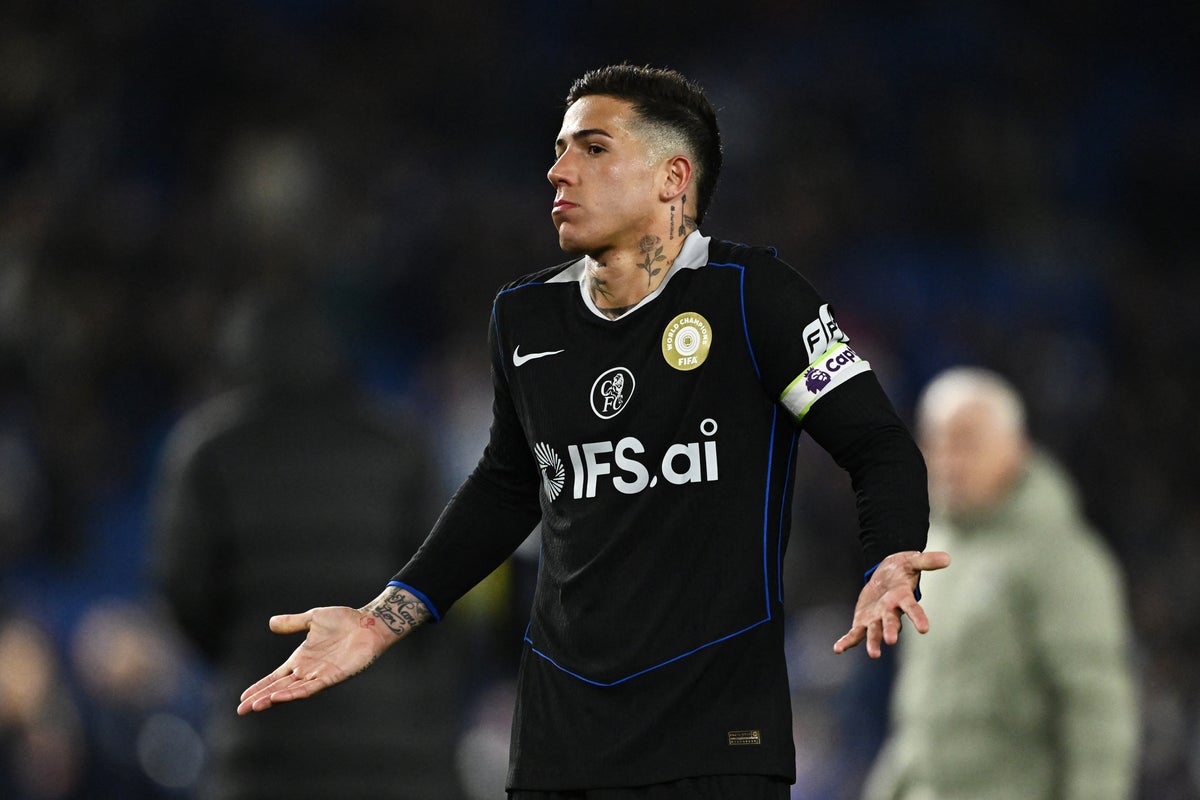
It was one of those games where you’d love to focus on Brighton’s performance but, at the end of yet another chastening evening it was hard to take the eyes off the Chelsea captain. There was Enzo Fernandez, standing there mostly motionless in front of the away crowd, other than shrugging his shoulders. That he was wearing the armband only two weeks after being dropped from the first team added to the sense of farce, of a club shredded by so many bad decisions.
What was Fernandez actually doing here? What was he thinking? Maybe it was an apt image in its own bizarre way, because you can say this of the entire club right now. “A sad night for the club”, as one Chelsea insider said. Most visibly, there’s just the way they’re playing. What is Liam Rosenior trying to do?
Well, whatever it is, the players aren’t responding. This dismal run has now added up to the club’s worst run since 1912.
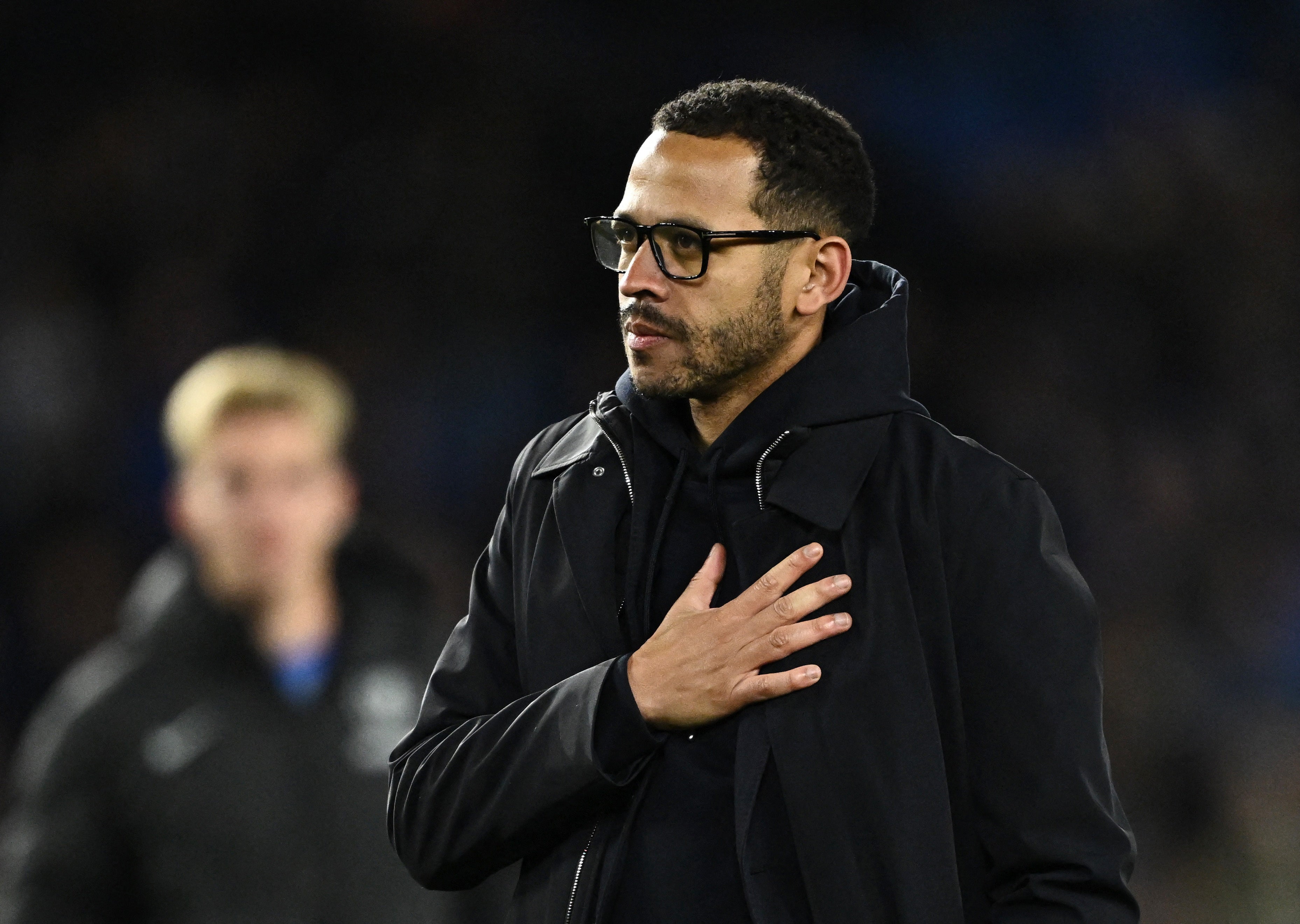
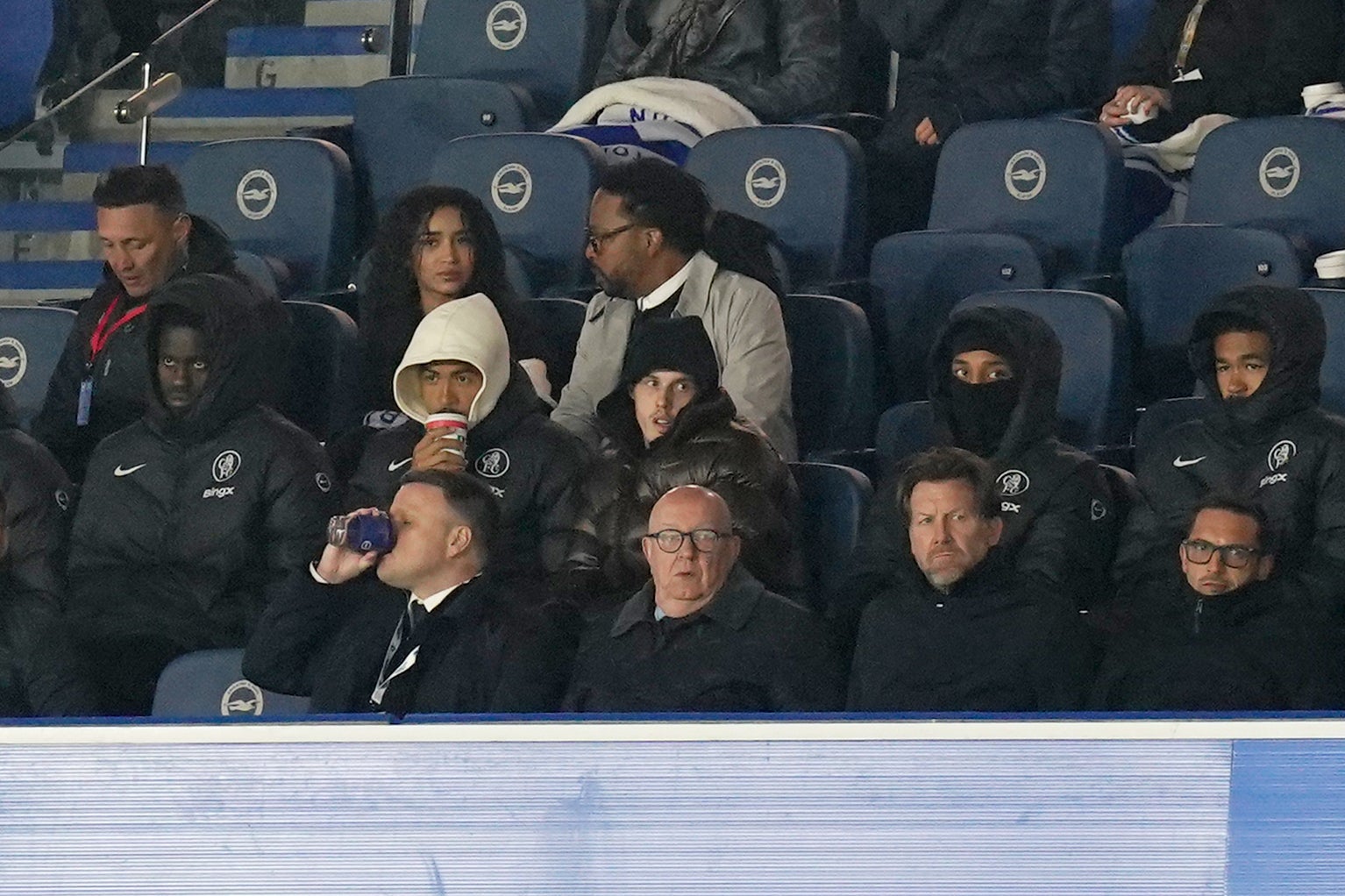
As cameras constantly cut to Behdad Eghbali and the rest of the Chelsea leadership, it was impossible not to wonder whether they were deciding on Rosenior’s future there and then. No one would be surprised if a club statement was imminent.
His defeated post-match Sky interview even felt like one of those exit speeches. Rosenior he spoke about how Chelsea’s performance was “unacceptable” and “indefensible”. He said he was “hurting” and that their display did not “represent this great football club”.
More words, even if these were conspicuously directed towards the players.
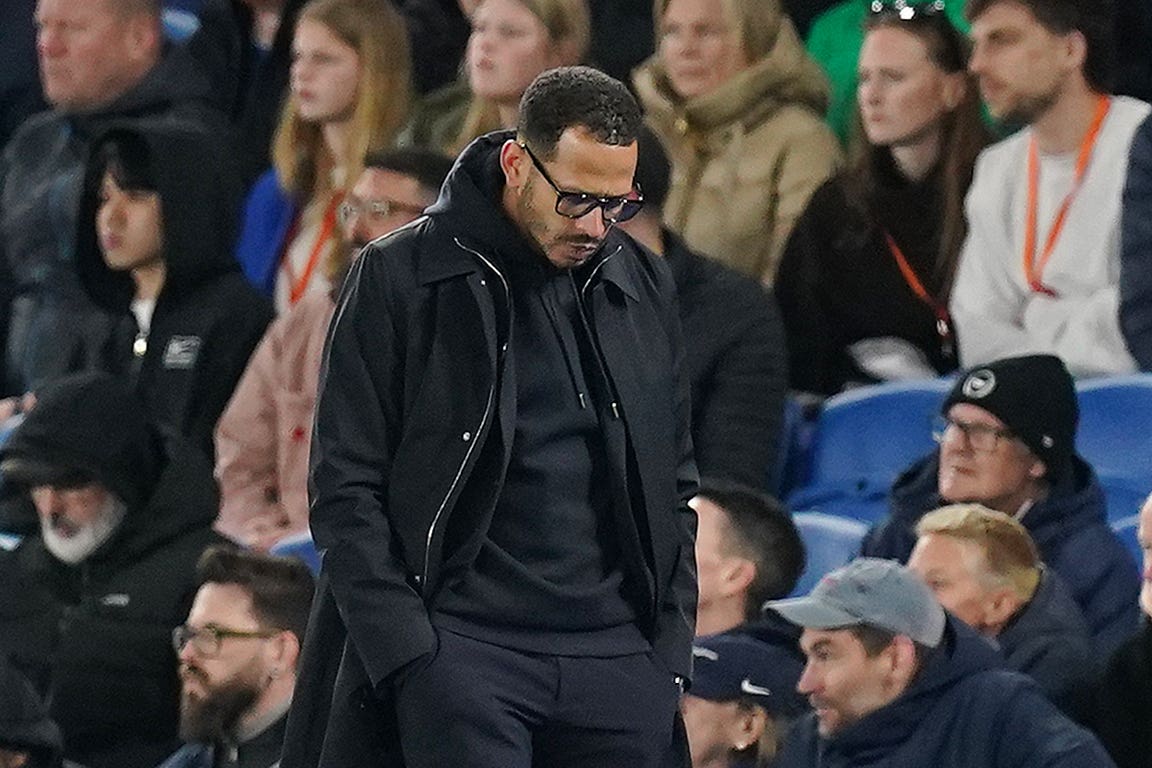
But, by the end, they were also amounting to some form of self-flagellation. Rosenior couldn’t even look up.
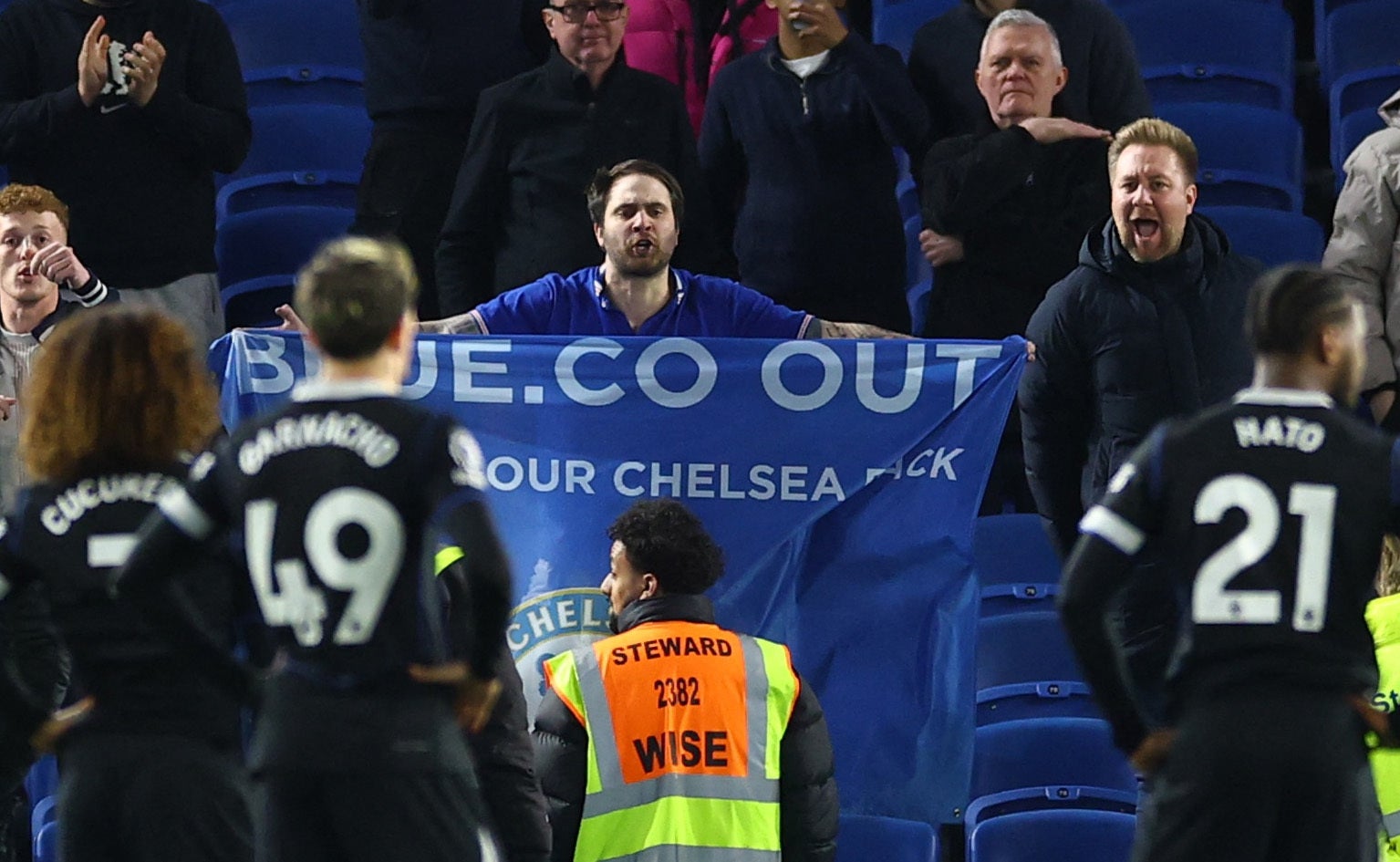
Really, though, the focus should stay on that hierarchy. They are responsible for this. They are responsible for turning a social institution into some kind of financial experiment.
They’ve made the common mistake of thinking they are smarter than the norms of a 166-year-old sport and have been shown reality. Maybe it’s a rare football morality play for private equity trying to exploit the sport.
The Rosenior appointment was really only a logical – or perhaps illogical – conclusion of all this, especially amid the widespread suspicion that he was largely appointed on the basis of being someone the hierarchy could control.
That might be a little harsh on a forthright young coach, but he’s now in the sorry situation where there’s sympathy for him. It’s got that bad, as was seen with the facial expression after that third Brighton goal. Almost the saddest part is that this has become one of those appointments that has the possibility of destroying a career.
For all the jokes about Rosenior and fair criticism, he did previously enjoy a respect as a promising young coach. Even leading Premier League clubs felt he was very adept at all the pure tactical elements of coaching.
The fundamental issue, however, is that you do need all the other elements of management to actually maximise such qualities. Rosenior has been found wanting there, as there have been constant insider questions about his authority over the squad.
Players have even felt he has “changed” in his short time in charge.
Again, that shouldn’t be a surprise.
A young coach has been prematurely promoted to what was already one of the most pressured jobs in the game, made more complicated because of the “unique” approach of the ownership.
How can a team culture even be built if there’s constant transfer turnover of young players? Little wonder those like Marc Cucurella and Cole Palmer might be considering their futures.
And despite all of that, Rosenior couldn’t really say no to such a job.
He was already working in the ownership group so would have known the chance probably wouldn’t have come again.
So here they are, at the end result of multiple bad decisions. Not just a 3-0 at Brighton, but a tailspin.
And worse may be to come. Can anyone see them beating Leeds United in the FA Cup semi-final on Sunday?
What would the ownership do? The word from inside is that they don’t have any prospective replacement lined up. Do they have any ideas?
And there’s a key final point. The opposition also represented a fitting image of something that works well, all the more so because this ownership’s one idea was to copy Brighton.
Typically, though, they got that wrong too.
There’s no point in trying to bring over everything from Brighton if you can’t also bring over their analytics.
That’s what really makes it work, and fortifies the culture.
You could ask how the Chelsea ownership missed all of this but that itself would be to miss the point.
This outcome – a comprehensive 3-0 for a club in the Championship when Chelsea were last English champions – was entirely predictable. It is the result of multiple bad decisions.

.jpg?trim=0,0,0,0&width=1200&height=800&crop=1200:800 "Apparent human remains found in school chimney in New York City – UK Times")