

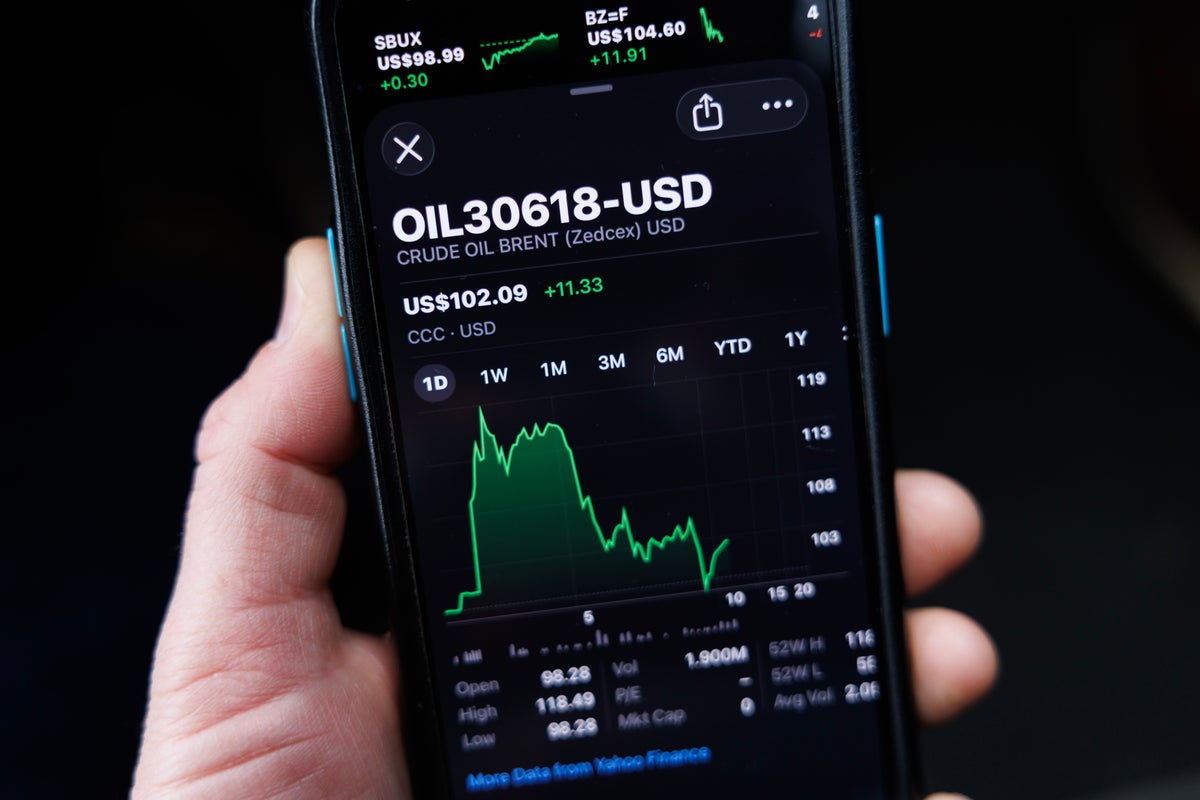
Donald Trump’s war on Iran risks triggering a global recession, the International Monetary Fund (IMF) has warned in the latest damning assessment of the conflict’s impact on the world economy.
The influential financial body said the international outlook has “abruptly darkened” as a result of the conflict, which threatens to throw the global economy “off course” and could cause an energy crisis on an unprecedented scale.
As oil and gas prices continue to rise, a worldwide recession could be a “close call” in a severe scenario in which there is further turmoil, the body warned.
For the UK, economic growth forecasts have also been slashed for the next two years, with the IMF warning that inflation and unemployment will rise in what represents a further blow to Keir Starmer.
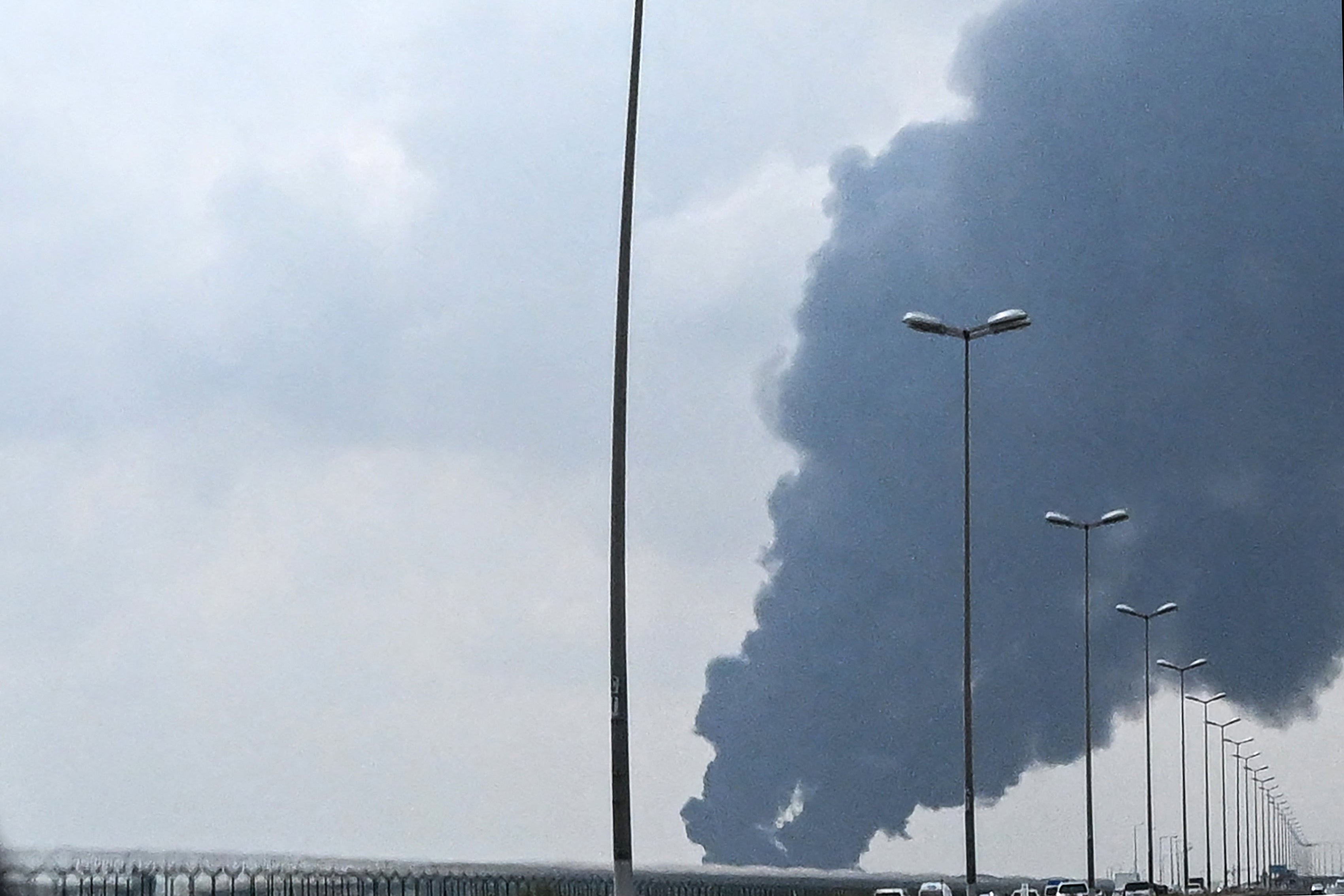
Its findings are released as Rachel Reeves heads to Washington for the IMF’s spring meeting, where the chancellor will urge other countries to take collective action to respond to the crisis in the Middle East.
As she jetted off she warned families and businesses across Britain were bearing the cost of instability “they did not cause”, as the UK continues to push for the re-opening of the Strait of Hormuz, which is crucial to the world’s oil supply.
In its latest economic outlook, the IMF predicted that, in the wake of the war, UK economic growth will be weaker than previously forecast, with GDP set to grow by 0.8 per cent this year and 1.3 per cent next year. Both are below its prediction, as recently as January, of 1.3 per cent this year and 1.5 per cent next year.
The UK economy grew last year by 1.3 per cent.
The IMF also predicts UK inflation will rise, driven by higher energy prices, more expensive fuel and increased food costs, to an average of 3.2 per cent this year and 2.4 per cent next year.
It had previously forecast averages of 2.5 per cent and 2 per cent.
Petrol prices have already risen 19 per cent since the conflict started, while the cost of diesel is up by more than a third.
In another blow, the IMF predicts UK unemployment will rise to 5.6 per cent this year, up from last year’s rate of 4.9 per cent.
In a foreword to the latest report, IMF economic counsellor Pierre-Olivier Gourinchas said that the global outlook has “abruptly darkened”, knocking the global economy off a steady trajectory of growth.
He added: “The closure of the Strait of Hormuz and serious damage to critical production facilities in a region central to global hydrocarbon supply could cause an energy crisis on an unprecedented scale.”
The IMF said a severe scenario for the conflict over the coming months would mean that global growth would be reduced by 1.3 percentage points in 2026.
“This would mean a close call for a global recession (growth rate below 2 per cent), which has happened only four times since 1980, with the latest two occasions corresponding to the global financial crisis and the Covid-19 pandemic,” according to the report.
In response, the shadow chancellor Sir Mel Stride said: “Being handed the biggest downgrade in the G7 is a clear verdict on Rachel Reeves’ choices – and she’s got no one to blame but herself.
“The Chancellor hiked national insurance in her first budget, doubling inflation and sending unemployment soaring. She is driving the hospitality industry out of business with business rates increases, and planning the first hike in fuel duty in 15 years. Her ‘plan’ to keep costs down has left us with the highest inflation in the G7, with businesses closing and the cost of living skyrocketing.
“The Conservatives urge international partners to see Rachel Reeves as a cautionary tale of what happens when a politician has no clue what they’re doing and chooses to hammer business relentlessly.”