

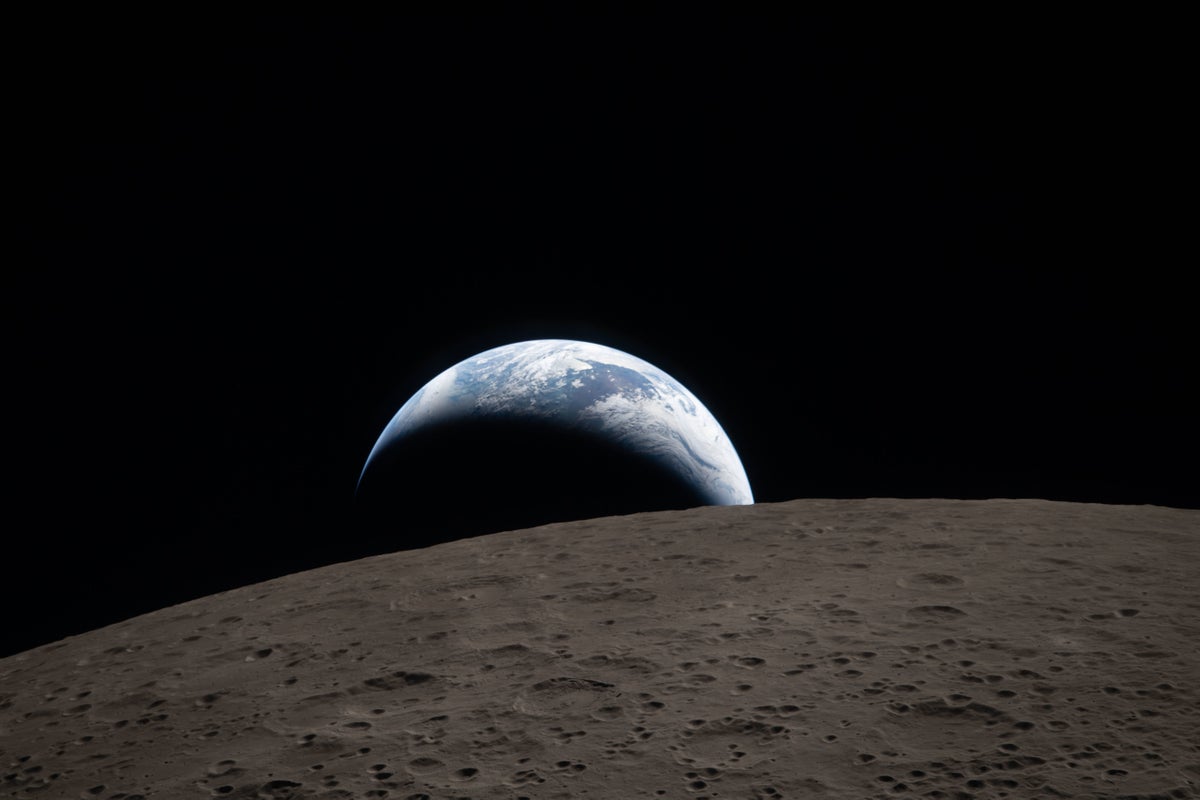
Artemis II commander Reid Wiseman said the mission astronauts were “locked in” as their capsule circled the Moon and started heading back towards the Earth.
Over a period of seven hours, the crew observed and photographed the Moon, including parts of the lunar surface never seen before.
Onboard the spacecraft, they also experienced their own personal solar eclipse as the Moon was positioned between them and the Sun.
The crew named certain features on the moon to honour the Orion spacecraft as well as commander Wiseman’s late wife, Carroll.
US president Donald Trump congratulated the crew, hailing their lunar flyby as the start of a new era of American space colonisation.
“You have made history and made all America incredibly proud. Your mission paves the way for America’s return to the lunar surface very soon,” he said on a live broadcast. “We’ll plant our flag once again, and this time we won’t just leave footprints.”
It will take the astronauts four days to get back, with a splashdown in the Pacific set to conclude their test flight on Friday.
Nasa is running a livestream providing continuous coverage of the Artemis II mission.
Orion spacecraft begins journey back to Earth
The Orion spacecraft (Integrity) fired its thrusters briefly to adjust its path and head back toward Earth, Nasa said yesterday.
Astronauts Christina Koch and Jeremy Hansen monitored systems during the manoeuvre, and Nasa also released the first images from the lunar flyby and confirmed that the recovery ship is en route in the Pacific.
The crew will rest overnight, Nasa added, before preparing for final tests and return-to-Earth operations on Wednesday.
Maroosha Muzaffar8 April 2026 04:02
Nasa images shown in new video
And here, in video form, are those astonishing new images from the astronauts’ journey:

Nasa share new stunning moon crater and Earth eclipse photos from Artemis II
Nasa has released two new photos captured on flight day six during the Artemis II lunar flyby. The first image shows the far side of the Moon’s surface, pockmarked with craters, with a half-shadowed Earth setting in the background. This “Earthset” photo beautifully complements the iconic “Earthrise” image taken by Bill Anders during the Apollo 8 mission in 1968. Nasa’s second snapshot shows the Moon fully eclipsing the Earth, “creating nearly 54 minutes of totality.” The Artemis II astronauts are now over halfway through their mission. The crew is scheduled to splash down off the coast of San Diego at approximately 8:07 p.m. EDT on Friday, April 10.
Andrew Griffin7 April 2026 16:00
Stunning images sent back from journey around the Moon
Nasa is sharing some of the images that the astronauts have sent back from their trip around the backside of the Moon. Here’s a selection.
Andrew Griffin7 April 2026 15:18
Nasa astronauts head back home but mission isn’t over
The crew of Nasa’s Artemis II mission have started the journey home after creating history on their pass behind the Moon.
The four astronauts on the first manned Moon mission in more than 50 years reached 252,756 miles (406,771 kilometres) from Earth.
The record was achieved during a seven-hour lunar flyby which included a 40-minute communication blackout as they passed around the far side of the Moon from Earth.
Apollo 13’s previous record was 248,655 miles (400,171 kilometres) from Earth in April 1970.
During the blackout, the crew reached their closest point to the Moon at 4,067 miles (6,545 kilometres).
Before the flyby, Canadian astronaut Jeremy Hansen said: “It is blowing my mind what you can see with the naked eye from the Moon right now. It is just unbelievable”.
The astronauts asked Nasa if they could name two newly observed lunar craters Integrity, after the capsule of their Orion spacecraft, and Carroll in honour of the late wife of Commander Reid Wiseman. She died of cancer in 2020.
Pilot Victor Glover and Christina Koch complete the four-strong crew, who experienced a total solar eclipse from their vantage point behind the moon early on Tuesday.
Nasa administrator Jared Isaacman said on X: “Before they left, they said they hoped this mission would be forgotten, but it will be remembered as the moment people started to believe that America can once again do the near-impossible and change the world.
“This mission isn’t over until they’re under safe parachutes, splashing down into the Pacific.”
Press Association7 April 2026 10:44
Crew describes Moon craters as ‘lampshade with tiny pinprick holes’
As the Artemis II Orion capsule flew by the Moon, crew members described craters on the lunar far side as having a range of colours from oranges and browns, to greens, sometimes appearing brighter than snow on Earth.
“All the really bright, new craters, some of them are super tiny, most of them are pretty small, there are a couple that really stand out. What it really looks like is a lampshade with tiny pinprick holes and the light shining through,” astronaut Christina Koch said during a live broadcast.
“There are islands of terrain out there that are completely surrounded by darkness, which indicates some real variation in terrain. Up to the north, there is a very nice double crater. It looks like a snowman sitting there,” crew member Victor Glover said.
Vishwam Sankaran7 April 2026 09:30
What crew did when they flew over lunar far side
As the Orion spacecraft flew over the far side of the Moon, the crew photographed and described terrain features like impact craters, ancient lava flows, and surface cracks and ridges.
They made observations of the colour, brightness and texture of these features which would provide clues for scientists to better understand the composition and history of the lunar surface.
Astronauts also witnessed an “earthset”, the moment the Earth dropped below the lunar horizon, and an “earthrise” as the spacecraft emerged from the opposite edge of the moon.
They reported observing light flashes created by meteoroids impacting the lunar surface while traveling many thousands of miles per hour.
The crew also witnessed a nearly hour-long solar eclipse as the spacecraft, the Moon and the Sun aligned.
Once the mission’s lunar data is downlinked from the spacecraft, scientists on earth will look at it and compare with data from amateur atronomers who are also observing the Moon at the same time.
Vishwam Sankaran7 April 2026 09:00
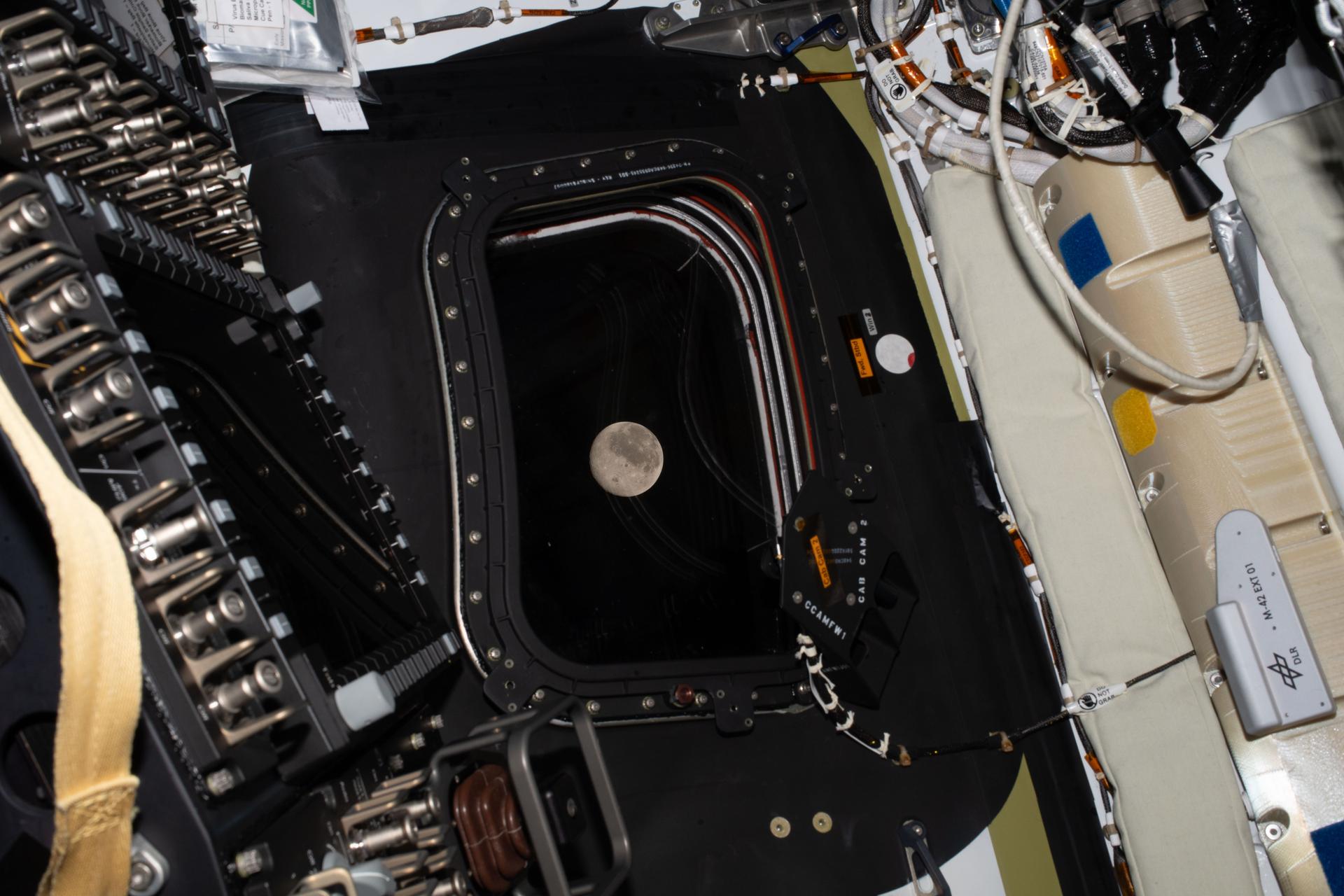
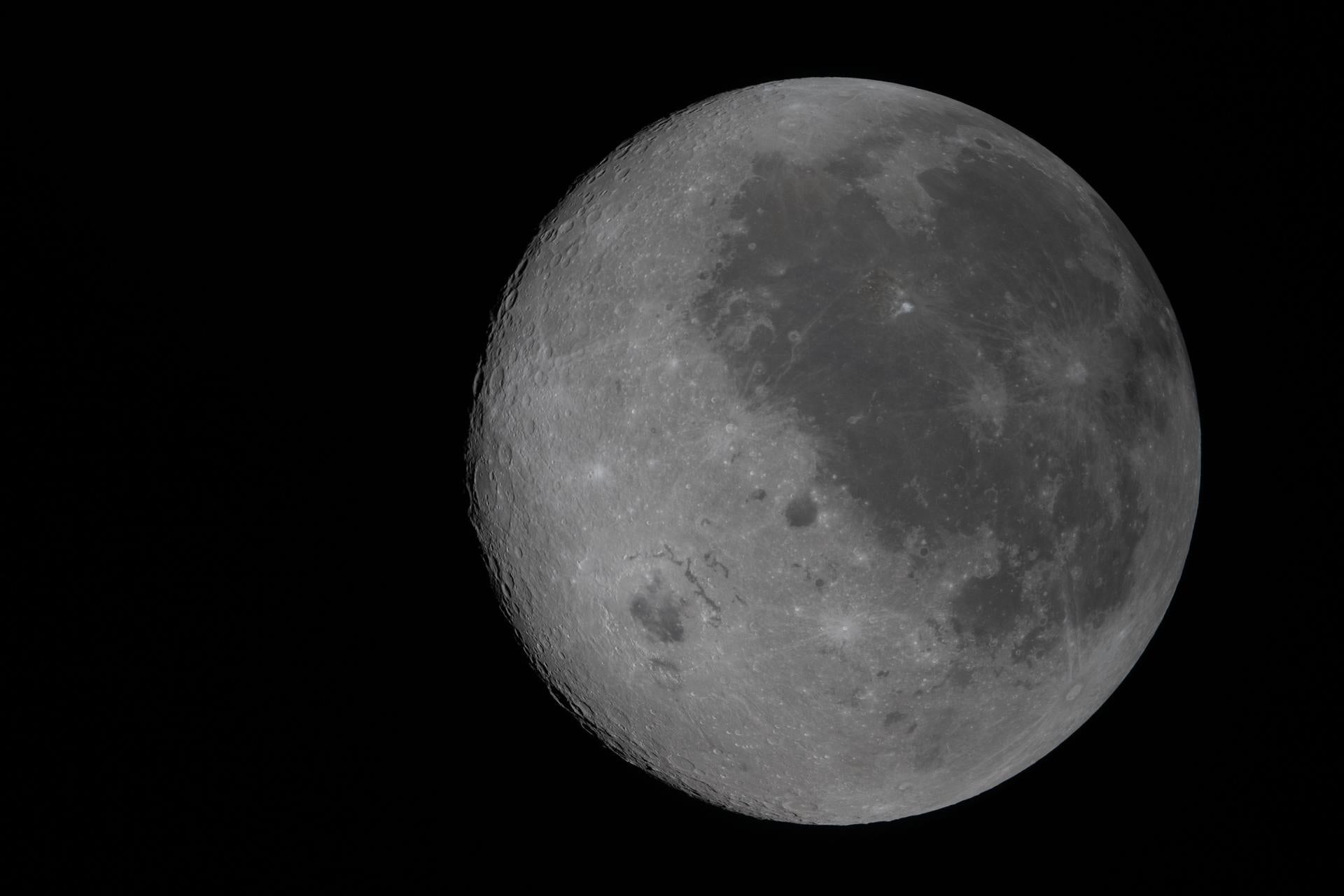
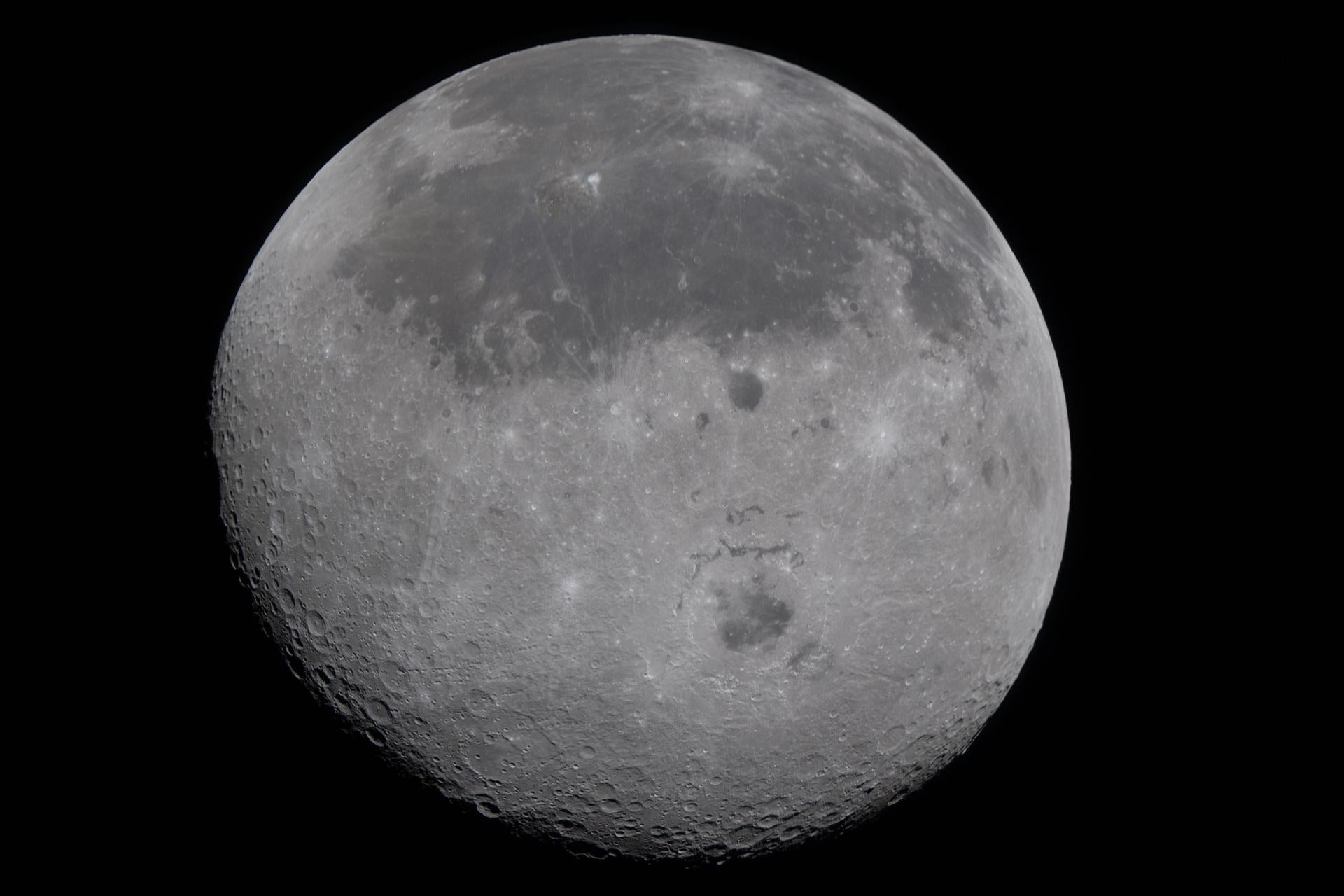
In Photos: Moon as seen from Artemis II mission capsule
NASA has shared photos of the moon as taken from the mission’s Orion capsule on Monday.
The photos offer clear views of parts of the near as well as far sides of the lunar surface.
Vishwam Sankaran7 April 2026 08:30
Crew spots asteroids striking moon
The Artemis II mission crew said they spotted at least four impact flashes, which are glints of light caused by asteroids striking the moon.
Crew commander Reid Wiseman said he saw two impacts while astronaut Jeremy Hansen saw another two.
“There was a little bit of giddiness,” Wiseman said.
Such asteroid impacts on the lunar surface are common as the moon lacks an atmosphere to slow down space rocks.
Studying lunar asteroid impacts has helped study how the moon has evolved over time.
Vishwam Sankaran7 April 2026 08:00
Floating Nutella tub in capsule offers ‘free advertising’ moment
A Nutella tub was spotted photobombing astronauts as it casually floated out of the spacecraft’s kitchen, offering what internet users are calling a “free advertising” moment for the chocolate-hazelnut spread.
The Italian company took to X, sharing a video of the moment.
“Honoured to have traveled further than any spread in history,” it said in the post.
Vishwam Sankaran7 April 2026 07:20
Artemis astronauts view their own personal solar eclipse
During the mission, the Artemis crew experienced their own personal solar eclipse as their Orion capsule passed behind the moon, with the sun entirely eclipsed from their perspective.
The eclipse lasted for about an hour and provided astronauts the opportunity to observe the sun’s corona.
During this time mission control on Earth temporarily lost communications with the capsule for about 40 minutes, which was planned and expected.
Vishwam Sankaran7 April 2026 06:56