

Your electric toothbrush questions answered
What is the best electric toothbrush?
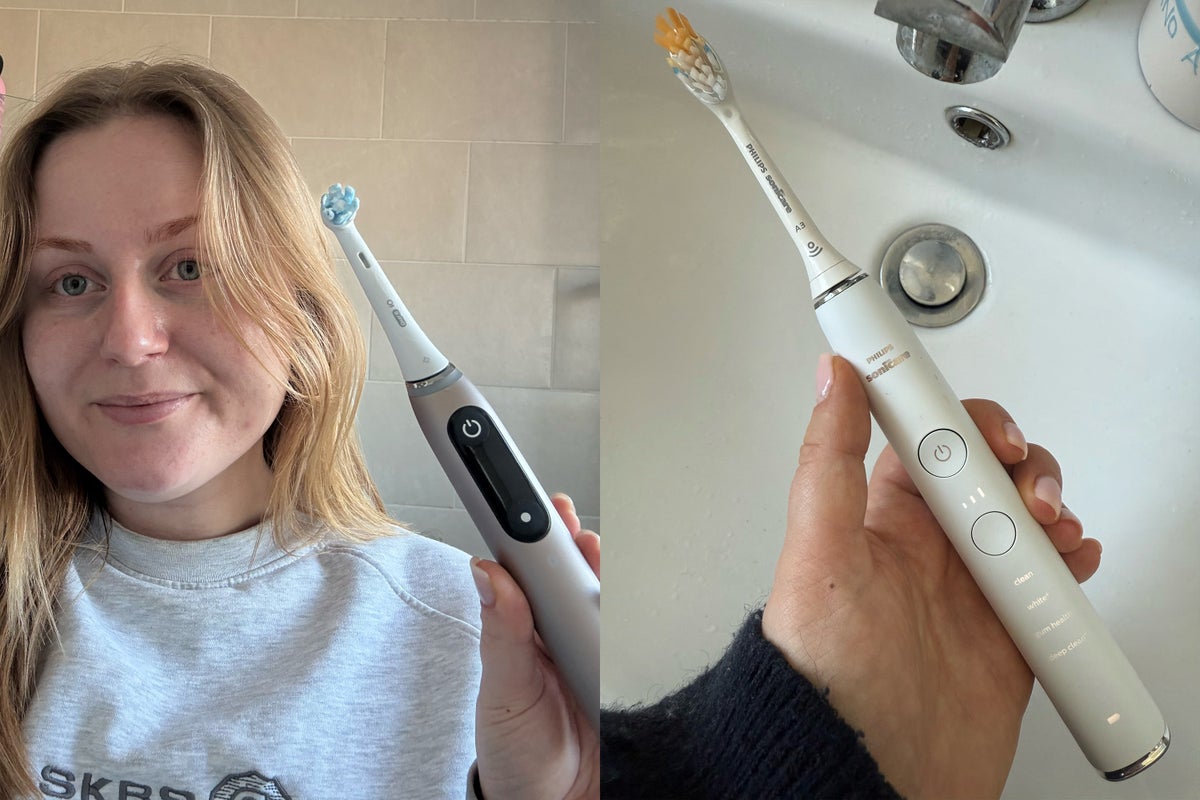
The Philips Sonicare 9400 diamondclean smart is the best electric toothbrush. My teeth felt noticeably cleaner, and my wisdom teeth were easy to clean and reach. Philips’ signature sonic pulses left my teeth feeling fresher than Oral-B’s oscillations, and at around £200 on promotion, this model – versus others from Philips – stood out for its thoughtful extras, such as its combined charger and sink holder.
For anyone on a budget, the Ordo Sonic+ also impressed with its excellent battery life, multiple modes and competitive 40,000 movements-per-minute clean. Meanwhile, the dentists’ pick is Oral-B’s iO3 electric toothbrush, which houses “two of the most important features” – a pressure sensor and timer – that Dr Felici looks for in a powered toothbrush.
What electric toothbrushes didn’t make the cut?
Colgate’s 360 slim sonic toothbrush didn’t quite measure up. While Dr Imran suggested it would “be fine as a budget option or if travelling light,” I found it delivered much the same level of clean as a standard manual brush, despite costing around £10 more.
I felt similarly about Oral-B’s iO2. Beyond its entry-level price point, it didn’t offer much to justify the spend. In my experience, savvy shoppers can often find the more advanced iO3 model for a similar price by keeping an eye out during sales periods. And without an alert to flag when you’re brushing too lightly, I found it harder to gauge the overall effectiveness of my brushing.
How I tested the best electric toothbrushes
I tested each toothbrush over several weeks as part of my day-to-day brushing routine, focusing on performance, value, aesthetics and usability. Specifically, I used the brushes in the following settings:
- After meals: I used the brushes after eating food that tends to stick, such as pulled pork and seed-filled salad, to assess debris removal and cleaning performance.
- After stain-heavy food and drink: Coffee, tea and red wine are common staining culprits, so I used the brushes after consuming them to compare plaque, stain reduction, and overall freshness.
- With smartphone assistance: I tried the brushes with and without their companion apps (where possible), evaluating simplicity, timers, feedback systems and, chiefly, how realistic it was that you’d make use of the technology.
- On sensitive teeth: I called on an additional tester – IndyBest’s Daisy Lester – who has particularly sensitive gums and teeth to find and test the best brushes for gentle cleaning, pressure control and mode flexibility.
- On children: I recruited my six-year-old niece (with parental guidance) to establish the best children’s electric toothbrush brush for safety, engagement and ease of use for younger users.
- Until they ran out of battery: I monitored the longevity of each toothbrush per single charge and assessed the convenience of charging, including in travel scenarios.
- On hard-to-reach teeth: I recorded whether or not it was achievable to reach tricky areas like wisdom teeth, molars and along the gumline.
Is an electric toothbrush actually worth it?
“For many patients, yes,” claims Dr Felici, “Studies consistently show electric toothbrushes remove more plaque and reduce gingivitis more effectively than manual brushing, particularly when patients struggle with technique.”
Is there a downside to an electric toothbrush?
“The ongoing cost of the heads on your wallet and the environment,” answers Dr Imran.
“Some people may brush too aggressively if they ignore pressure warnings; however, modern brushes are designed to minimise this risk,” adds Dr Felici.
What is the best electric toothbrush for gum disease?
“The Oral-B iO3 would be my pick,” says Dr Imran. “For gum disease, pressure control is essential,” states Dr Felici. “A brush with a visible pressure sensor and a gentle gum-care mode is ideal. Oscillating-rotating brushes such as the Oral-B iO range are particularly effective at plaque removal along the gumline, which is critical in managing gingivitis and periodontal disease,” adds Dr Imran.
Is an electric toothbrush better for periodontal disease?
“Yes, plaque is the biggest risk factor for periodontal disease and plaque control is proven to be better with an electric toothbrush,” says Dr Imran.
Dr Felici adds: “Electric brushes can provide more reliable cleaning for patients with reduced dexterity or established periodontal pockets.”
That said, Dr Imran stresses that “Periodontal disease requires multifactorial management, including professional ultrasonic cleaning, interdental aids and good lifestyle habits.”
Do electric toothbrushes cause gum recession?
“Electric toothbrushes do not cause gum recession when used correctly,” responds Dr Felici. “Gum recession is usually linked to excessive pressure or aggressive technique – which is why a pressure sensor is so important,” he details.
What is the 2-2-2 rule for brushing teeth?
“It’s a popular rule-of-thumb: brush twice a day for two minutes and see your dentist twice a year,” replies Dr Imran.
Why you can trust IndyBest reviews
Having written reviews for IndyBest since July 2024, Lucy Smith has garnered a breadth of testing experience and ensures all the products that land a spot in her guide are genuinely worth your time and money. She’s reviewed the best teeth whitening kits and covered the launch of Oral-B’s iO10 electric toothbrush. What’s more, she’s been using an electric toothbrush personally since 2023 and has experienced tooth decay in the past – so she knows the value of a thorough clean.
Ditch the string and upgrade your daily dental routine with our pick of the best water flossers