



From the very first US and Israeli strikes on Iran, it was apparent that any conflict lasting longer than a few days was also likely to cause some very significant collateral damage, not least to the cause of Ukraine. And so it has proved.
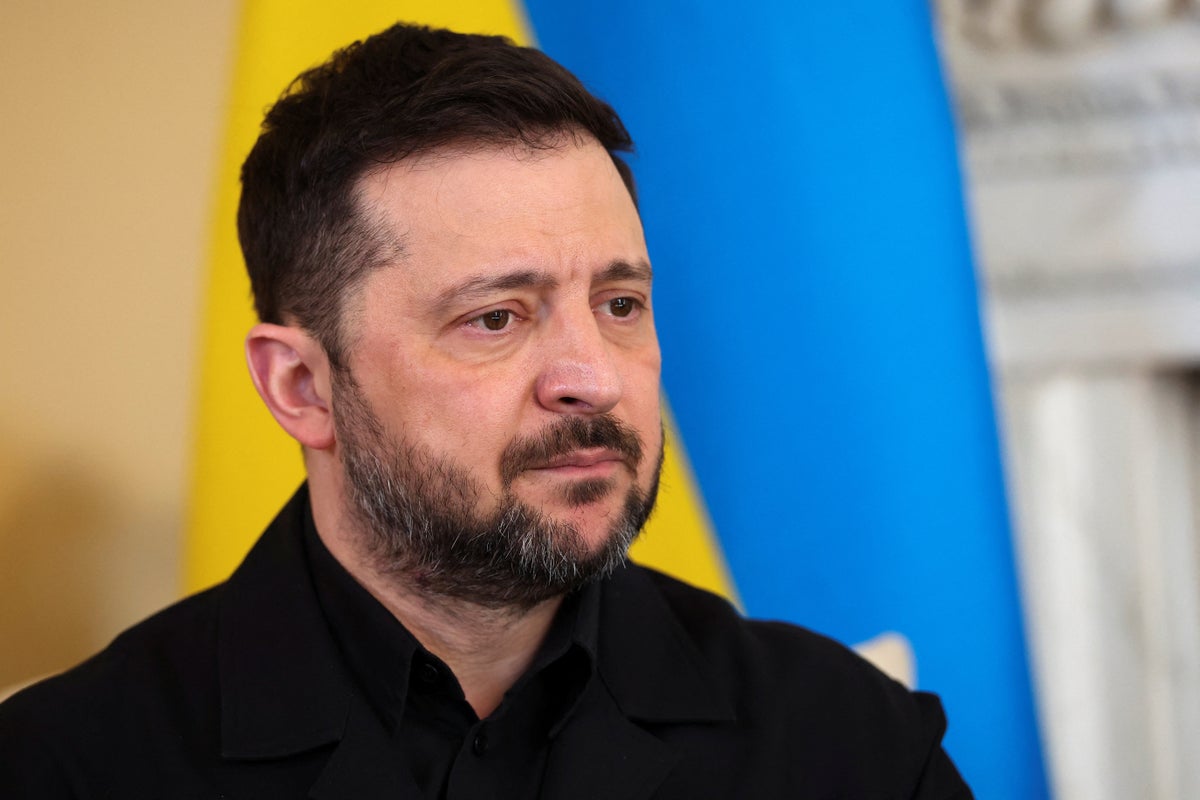
With the attention of the United States, the Middle East and Europe focused on this new war – both on the human costs and on the spiralling economic costs resulting from Iran’s effective closure of the Strait of Hormuz – the continued fighting in Ukraine has been, to a large extent, absent from the news. As Ukraine’s president, Volodymyr Zelensky, pointed out in a sadly clear-eyed interview this weekend, “We have to recognise that we are not the priority for today.”
The all-too-predictable risks have been twofold: that US military equipment, especially the missiles and air defences desperately needed by Ukraine, would be diverted to the Middle East; and that the decrease in news coverage of Ukraine, which has been a source of such strength for Kyiv over much of the past four years, would lead to the plight of Ukraine, and Ukrainians, receding ever further from the awareness of foreign leaders and sympathetic public opinion, especially in Europe.
At no time has the disparity been more striking than in recent days, when the plight of two US airmen has, for entirely understandable reasons – both the agonising human angle and concerns about how the capture of one or both could change the calculus of the war – been front and centre of Western attention. Both the latest Russian strikes on Ukraine and President Zelensky’s enterprising tour of the Gulf states had to take a very distant back seat.
Even as the prime minister and government ministers continue to insist that the war in Iran is not “our war” – which is true – they are in danger of allowing their gaze to wander from the war that they have hitherto recognised, unswervingly, as one in which the UK and European countries have a direct interest – and in which, it should also be stressed, Russia will not hesitate to seize what advantage it can, should Ukraine’s back be turned or its material support weakened.
With the pressure on Russia’s economy eased, both by the energy price rises resulting from the Iran war and the loosening of some US sanctions, and with a Russian spring offensive either begun or in the offing, the war in Ukraine could be approaching a new critical point. To the risks posed to Ukraine by the international situation must be added the gathering tensions inside the country, where a shortage of people not only trained, but more to the point, willing to fight is becoming a major complicating factor.
Time was when young and not-so-young Ukrainians were flocking to defend their country. As we report today, that is no longer true. In Russia, it has been reported for some time that the numbers being mobilised are no longer sufficient to replace battlefield losses; it would now appear that this is also the case in Ukraine.
Given Ukraine’s much smaller population and the fewer reserves it has to call upon, this cannot but place Ukraine at an additional disadvantage, and so too does one of the reasons for the shortfall. As many as 2 million men are wanted for evading mobilisation, while another 200,000 are absent without leave. These figures, it should be noted, come from Ukraine’s defence minister; they are not Russian propaganda.
Those seeking to evade call-up cite the lack of scheduled rotations and the perceived unfairness of the draft process, as well as the casualty rate. Mr Zelensky’s humane and pragmatic decision to allow 18- to 24-year-olds – those too young to be mobilised – to leave the country last summer can also be seen in retrospect as a strategic mistake, given the numbers who left as a result. Corruption – the illicit selling of weapons and rations – is another ingrained problem.
The defence minister has responded by promising new, including hi-tech, measures to stem corruption at all levels, including draft evasion. He also shows admirable optimism in his insistence that Ukraine is currently mobilising sufficient numbers to fight, and that a better-quality command will generate a better quality of recruit. Quality, he says, rather than quantity, is what will count.
Even with the demonstrated ingenuity and effectiveness of Ukraine’s forces, however, stemming the country’s current recruitment difficulties could take time. And time, given both Ukraine’s shortage of air-defence equipment and the fast-changing international situation, is a luxury that Kyiv cannot take for granted. At such a point, it is crucial that the country’s European backers, including the UK, refuse to be distracted, and keep Ukraine firmly in their sights.
.jpg?trim=0,1,0,0&width=1200&height=800&crop=1200:800 "Pepsi and Diageo withdraw sponsorships of Wireless Festival amid Kanye West backlash – UK Times")