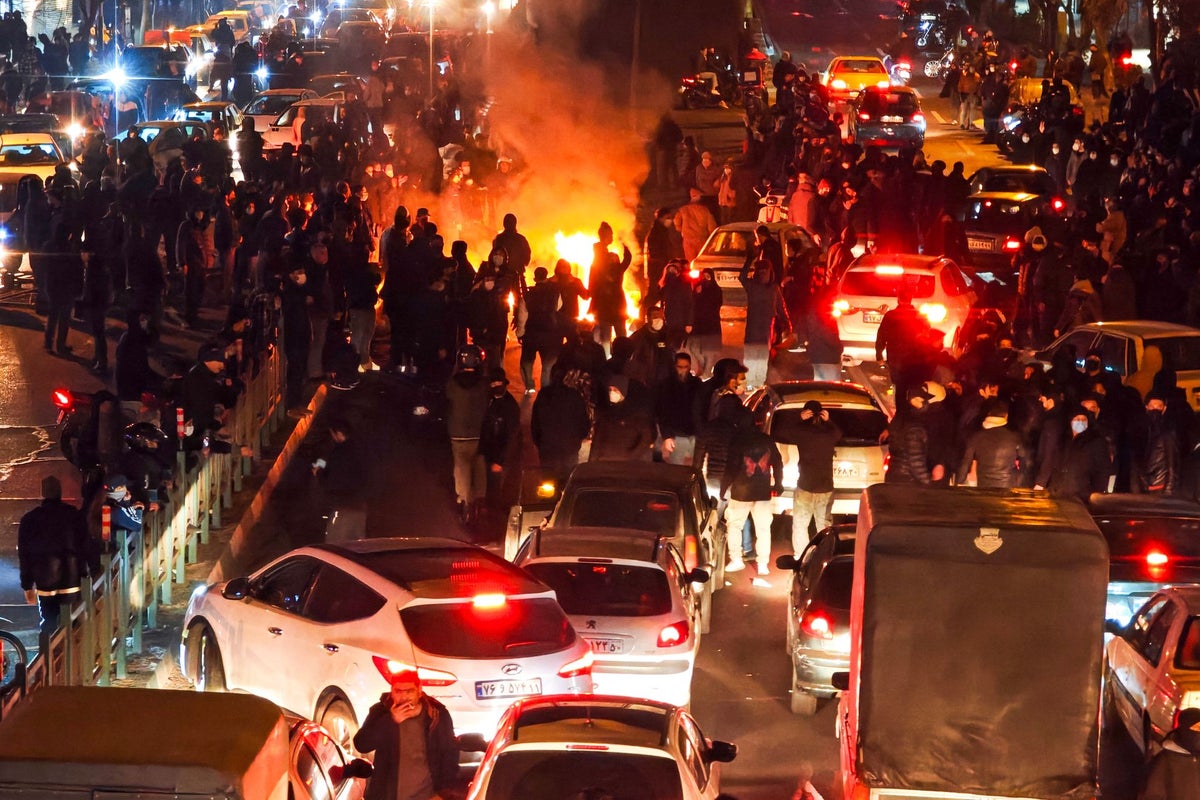
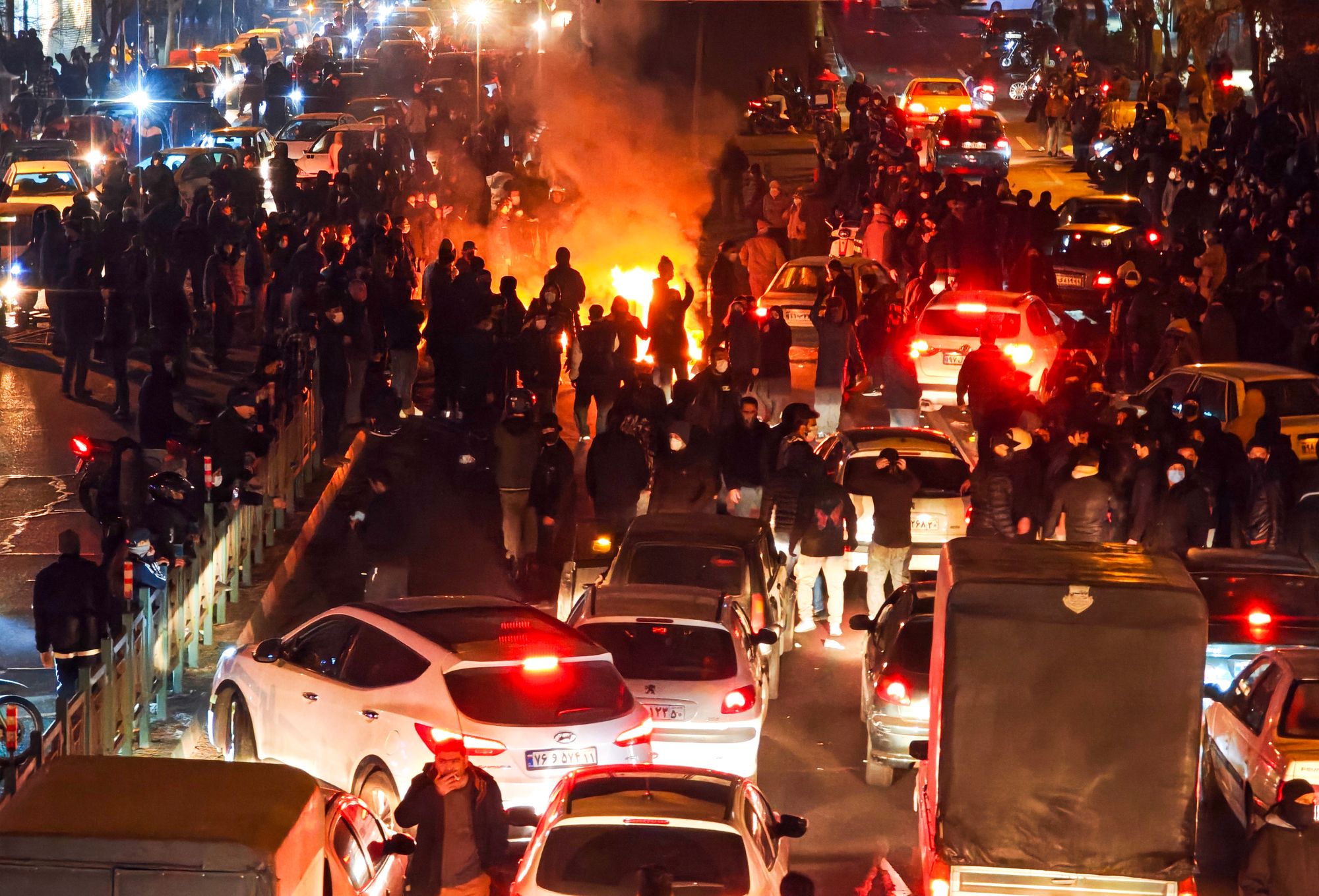
U.S. forces sought to arm Iranian protesters earlier this year after the country was rocked by demonstrations over dire economic conditions but saw those arms largely fall into the hands of Iran’s Kurds, President Donald Trump said on Sunday.
The president began his Easter Sunday with a series of revelations and proclamations about the Iran war, including a bizarre, cursing threat to begin targeting Iranian power plants on Tuesday if a deal was not reached to open the Strait of Hormuz.
“Open the F***in’ Strait, you crazy b*****ds, or you’ll be living in Hell,” he warned.
But in an interview over the phone with Fox’s Trey Yingst on Sunday morning, the president made another piece of news: The U.S. was directly involved in efforts to destabilize and overthrow the Iranian government weeks before strikes were launched across Iran, and as U.S. negotiators were engaging with senior Iranian governmental officials in Europe. Those protests began shortly before the new year and lasted for weeks, ending in the violent subjugation of protesters by the Iranian government.
“We sent them a lot of guns. We sent them through the Kurds, and the president says he thinks the Kurds kept them,” Yingst said on Fox News, paraphrasing the president.
Iranian Kurdish exiles have lived in a semi-autonomous region of Iraq, near the border of Iran, for decades following the Islamic Revolution in 1979 that saw the U.S.-backed Shah of Iran overthrown and the installation of the supreme leader by Iran’s new government. In the years since, the Kurds fought against Saddam Hussein’s government in Iraq as well as with the Iranian government since the latest conflict began. Some Kurdish groups still remain across the border in Iran.
In that same interview, Trump told Yingst that Iranian officials had allegedly killed more than 40,000 civilians in the crackdown ending those protests this year.
Trump conducted two other interviews on Sunday morning with ABC’s Rachel Scott and Axios’s Barak Ravid. He briefly spoke with The Independent on Friday.
On Sunday he repeated his vow to unleash a wave of destructive attacks targeting civilian infrastructure across Iran if the Strait of Hormuz was not opened. Doing so is generally considered to be a war crime unless the targets in question are actively being used for military purposes.
“Very little” is off the table if a deal isn’t reached, Trump told ABC. “If happens, it happens. And if it doesn’t, we’re blowing up the whole country.”
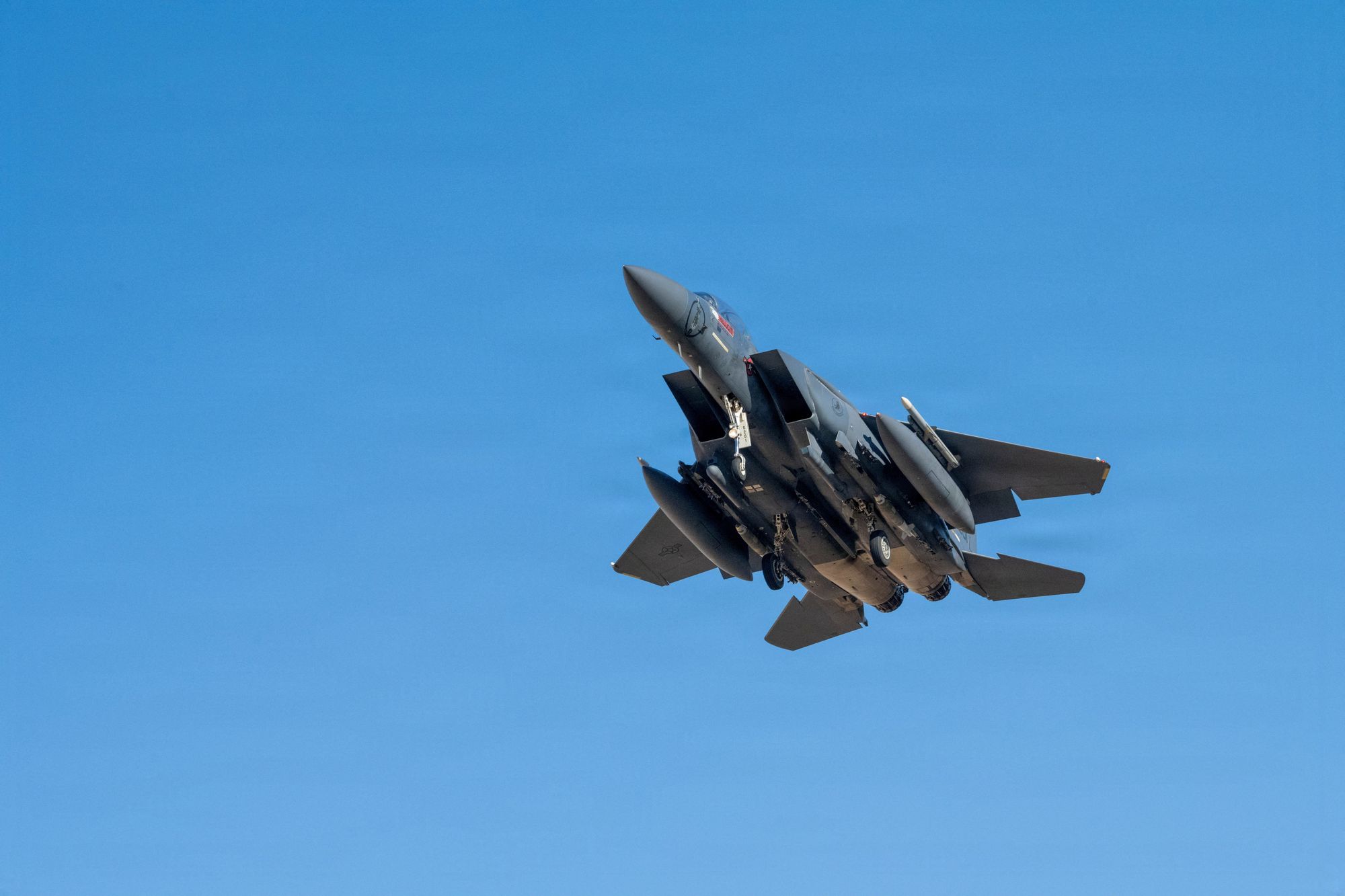
Speaking with Axios, he also gave more details about the rescue of an American service member whose F-15 was downed over Iran on Friday. The crew member was confirmed to have been rescued late Saturday evening after a days-long search. According to the president, U.S. officials feared the service member’s capture and the possibility that a beacon pinging his location was actually a trap.
He once again leaned into language that many seem as overtly racist as he described Iranians as “savages” in their hunt to detain the downed American crew member: “Thousands of these savages were hunting him down,” Trump told Axios. “Even the population was looking for him. They offered people a bonus if they captured him.”
The successful return of the downed American is a bright spot in an otherwise murky picture of Trump’s Iran war. The president and his top officials continue to insist that the Iranian military has been destroyed and that the U.S. has already essentially achieved victory, only to continuously fail to convince Iran’s government (which still appears to be intact) to re-open the Strait of Hormuz or strike a formal agreement to end the conflict.
Oil prices continue to rise as the choking of a major shipping route drags on and weeks pass by while the White House insists that the end of the war is coming in days.
Ahead of an address to the nation on the conflict this past Wednesday that largely ripped from old Truth Social posts, the president faced a perception problem: A CNN poll found that as many as two thirds of Americans do not believe that he truly has a plan for ending the war.
Trump continues to deny this, even as his goals have publicly shifted to re-opening the strait and away from the U.S. acquiring Iran’s supply of enriched uranium. He insisted once again on Sunday, however, that the permanent end of Iran’s nuclear weapons program remained a sticking point as he sought a diplomatic resolution to the war he started.