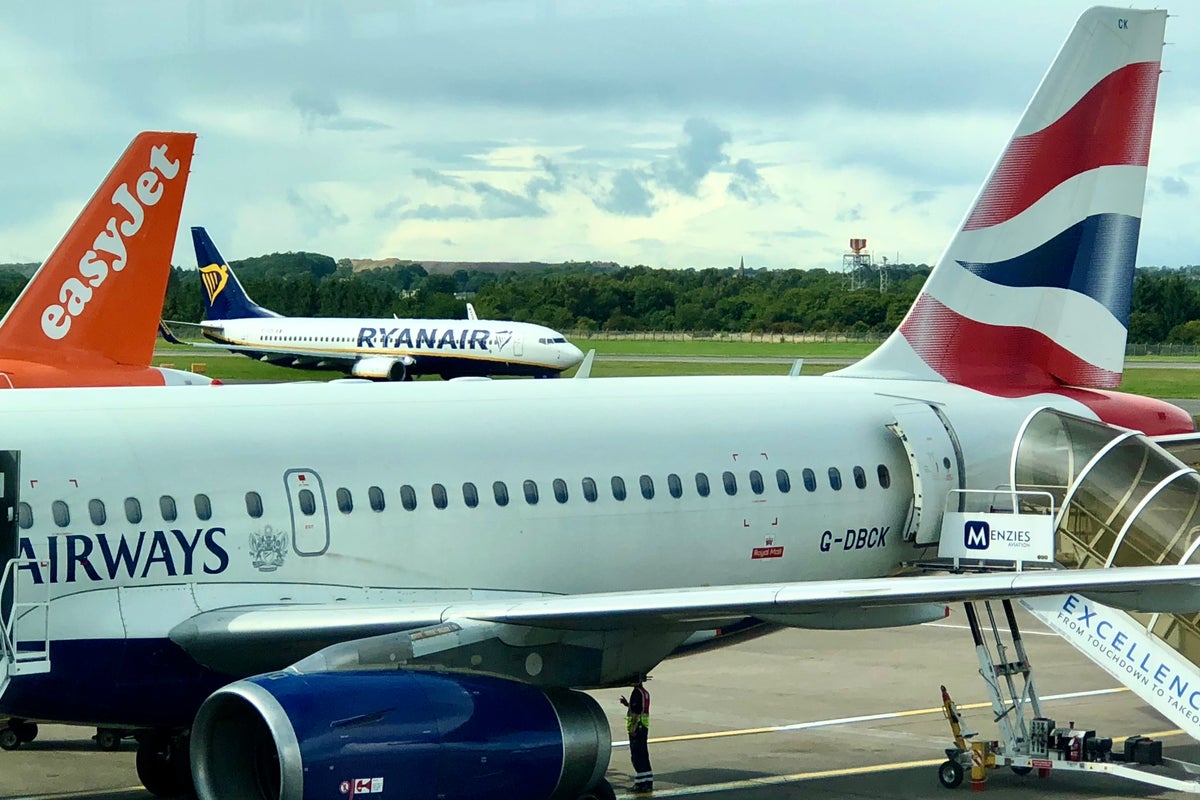
“Jet fuel cliff” is not the name of a male worker at one of the fuel farms that supply aircraft at Heathrow, Gatwick and Manchester. The term is being used in aviation circles to describe the possible collapse of Jet A-1 supplies in Europe, Asia and beyond.
With aviation fuel stuck on the wrong side of the Strait of Hormuz, there is an increasing focus on how airlines would cope were supplies to start to dry up.
I stress that I am speculating. A Department for Energy Security and Net Zero spokesperson told me: “Jet fuel shipments are continuing to arrive in the UK. The UK receives imports of jet fuel from India, the US and the Netherlands, as well as smaller amounts from a range of other countries.”
Yet as I reported this week, UK flight cancellations have already begun on links between London Gatwick and Newquay with Skybus and between English airports and Guernsey on Aurigny.
The groundings are partly in response to a drop in demand and the soaring cost of fuel. Jonathan Hinkles, managing director of Skybus, said it was “neither environmentally nor economically sound for us to continue flying with vastly reduced passenger numbers”. Links on Skybus between Devon, Cornwall and the Scilly Isles continue.
So far, then, entirely voluntary. But while the bosses of all the major budget airlines are confident that supplies are sufficient to cover the rest of April, visibility in May and through the summer is more difficult. Michael O’Leary, chief executive of Ryanair, has warned of “the risk of supply disruptions in Europe in May and June” unless the war ends quickly.
What would it mean for passengers in the entirely hypothetical scenario of airlines being asked (or compelled) to reduce their fuel consumption by one-fifth?
British Airways has far more experience than any other UK airline in contending with such a request: when adverse weather affects its main base, London Heathrow, BA and other carriers are instructed to cut a percentage of departures and arrivals.
The home airline inevitably ends up grounding more than its rivals, because (for example) Air Serbia cannot cancel 10 per cent of its single afternoon flight from Heathrow to Belgrade.
If you are a regular British Airways passenger heading for any of the domestic airports, or to Amsterdam, Barcelona, Geneva, Milan, Nice or Stockholm, you may be accustomed to receiving cancellation announcements with an invitation to rebook either before or after the original flight time. Irritating and inconvenient, in my experience, but not a trip-wrecker. Filleting the schedules could easily extend to long-haul flights – with eight-a-day New York JFK top of the list.
EasyJet, Britain’s biggest budget airline, could do the same with its five or six daily flights between Gatwick and Malaga this summer. Manchester to Amsterdam – with up to half a dozen each way, each day – is another obvious candidate. Yet such low-hanging fruit is in relatively short supply. Newcastle to Antalya (twice weekly) and Belfast International (three a week) are trickier. Once airlines start moving travellers’ dates rather than simply times, the damage multiplies.
Ryanair also has some “previous” on large-scale cancellations: over the winter of 2017-18, the carrier grounded around 20,000 departures after a foul-up with pilots’ rosters. The carrier, now by far Europe’s biggest budget airline, is well placed for making annoying but tolerable cuts thanks to high frequencies on routes such as Stansted to the Barcelona area: with a total of eight a day to Girona, Reus and “real” Barcelona, there is scope for travellers to be shuffled.
Let us all hope that this scenario remains firmly hypothetical. While shuffling passengers will come at a cost to airlines and constrain their capacity, you can expect fares to go through the roof as late-bookers scrabble for seats.
If you have already booked and you get that cancellation communication, remember that under air passengers’ rights rules, if your flight is cancelled, the airline must arrange seats on any carrier that can get to your destination on the intended day of travel.
To sum up:
- Most passengers whose flights are cancelled would not be too badly affected
- Airlines would be most unhappy at having to ground flights, but fares would rise sharply
- If you haven’t yet booked a summer flight, you might choose to do so now
Simon Calder, also known as The Man Who Pays His Way, has been writing about travel for The Independent since 1994. In his weekly opinion column, he explores a key travel issue – and what it means for you