


In more ways than one, it was a game-changer. The incident that flipped Sunday’s Japanese Grand Prix on its head, to the delight of the race winner and the despair of his Mercedes teammate George Russell, means we have a new championship leader in 19-year-old Kimi Antonelli. Yet the long-term connotations, for the 22 drivers and for Formula One’s new era, will be of greater significance.
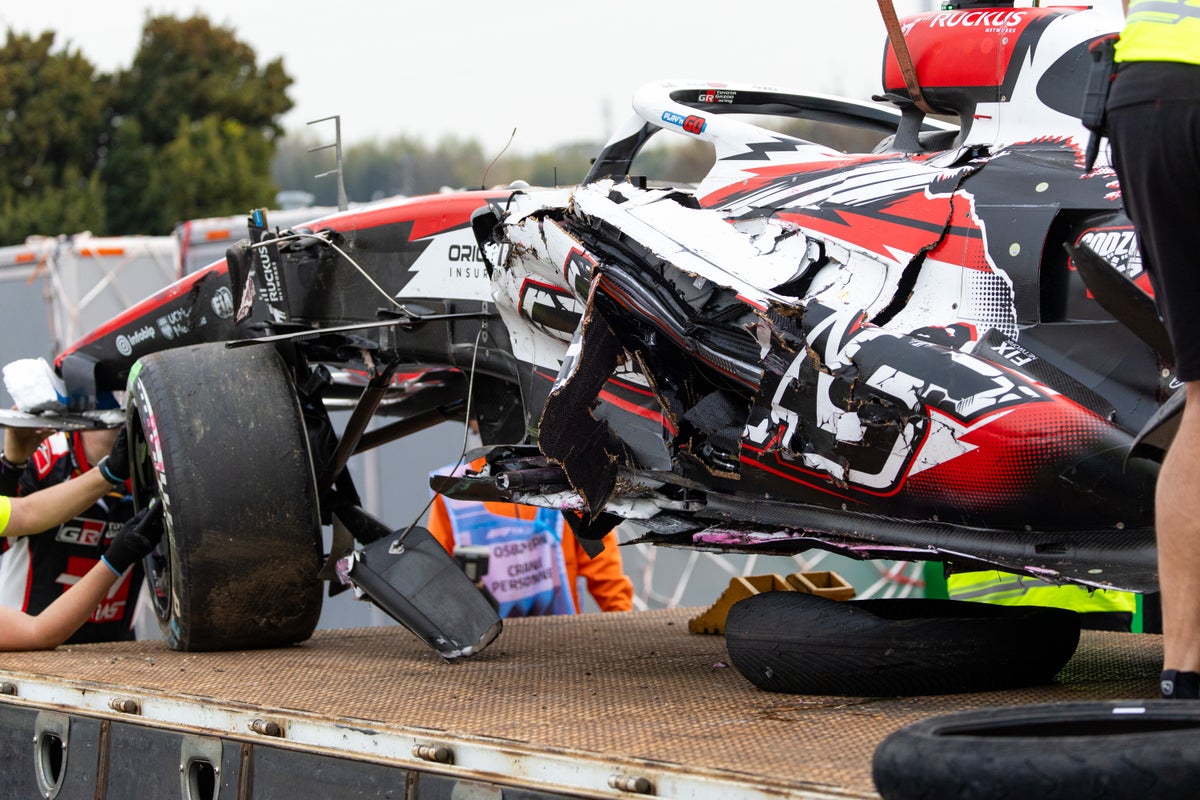
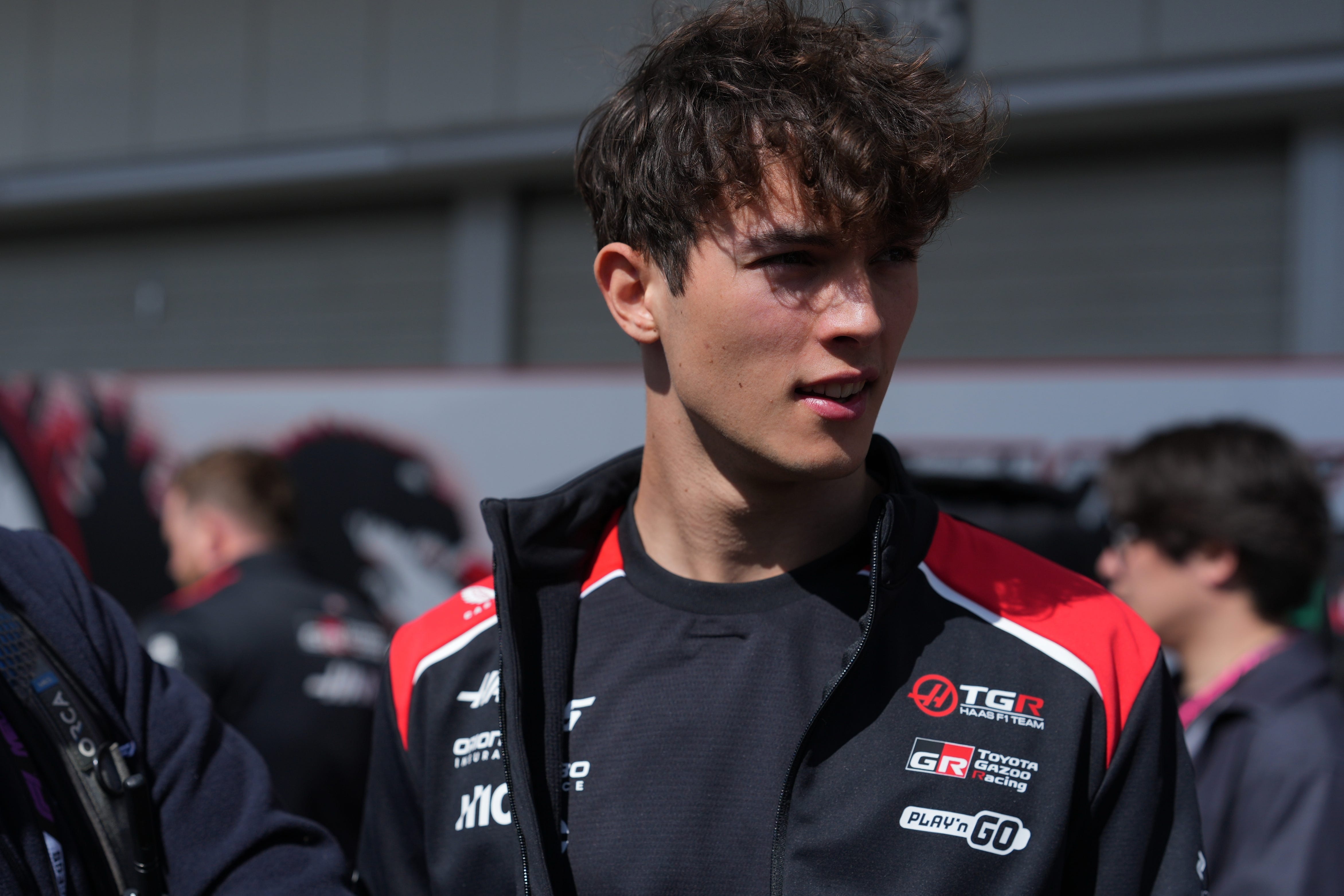
Ollie Bearman’s thunderous crash on lap 22 at Suzuka was, to put it in simplistic F1 colloquialisms, a “big one”. An impact with the tyre barrier measured at 50G – similar to Max Verstappen’s 2021 shunt at Silverstone – saw the 20-year-old limp away from his cockpit with the assistance of trackside marshals. When his car skated off track, his Haas VF-26 was doing an enormous 191mph.
Such are the brilliant advancements in driver safety over the last decade, most notably the “halo” device over the cockpit introduced in 2018, it is to F1 and the FIA’s credit that Bearman emerged more or less unscathed. Haas confirmed that the Chelmsford-born driver did not sustain any fractures, but did have a “right knee contusion”, effectively a bruised knee.
Thankfully, Bearman was seen walking around the Haas garage towards the end of the race, having been cleared by doctors at the medical centre. Further in his favour is the now five-week gap in the calendar, resulting from the cancellation of events in Bahrain and Saudi Arabia. It means he will have the requisite time to recover for the next race in Miami on 3 May, though we are yet to hear from Bearman himself after he was rightly allowed to skip his media duties post-race.
However, for some drivers, this accident felt like something of an inevitability. And it is the necessary shot across the bows for the sport’s executives.
“We’ve been very vocal on this – we’ve been warning that this kind of accident was going to happen,” said Williams’s Carlos Sainz afterwards. The Spaniard is a director at the Grand Prix Drivers’ Association (GPDA), the representative body. As such, he is well placed to speak on the matter – and spoke calmly but firmly in his post-race comments to Sky Sports.
“With these closing speeds, this was going to happen. Hopefully, we come up with a better solution given these massive closing speeds and [find] a better way of racing. We’re lucky there was an escape road [run-off area]. Imagine what would happen in Baku or Vegas [street tracks]. It was 50G, that is higher than my crash in Russia in 2016, which was 46G.
“I hope it serves as one example… the racing is clearly not OK.”
The wiliest F1 fox of them all, 44-year-old Fernando Alonso, even foresaw the issue on the grid before the race. “Overtaking these days is accidental,” he said. “You find yourself with a higher battery than the car in front and you either crash into them or you overtake them.
“It’s an evasive manoeuvre – not an overtake.”
This is exactly what occurred with Bearman. Eyeing a move on Alpine’s Franco Colapinto as they approached the high-speed Spoon Curve in sector two, the Briton was suddenly going 28mph quicker than the car ahead after using his energy deployment more efficiently, as well as boost mode for further speed. Not on a straight, but on a turn.
In a matter of seconds, Bearman took evasive action to avoid ramming the rear of Colapinto’s car. He swooped left, smashed into the polystyrene speed boards on the grass, spun back over the racetrack and into the wall side-on.
Most unusually, there was no long investigation from race stewards; no anger on team radio from either party or their bosses. It was quickly decided that nobody was at fault. Haas team principal Ayao Komatsu simply described the incident as “scary”.
Max Verstappen, amid his own issues at Red Bull and with a Guardian journalist in Japan, has regularly described this season’s new energy-focused regulations as like “Mario Kart.” On Bearman’s crash, the Dutchman compared the Briton’s sudden surge in speed to pressing the “mushroom” button on the popular computer game. Fun in a virtual setting; dangerous in the real world.
It is a much-needed tipping point for the 2026 cars and the Sunday spectacle. Three hours after the race concluded, the FIA released a lengthy statement acknowledging the crash’s “high closing speeds” and revealed that a “number of meetings are scheduled for April to assess the operation of the new regulations and to determine whether any refinements are required.”
This is a positive step from the sport’s governing body. The “spring break” allows all stakeholders to evaluate and amend. The much-criticised energy deployment can, to an extent, be tweaked in the rulebook. Fuel flow modifications could also be a solution.
Whichever road they go down, Bearman’s crash should be the stimulus. Change is afoot. Let’s see how the dial has shifted by Miami in May.
