

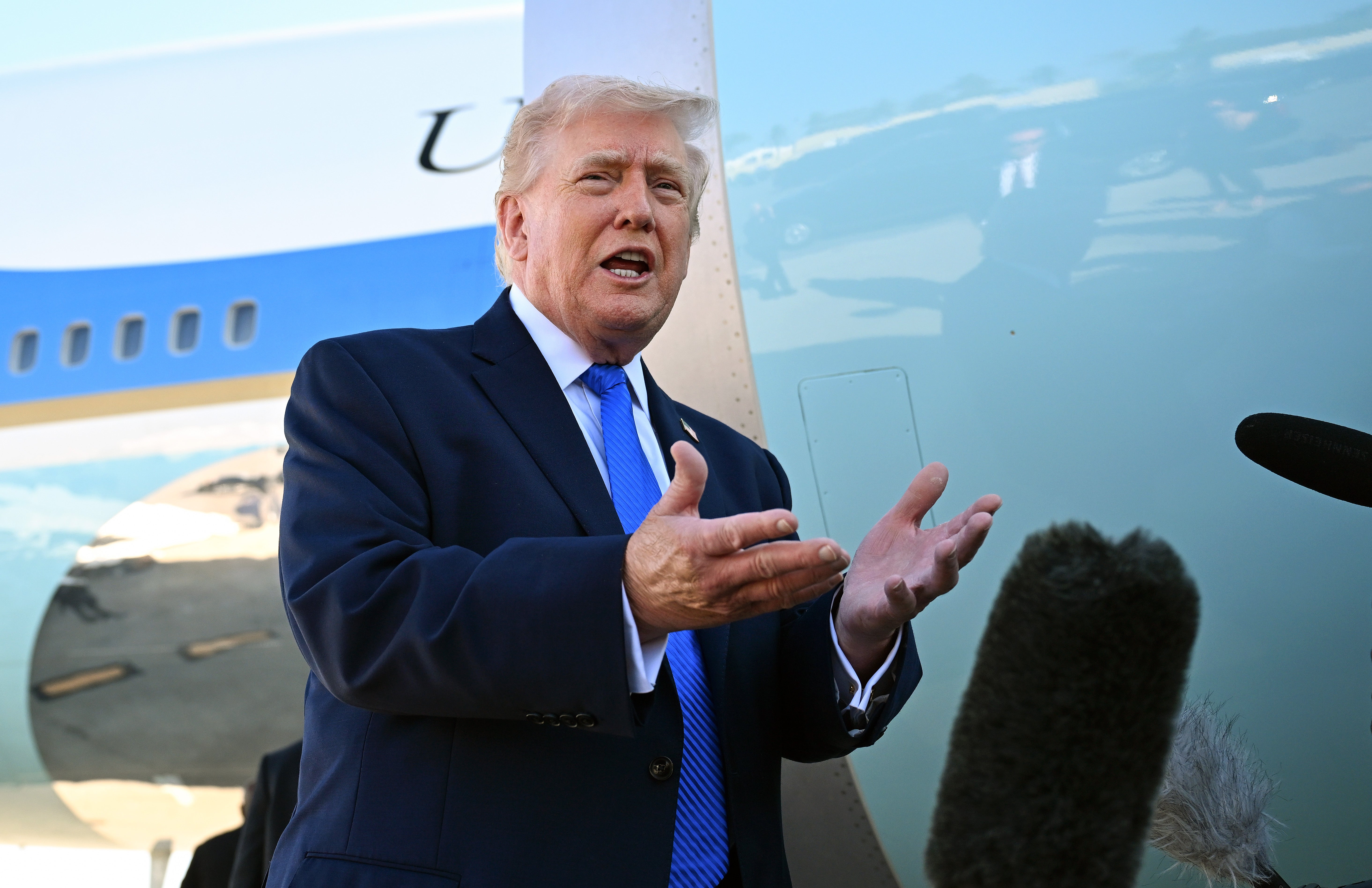
US president Donald Trump insists talks with Iran to end the ongoing war are progressing “very well”, after sending a “15-point action list” of demands via mediators.
But the United States has been unusually coy about the contents of the proposal and has yet to say who it is supposedly negotiating with, while Iran disputes that discussions are even taking place.
Rubbishing the plan this week, Iranian officials described the conditions as “excessive”, “maximalist” and “unreasonable”. Senior officials who reviewed the proposal felt it only served US and Israeli interests, a source told Reuters, though adding that diplomacy is still on the table.
Analysts have told The Independent that despite US boasts of success, the war will not be ended militarily, and one month since the conflict began, Iran feels it has the upper hand.
Eroded trust will make it harder for the US to make any breakthrough in diplomacy, they say, while an emboldened Iran will see any offer of truce as “surrender”.
What do we know about the 15-point plan?
The White House is yet to confirm what is in its 15-point plan, and details leaked so far have come from a mix of Iranian officials and media reports.
Intermediaries say the proposal covers restraints on Iran’s nuclear programme, enhanced monitoring by the UN’s nuclear watchdog, the dismantling of infrastructure and the handing over of existing enriched uranium. It would seek a permanent commitment from Iran never to develop nuclear weapons.
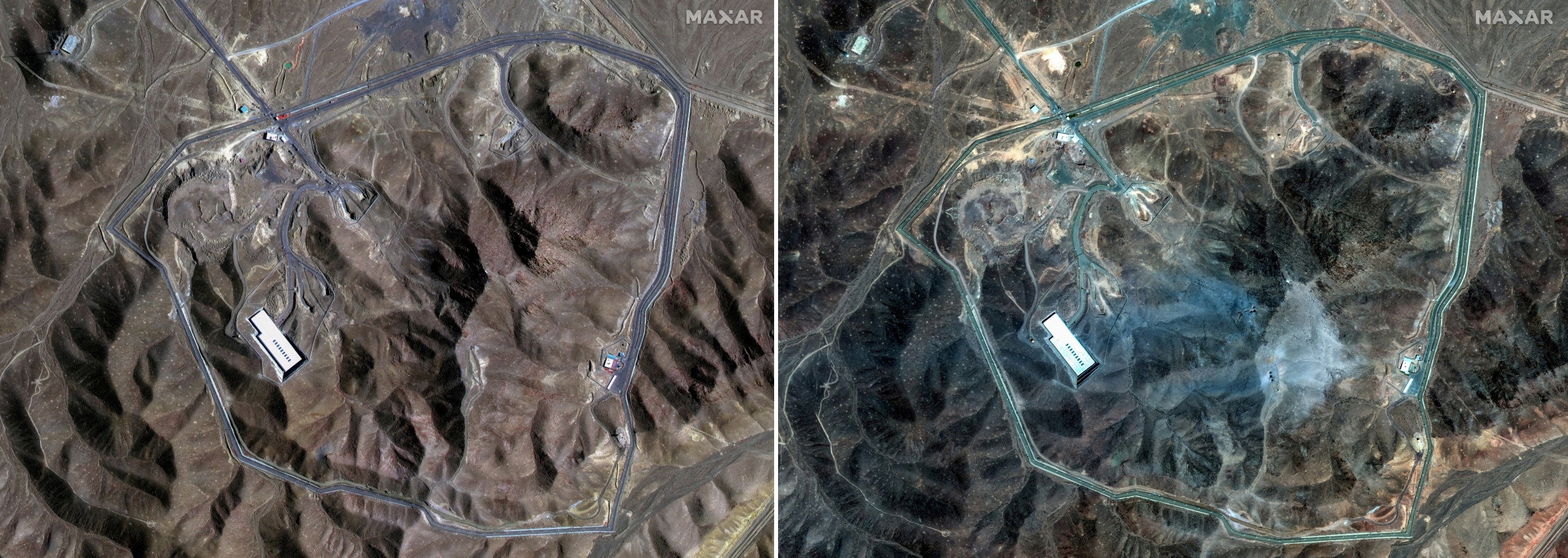
Dismantling infrastructure would include Iran getting rid of its nuclear sites in Natanz, Isfahan and Fordow, according to Israel’s Channel 12. All three were struck by the coalition forces last summer, but US intelligence assessed the strikes had only set back operations by months.
Iran would also no longer be able to enrich uranium in the country, and the International Atomic Energy Agency (IAEA) would be given assurances of the right to monitor remaining nuclear infrastructure. Reports make brief mention of how the US could assist Iran in building up a civilian nuclear power industry and remove sanctions.
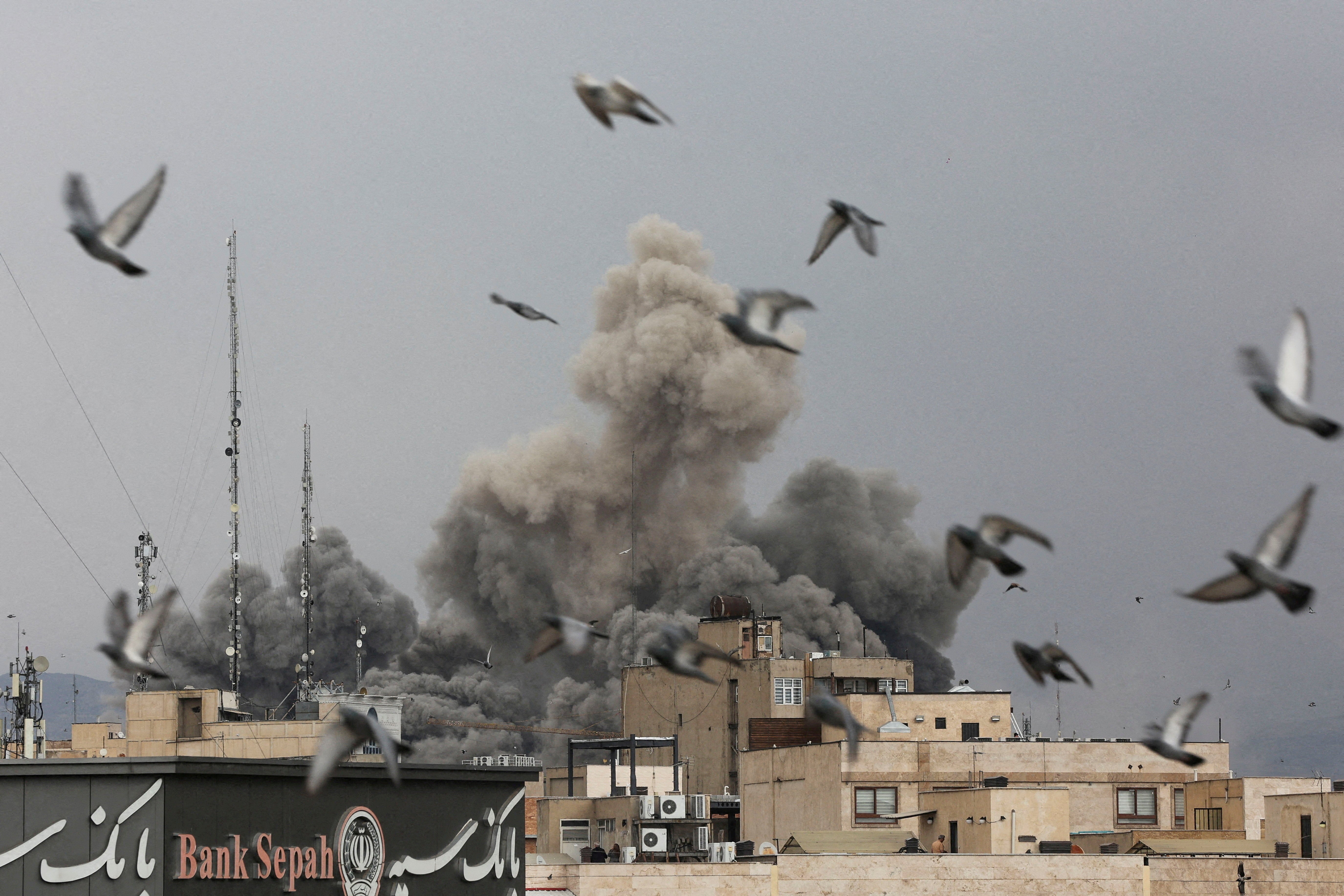
The plan, as reported, would also look to end Iran’s support for regional proxies and curb its ballistic missile programme, and move to end the war with a 30-day ceasefire and the reopening of the Strait of Hormuz.
Such a deal would be wider in scope than the discussions the US was holding with Iran earlier this year, aimed at resolving US-Israeli concerns about Iran’s nuclear programme. Similar talks were also held last year, before Israel attacked Iran.
Andreas Krieg, senior lecturer at the School of Security Studies at King’s College London, said that the demands outlined in the proposal are in line with what has already been tabled by the US on several occasions over the past year.
The difference this time is that “it comes against a backdrop of zero mutual trust and a geopolitical standoff where Iran has better cards to play than the US”.
He said the war has weakened the US’s bargaining position, as Iran has shown it has a “much, much higher” pain threshold than the US.
“Essentially, the US is offering a deal that Iran might have been able to accept as a foundation for negotiation prior to the war. Now that Iran feels it has the upper hand, it would likely ask for more and would be less ready to offer that much.
“Trump has essentially no alternative to a diplomatic settlement. There is no military way out for him. His offer is taken by Iran as surrender.”
.png)
How does the new plan differ from previous deals?
Analysts agree that the latest US offer is much wider in scope than the Joint Comprehensive Plan of Action (JCPOA), the previous deal limiting Iran’s nuclear programme in return for sanctions relief that was agreed between Iran, the US, the UK, France, China, Russia and Germany in 2015.
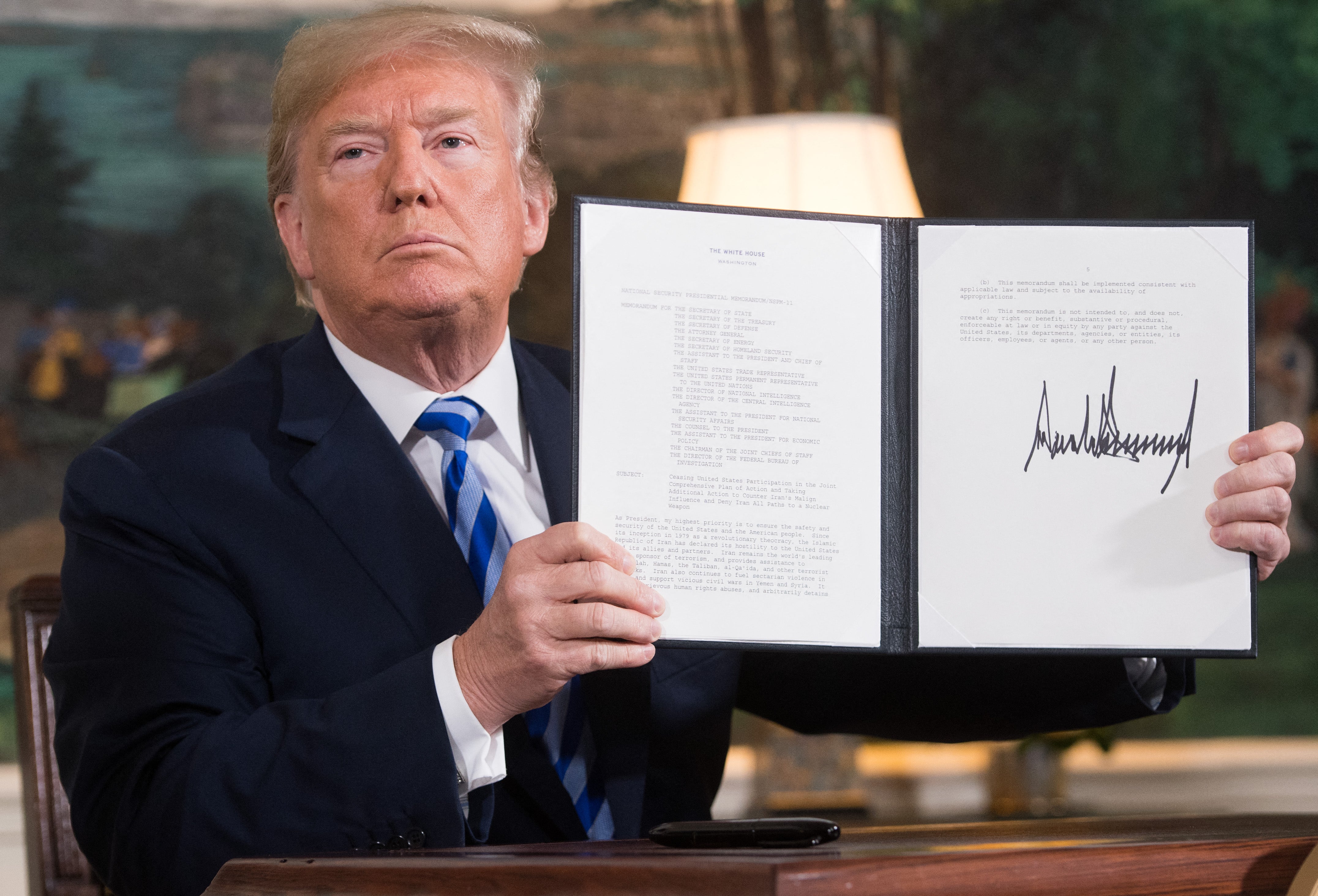
Trump withdrew from that deal in 2018, as he argued it failed to curtail Iran’s missile programme and regional influence.
Dr Burcu Ozcelik, a senior research fellow for Middle East Security, said that the reported proposals look broader in ambition.
“The latest debate over a diplomatic path is really the newest turn in what has become a quasi-theatrical, stunt-like saga about whether Washington is offering Iran a serious off-ramp or simply repackaging older hardline demands that were previously rejected by Tehran.”
“From what has been reported, the 15-point plan echoes positions the US has pressed before. If true, then this is not JCPOA-style diplomacy revisited so much as a more maximalist set of terms that Tehran is bound to reject,” she told The Independent.
“The JCPOA was narrowly centred on the nuclear file and verification. What is now being described goes well beyond that and cuts into the military and regional pillars of Iran’s power.”
The deal signed in 2015 aimed to ensure Iran’s nuclear programme remained exclusively peaceful. It gave a timeline for the lifting of nuclear-related sanctions.
Some sanctions remained in force, such as embargoes on arms and ballistic missiles for several years and restrictive measures against a number of sanctioned individuals.
The JCPOA aimed to rein in Iran’s ability to enrich uranium, cutting the number of gas centrifuges by two-thirds and forbidding it from enriching beyond 3.67 per cent purity for 15 years.
Like the new proposal, it also aimed to ensure the IAEA would have full access to declared sites and the ability to investigate suspected undeclared sites.
Proponents said the deal would help prevent a revival of Iran’s weapons programme and reduce the prospects for conflict. Opponents said it would only delay Iran from building a bomb, while sanctions relief would enable it to fuel terrorism in the region.
The IAEA said in 2016 that Iran was meeting its pledges, before Trump withdrew in 2018, saying the deal failed to address Iran’s missile programme and proxy warfare in the region. Iran accused the US of reneging on its commitments.
As such, diplomatic efforts since have focused not only on addressing Iran’s nuclear programme but also its ballistic missiles and influence over armed groups.
Will Iran accept the new offer?
Jason M Brodsky, policy director at United Against Nuclear Iran (UANI), told The Independent that Trump appeared to be eyeing a much more “expansive” deal, which Iran is defying while it believes it has the upper hand.
“President Trump’s 15-point plan is completely different from the JCPOA,” he said. “The JCPOA was a narrowly tailored arms control agreement, which traded temporary constraints on Iran’s nuclear programme in exchange for permanent sanctions relief.”
The new plan, he says, “is more expansive and restrictive on the Iranian regime. Right now, Iran’s regime is publicly defying President Trump’s plan because it thinks that it is winning – and its narrative of victory is being amplified by many in the West.
“Under these conditions, it seeks to create more deterrence to break the war, negotiations, ceasefire, and war again dynamic. But as the regime is prone to do, it will likely overplay its hand.”
Dr Ozcelik warned that while the US may have more “coercive power” over Iran after a month of conflict, “this is only one part of the overall assessment”.
“Coercive power does not automatically convert into actionable diplomatic leverage, especially as Iran has demonstrated that both its threat and exercise of asymmetric warfare tactics have successfully spooked global markets.
She said the approach could still be a “classic Trumpian negotiating tactic”, serving as a rough starting point for talks in which US negotiators later make concessions.