Any standup will tell you: to make it as a comedian, you first need to find your angle. For a young Bill Bailey, then a long-haired, goateed Glastonbury fanatic, it didn’t take much searching. “I was portrayed as this sort of bewildered hippy who just exists on a different plain, out in the woods somewhere. And it wasn’t quite true!” he tells me. “But it wasn’t a million miles off.” Bailey would go on stage interspersing absurdist musical routines with material about sneaking into festivals and rolling spliffs. Today, as he sits down to talk to me about his latest project – Extraordinary Portraits, the returning BBC series about fine art – it’s hard to shake the sense I’m looking at a very different animal.
He is, he jokes, “much more suave and sophisticated” now. To anyone who knows Bailey from his old standup, his role as the docile oddball Manny on the sitcom Black Books, or even his triumphant 2020 stint on Strictly Come Dancing, the most immediately obvious change is his hair: gone are the shaggy record-shop-proprieter locks that for decades defined the Bill Bailey look. “I remember I was on a crowded Tube and the doors closed on the back of my head, trapping my hair; I had to sort of style it out until the next station,” he recalls. “I thought, ‘Yeah, maybe this is a sign.’” By the end, he adds, it had “become a bit unruly, to the point where I’d see photos of myself at a smart family function, and think, ‘Oh my God, some dodgy old bloke from the fairground’s made his way into the wedding.’”
Hair or no hair, Bailey in all other ways seems much the same as ever. He’s genial and inquisitive, tempering his natural whimsy with enough world-weariness to avoid crossing over into twee. In many ways, he is the perfect choice for Extraordinary Portraits, a programme that requires both a light touch and an underlying sensitivity. In each episode Bailey meets a noteworthy member of the public, an “everyday hero”, whose likeness is then captured by a professional portrait painter. (Or, in one instance, a sculptor.)
There is, Bailey says, a democratising element to the premise – taking an artform historically gate-kept by the wealthy elite, and re-appropriating it for the ordinary man or woman in the street. “We film in Kelmarsh House, this beautiful old house in Northamptonshire. And the walls are covered with old portraits – all of men, who were important in some way. And that’s really what portraiture was about, the great and the good, the well-connected, the wealthy aristocracy or the monarchy. And this show flips that on its head.”
The new series of Extraordinary Portraits begins with what may well be its most affecting episode to date. titled “I Tackled a Terrorist with a Narwhal Tusk”. Bailey commissions a sculpture of Darryn Frost, the civil servant who risked his life to intervene in a terrorist attack near London Bridge in 2019. As we watch the sculptor Nick Elphick get to know his subject, we see the huge, traumatic impact the incident had on Frost’s life.
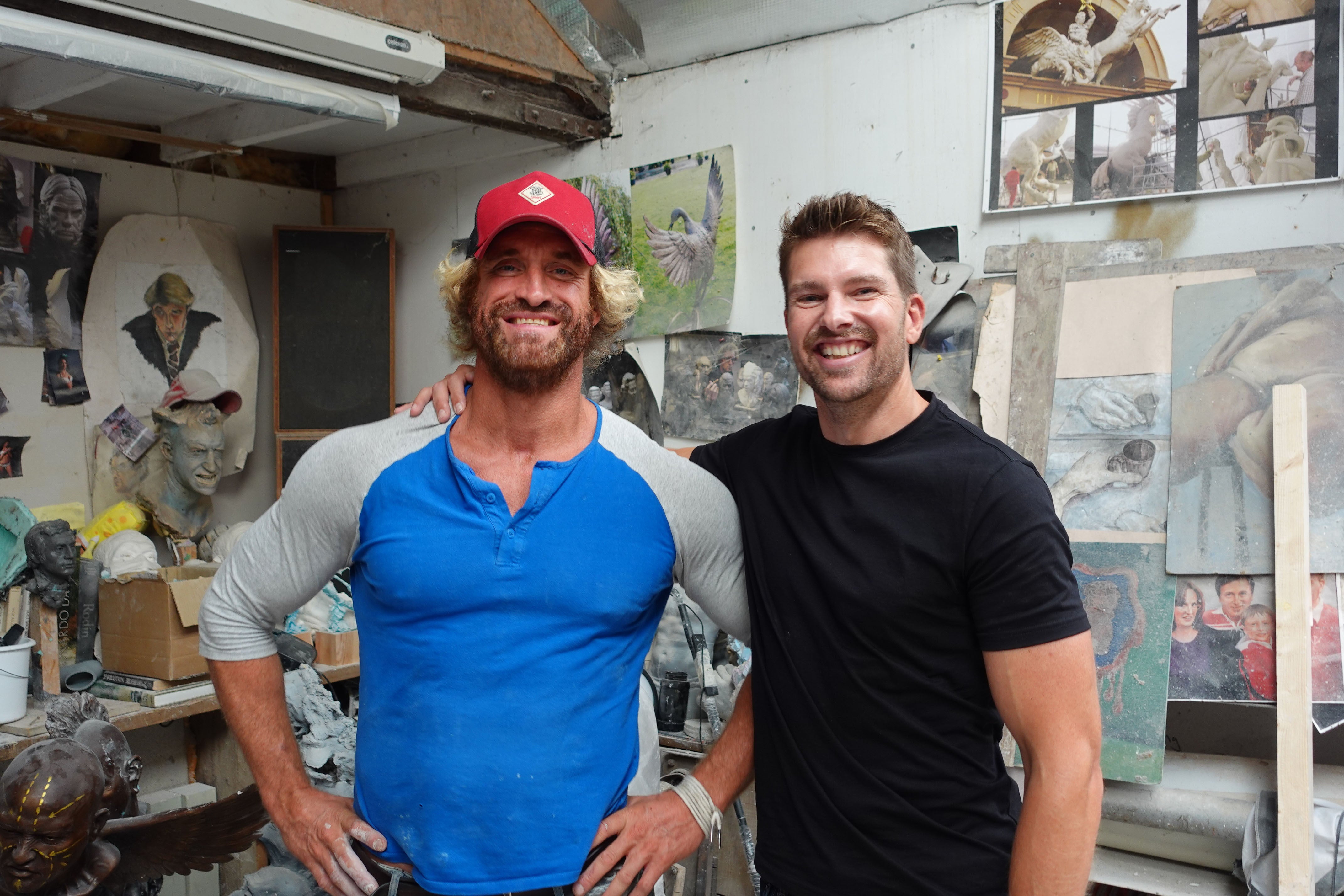
“Darryn was very articulate and measured, and talked about it with great compassion and self-deprecation,” Bailey says. “It affected him so deeply. He didn’t even realise how deeply. And it started to manifest itself in a lack of memory. He wasn’t able to remember what someone had just said to him. But he can remember in forensic, molecular detail – like 4K video – exactly what happened [during the attack].”
When Frost is finally confronted with his own sculpture, the effect is overwhelming. “It was extraordinary,” says Bailey. “He became extremely emotional, and suddenly the whole weight of that was lifted. It was immensely powerful.” Bailey seems moved even now, just speaking about it.
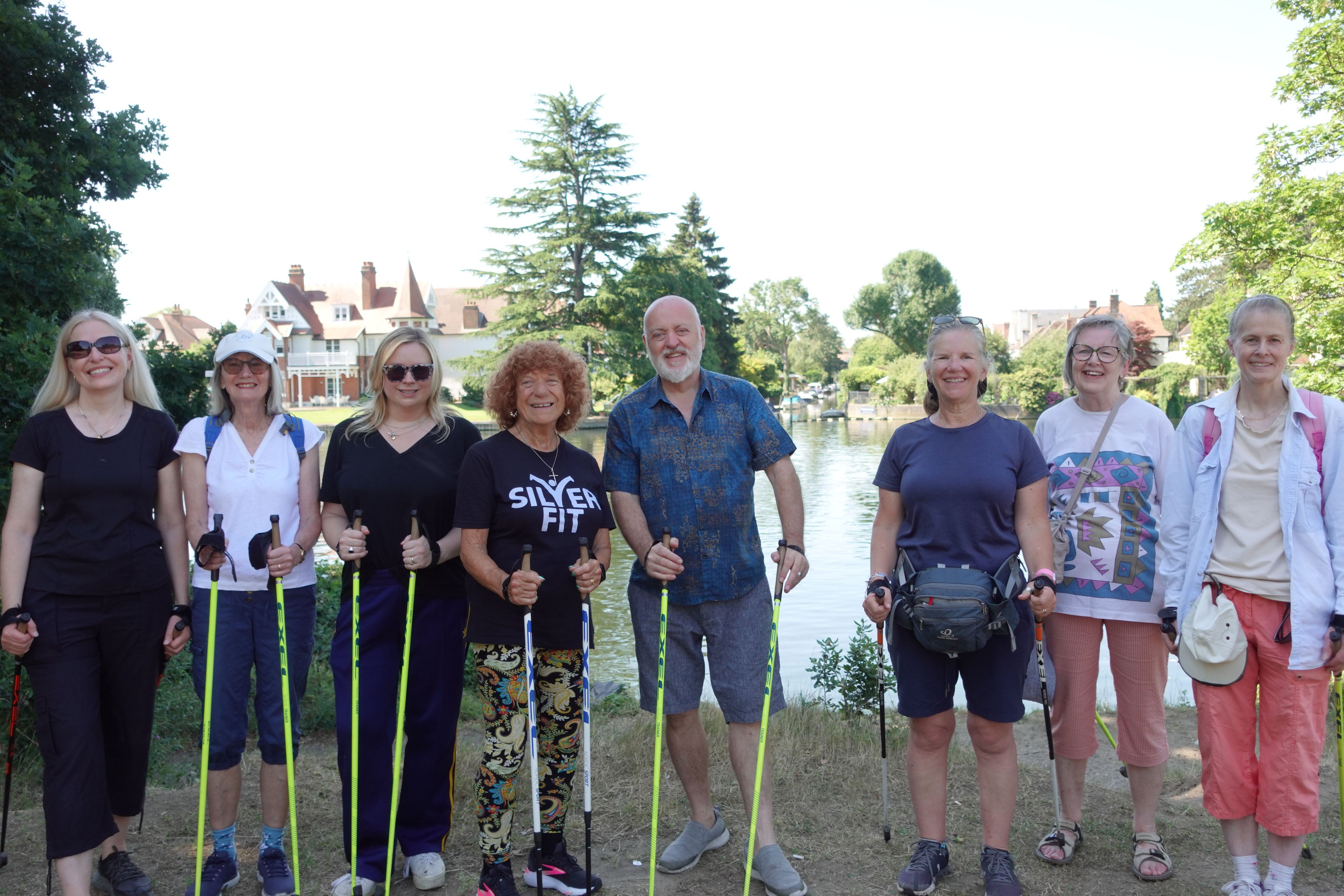
Frost may be the most unusual case study – not so much everyday heroism as rare, potentially life-saving valour – but every one of Bailey’s subjects has a worthwhile story to tell. Eddie Brocklesby is another – an octogenarian woman and late-in-life Iron Man triathlete who has successfully championed exercise schemes for older people. In a sort of light, uplifting way, her episode probes ideas around ageing, a subject Bailey thinks about a lot. “I’m just aware of the passing of time,” he says. “And time is precious. I feel that more acutely now.”

Watch Apple TV+ free for 7 day
New subscribers only. £9.99/mo. after free trial. Plan auto-renews until cancelled.
Try for free
ADVERTISEMENT. If you sign up to this service we will earn commission. This revenue helps to fund journalism across The Independent.
Watch Apple TV+ free for 7 day
New subscribers only. £9.99/mo. after free trial. Plan auto-renews until cancelled.
Try for free
ADVERTISEMENT. If you sign up to this service we will earn commission. This revenue helps to fund journalism across The Independent.
Tempus fugit indeed. It’s now been a little over 61 years since Bailey was born – in Somerset, to an NHS GP father and a hospital nurse mother – and more than four decades since he broke through on the comedy scene. He’s been with his wife, Kristin, for decades too, having married spontaneously in Indonesia in 1998; they share a son, and live in west London in a house filled with unusual pets (armadillos, chameleons, cockatoos). You’d have to go back even further to find the genesis of Bailey’s work: it became clear in teenhood that he was a gifted musician with perfect pitch, and it was, in hindsight, inevitable when he started incorporating dextrous musical pastiches into his act.
Today, this act bears many of the same Bailey hallmarks, alongside his attempts to wrestle with the cultural paradigms of the modern era. This includes generative AI, which Bailey has experimented with – and picked apart – on stage. “There’s been so much slop, as people call it,” he says. “AI videos that get pinged around on social media. And it’s just annoying, and wearying, and also just like… cringe, really. I think people are generally feeling that the great fear that it was going to replace everyone hasn’t materialised.”
Bailey’s forthcoming stage show, Vaudevillean, is an attempt to recapture the specific joy of live performance in the face of things like AI. “Comedically, I think that AI is a dead end, really,” he says. “It’s self-parody. And of course the negative effect of that is when you see an amazing thing online, people just go, ‘Well, that’s just AI. It’s not real.’ But when people go along to a live show, they see something happening right in front of them. That’s a rare commodity, and that should be celebrated.”
There’s always been something of the vaudevillian showperson about Bailey, of course – perhaps this is the key to understanding his success on Strictly in 2020, when he became, at 55, the oldest contestant to lift the glitterball trophy, having won the competition with the professional dancer Oti Mabuse. Brushing aside any suspicions that his involvement would fall under the banner of “novelty act”, he became, through sheer skill and enthusiasm, a competitor who went the distance.
In the past few years, of course, Strictly has been beset by scandals, several of which involve the mistreatment of contestants. What did Bailey make of all this? He thinks for a second, and seems to pick his words carefully. “I think that it’s difficult for me to compare my experiences,” he replies. “When I did it, it was during the pandemic, and that was a very unusual version of it. We danced, we trained, and went home. There was nothing else. It was intense. I don’t really know the people that were involved in it, but it was a great experience.”

“I think it’s a shame that it’s gone through all these supposed scandals and tabloid stories, because I suppose, in essence, it’s a simple idea. You get some people and you teach them to dance, and get them to fall in love with it. And that’s exactly what happened to me.”
Between Strictly, Extraordinary Portraits and the raft of other TV gigs Bailey has taken on in recent years, it sure feels like he’s come a long way from the counterculture. Last year, he was awarded an MBE. I wonder what Bailey’s younger self would make of this new iteration.
He mentions a time a few years ago, when he was invited to make a speech at the Royal Institute of Chartered Surveyors. It was to mark the centenary of the death of Alfred Russel Wallace, the originator of the theory of evolution, whom Bailey had made a TV programme about. It was also the weekend of Glastonbury.
“I was preparing for this speech I had to give, and got phoned up randomly by someone on site at Glastonbury, who assumed I was there,” Bailey says. “They said, ‘Bill, are you coming up the teepee field?’ And I said, ‘No, I’m not. I’m not at Glastonbury… I’m giving a speech at the Royal Institute of Chartered Surveyors.’
“Long silence on the phone. All you could hear was bongo drumming and f***ing dancing in the background. And it was just like, ooh, you’ve changed.”
He smiles, and sort of mock-dramatically thumps his chest. “Not inside, though,” he adds. “I’m still a hippy at heart.”
‘Extraordinary Portraits’ airs Fridays at 7.30pm on BBC One