


A South Korean missile system built to intercept North Korean artillery has become one of the most sought after defence hardware for Gulf nations amid the ongoing US-Iran war.
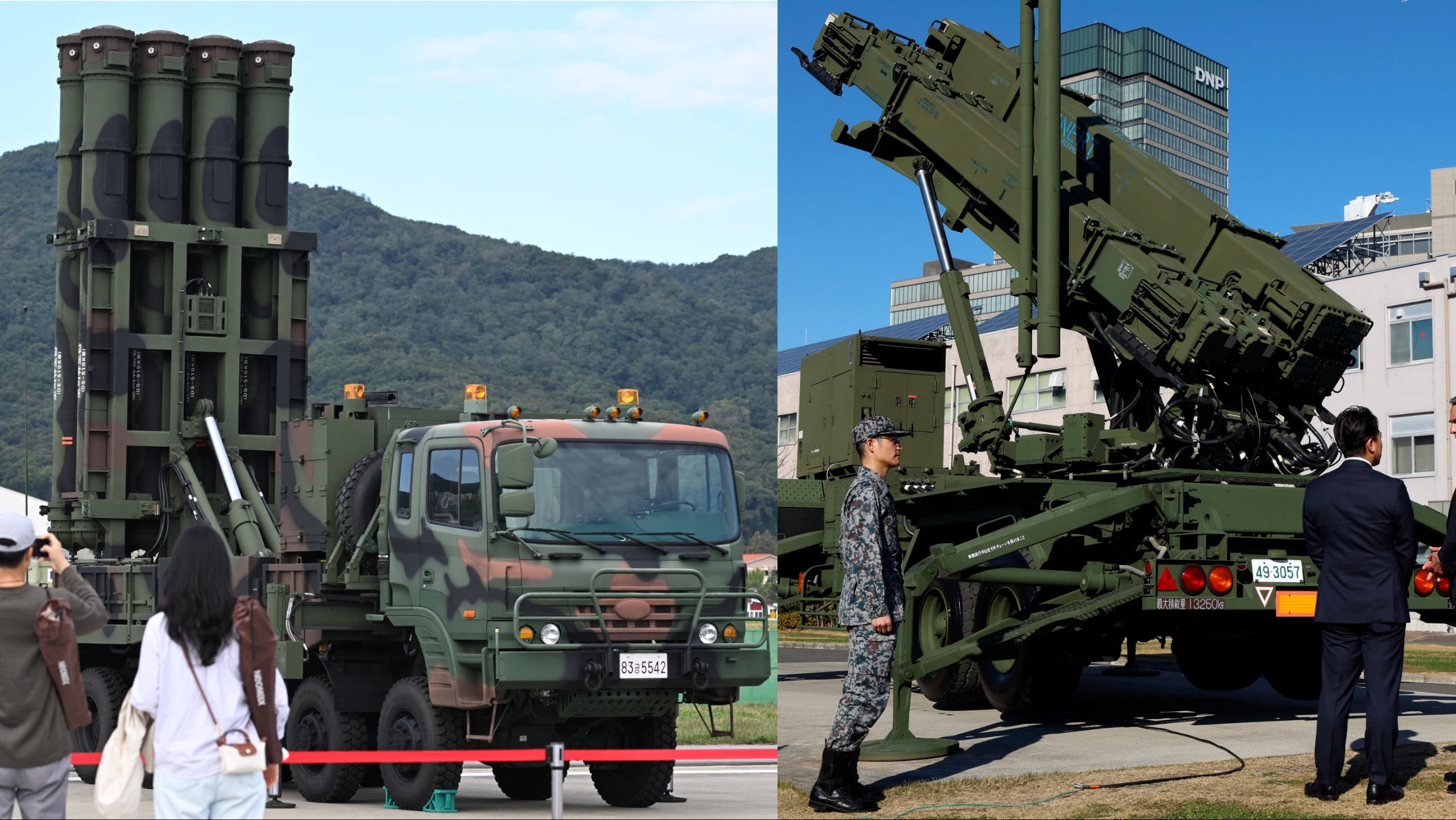
Seoul’s homegrown, medium range, surface-to-air missile Cheongung, also known as M-SAM Block II, scored a reported interception rate of 96 per cent against Iranian missiles that were fired at the United Arab Emirates.
The Nato-standard missile interceptor, which rivals capabilities of the US-made Patriot PAC-3 system and produced at just a quarter of its price, has sent Arab nations scrambling for the defence hardware.
“Middle Eastern countries are lining up to buy South Korean missiles right now,” South Korea’s finance minister, Koo Yun Cheol, told Bloomberg News. “They are requesting weapons from South Korea because of their accuracy – the fact that they destroy ballistic missiles with a success rate of over 90 per cent.”
The minister, however, did not specify which countries were in the race for securing more supplies.
Even though Patriot and Terminal High Altitude Area Defence (THAAD) systems are deployed to the Middle East to counter Iran’s missiles and drones, demand is increasingly shifting toward South Korea’s cheaper, faster-to-deliver interceptors, which also reflects a broader push to reduce reliance on US weapons.
The UAE was the first nation to import and operate Cheongung batteries, signing a $3.5bn deal in 2022 with South Korean firms LIG Nex1, Hanwha Systems, and Hanwha Aerospace for 10 units. The move was followed by Saudi Arabia and Iraq in 2024, with each signing agreements to acquire the air defence platform.
The interception earlier this month marks the first known combat use of a South Korean-made air defence system deployed overseas. Abu Dhabi has since pushed to fast-track delivery of the remaining batteries and separately requested 30 more interceptors, which saw this month’s airlift from Daegu.
However, Seoul has signalled it cannot easily speed up deliveries, constrained by existing production commitments.
“The Iran war is mostly about firing missiles and defending against them as politicians are reluctant to send in ground troops over fear over mass casualties . . . therefore the importance of anti-missile defence systems is increasing as Iran continues to fire waves of missiles and drones,” Kim Ho-sung, professor of advanced defence engineering at Changwon National University, told the Financial Times.
The Cheongung-II battery is designed for speed and simplicity, built around four launcher vehicles, with each carrying eight launch tubes, that are supported by a multifunction radar and an engagement control station. The system has a maximum range of about 40km and can intercept targets at altitudes below 15km-20km – around the same range where Iranian ballistic missiles and drones have been operating.
The interceptor costs about 1.5bn won or $1m, according to reports. A Patriot missile PAC-3 made by Lockheed Martin in the US is sold for $4m.
While deliveries of the PAC-3 can take four to six years, South Korea’s LIG Nex1, despite facing a sizeable backlog, is ramping up capacity and could boost output within nine to 12 months by running double shifts, according to Nomura analyst Eon Hwang. Lockheed Martin said it plans to scale production to more than 2,000 units annually only by 2030, with output this year expected to reach about 650.
South Korea’s missile interceptors are particularly effective against Iranian systems because Tehran and Pyongyang have shared missile technology since the 1980s. Iran’s Shahab-3 ballistic missile, for instance, was developed from North Korea’s Nodong missile.
Experts caution that recent interceptions in the UAE are no guarantee South Korea’s missile defence would perform as effectively against a North Korean attack.
“Iran’s older missiles resemble North Korea’s, but North Korea’s latest systems are far more advanced,” Yang Uk, a research fellow at the Asian Institute for Policy Studies told the Korea Times. “Missiles such as the KN-23 and KN-24 can perform evasive maneuvers, and none of the missiles Iran launched this time had that capability.”
Seoul has recorded around $55bn in defence sales over the past four years and currently ranks 10th globally in arms exports, which includes Cheongung, K2 Black Panther main battle tank and K9 Thunder self-propelled howitzer.
The Export-Import Bank of Korea claims arms exports to the Middle East rose from about $240m in 2019 to about $740m in 2024, more than tripling over five years.
Korea has become the world’s ninth-largest arms exporter, with a three per cent market share, according to the Stockholm International Peace Research Institute. About 60 per cent of Seoul’s defence exports from 2021 to 2025 went to Poland, which has sharply ramped up military spending in response to Russia’s war in Ukraine.