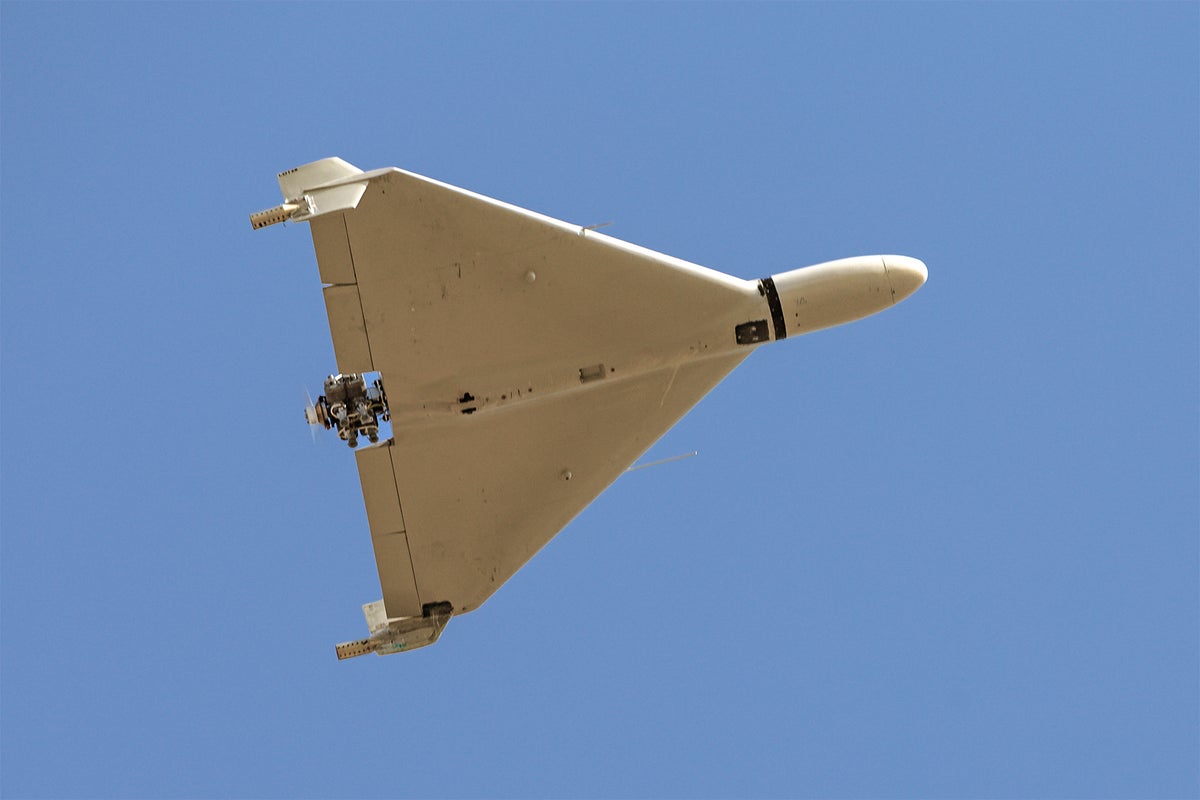
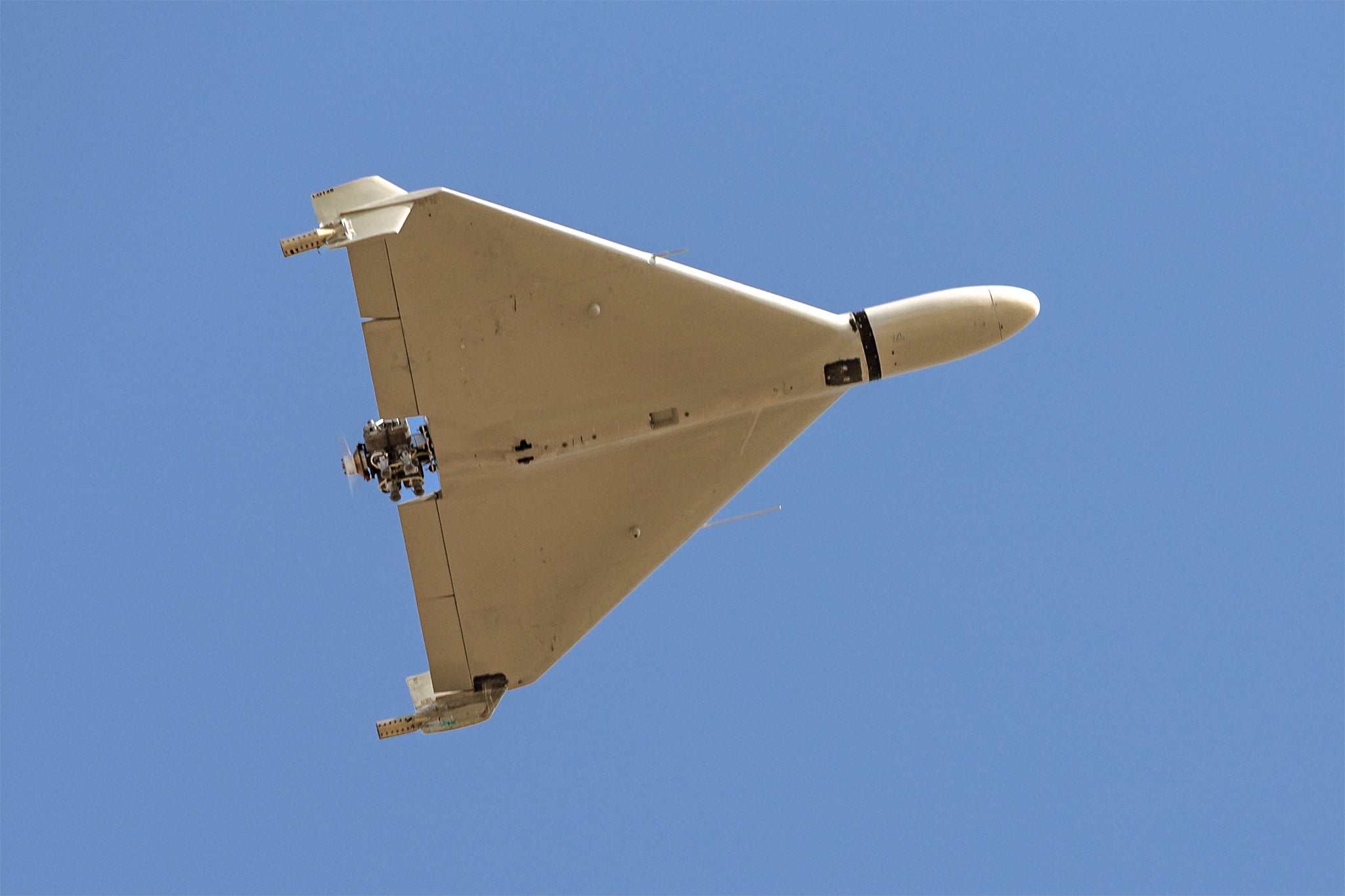
British troops shot down 14 Iranian “kamikaze” drones targeting allied bases in Iraq as Tehran stepped up attacks across the Middle East on Tuesday.
The ministry of defence said the defensive action marked the largest number of drones destroyed in a single night since the US and Israel began joint military action against Iran more than three weeks ago.
Defence secretary John Healey told ministers at Tuesday’s Cabinet meeting that a counter-drone team had intercepted the drones, which were used to attack the Erbil base in northern Iraq. British and American troops are housed at the base, which has previously been targeted.
A defence source said: “Where we have UK forces operating the Rapid Sentry system, they shot down 14 one-way attack drones just in one night last night, I mean, hugely impressive action, and that is the largest number that they’ve shot down in a single night.
“What we’re seeing is the rate of attacks last night returning to the norm that we’d seen pre-Eid,” the defence source said, referring to the Islamic Eid al-Fitr celebration at the end of last week.
Specialist troops from the RAF Regiment used the UK’s Rapid Sentry air defence system to defeat the unmanned aerial vehicles (UAVs).
Defence chiefs said two weeks ago that several UAVs targeted the camp and caused injuries to US troops.
Mr Healy told ministers that British forces had defended allies in Israel, Saudi Arabia, Kuwait, Bahrain and Jordan overnight, and that UK pilots had flown nearly 900 hours defending British interests and allies since the war began.
A kamikaze drone is designed to fly to a target area, loiter, and crash into a target to explode. They are designed for single use.
In an update on Tuesday, the ministry of defence also said that additional British Army Stormer air defence systems armed with “state-of-the-art missiles” had arrived in Cyprus to further strengthen air defences in the region.
Royal Air Force Typhoons and F-35 jets had continued their defensive missions overnight on Monday, including over Cyprus, Jordan, and Qatar, the ministry also said.
In a post on social media, it said: “Force protection measures in the region continue to be at the highest levels – ensuring UK personnel are as safe as possible. We are also working closely in co-ordination with allies.”
It comes as Rachel Reeves indicated on Tuesday that millions of British households would receive no help from the government with soaring energy bills due to the war in Iran, but would offer targeted support “to those who need it most”.
The chancellor said targeted support wouldn’t be unveiled for another month, as she admitted that the conflict in the Middle East would create “significant” challenges for the UK economy.
She said she also intended to meet with supermarkets and banks to discuss how they can help customers struggling with increased prices.
Elsewhere, it was reported that the UK is considering plans to send a Royal Navy ship as part of an international effort to hunt and destroy mines in the Strait of Hormuz.
The government is said to be leading coalition efforts between nations including France and the US to help ships move through the key oil route, which has been blocked amid war with Iran.
Plans could include sending a Royal Navy ship or leasing an commercial vessel to carry autonomous uncrewed systems to hunt the mines, which officials believe have been laid in the Strait of Hormuz.