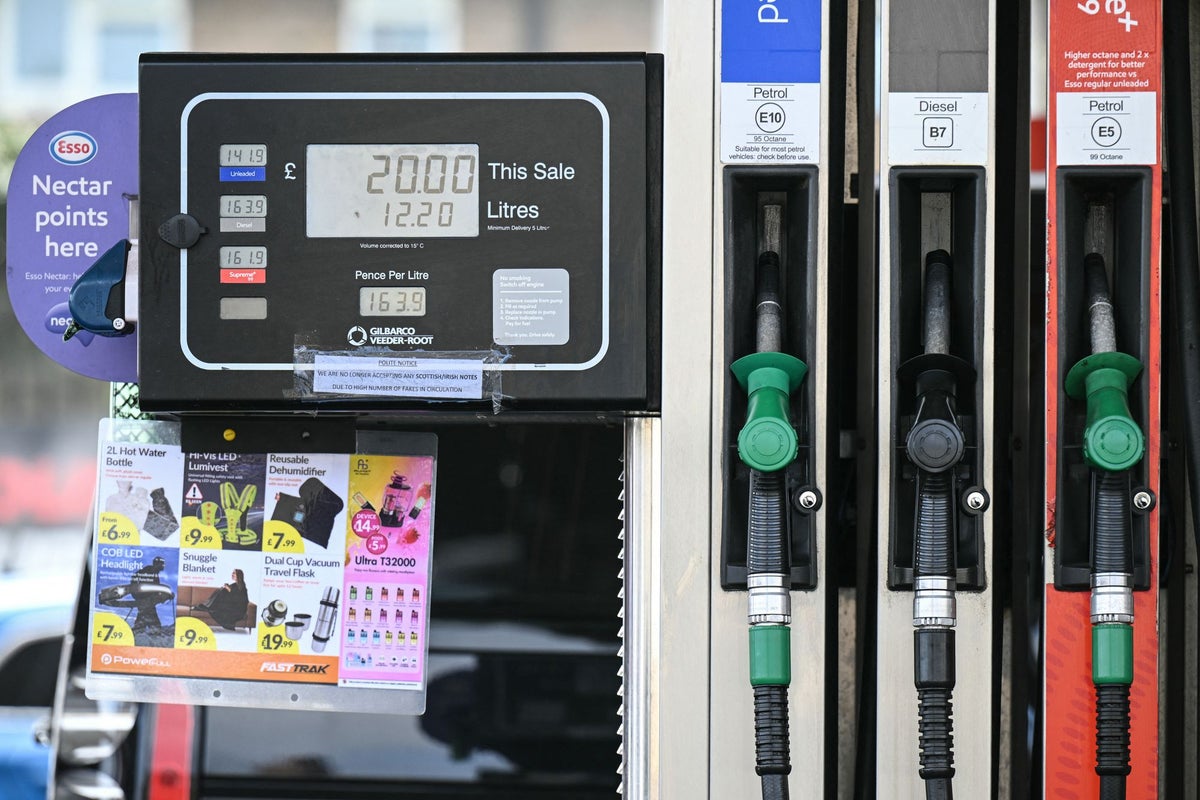
Drivers have been hit with a fresh blow as petrol and diesel have risen in cost again, new figures from the Department for Energy Security and Net Zero show.
On 16 March, the average price of unleaded petrol at pumps in the UK was 140.28p per litre. For diesel, the average price stood at 158.78p per litre.
Today, the department announced the average price on 23 March was 144.16p for unleaded and 166.88p for diesel.
That is a weekly rise of 3.9p for unleaded and 8.1p for diesel.
The rise in fuel prices comes amid the continued energy crisis sparked by the US-Israeli war with Iran.
Tehran is blockading the Strait of Hormuz, stopping the flow of oil through a vital shipping route leaving the Middle East.
However, motorists should not drive slower nor buy fuel differently because of the oil crisis, an energy minister has said.
Michael Shanks said British drivers did not need to change their habits, despite suggestions from the International Energy Agency (IEA) aimed at conserving fuel.
The IEA has advised motorists across the world to reduce their speed on highways, share rides and work from home when possible to reduce how much petrol or diesel they use.
Asked by Times Radio if British drivers should change their habits, Mr Shanks was a told the broadcaster: “They should do everything as absolutely normal because there is no shortage of fuel anywhere in the country at the moment.
“We monitor this every single day, I look at the numbers personally. There’s no issue at all with that.”
The minister added: “People should go about their business as normal. That’s what the RAC and the AA have said. It’s really important people do that.
“There’s no shortage of fuel and everything is working as normal.”
War in the Middle East has helped stall growth in the UK’s private sector this month, with disruption leading to shipping delays and a rapid rise in inflation for firms, according to new figures.
The S&P Global flash UK composite purchasing managers’ index (PMI), which is watched closely by economists, recorded a reading of 51.0 in Match, down from 53.7 in February.
Activity was nevertheless in growth territory, which is signified by any score above the 50.0 threshold.
But the score marked a six-month low, and businesses reported that the US-Israel war with Iran had hit customer demand, input prices and supply chains during the month.
With fuel prices rising and pressure building on household budgets, you can put your questions directly to our personal finance expert. Join our live cost of living Q&A and get advice on everything from petrol costs to mortgages, bills and savings.