
New homes will be built with solar panels and heat pumps, while plug-in solar will be in shops “within months” for existing homeowners, the Government has announced.
Ministers also unveiled plans for energy companies to offer discounted bills to people living in areas with wind farms on windy days when operators would otherwise be paid to turn off due to network constraints.
It is the latest in a series of announcements from the Government doubling down on its clean energy drive in response to the Iran war which has sent fossil fuel prices soaring, and raising the spectre of high prices at the pump and rising home energy bills later this year.
The Government said plug-in solar panels, which can be run into the home network using an ordinary plug and which are common in places such as Germany, where people hang them on balconies or fences, would soon be in the shops.
Officials said they were working with retailers such as Amazon and Lidl, alongside manufacturers including EcoFlow, to bring them to the UK market – so shoppers could soon see solar panels in the “middle of Lidl” aisle and other outlets.
The panels cut the amount of electricity being drawn from the grid, lowering bills and helping reduce the UK’s dependence on volatile fossil fuel markets for its electricity supplies, the Department for Energy Security and Net Zero (DESNZ) said.
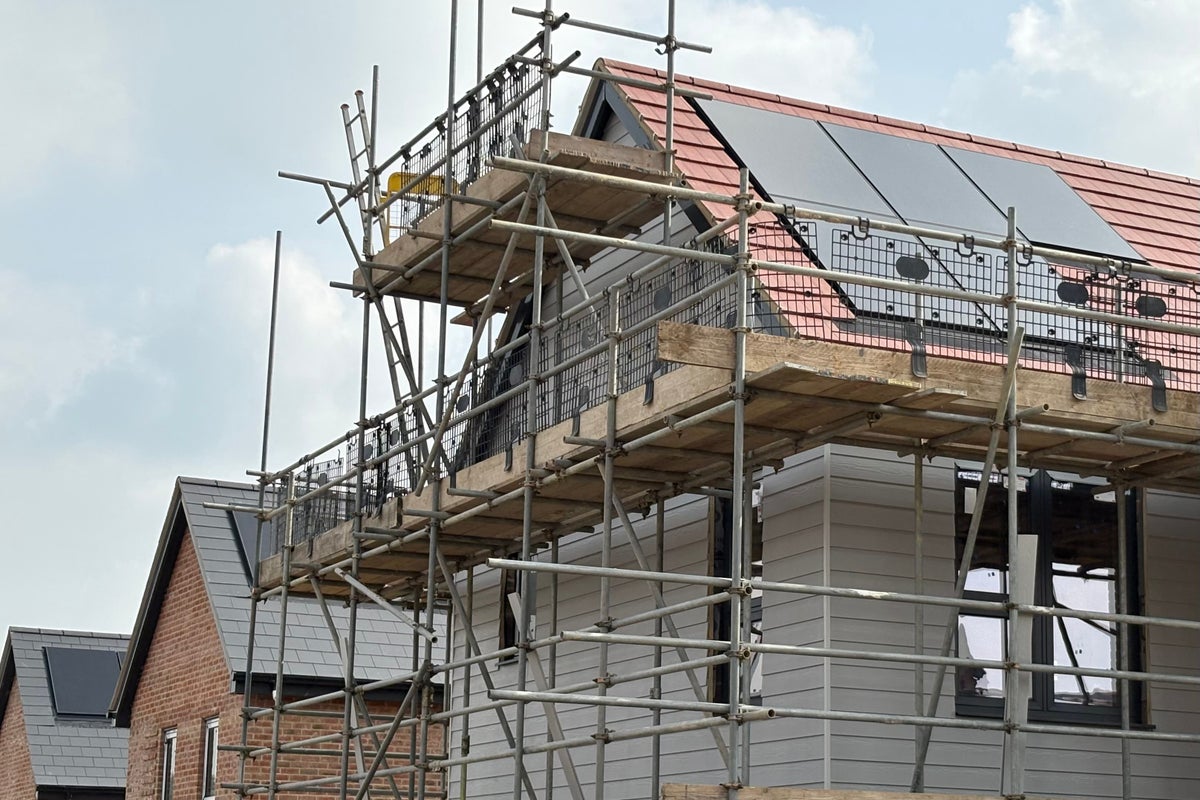
The move to speed up the delivery of plug-in solar is happening as new rules come into force to implement the “future homes standard”, building regulations that will make solar panels and clean heating standard in new homes.
Under the new standards, homes will be built with heat pumps or linked to heating networks, rather than gas boilers, and the majority of homes – with some exceptions – will be built with onsite renewable electricity generation, which is likely to be mostly solar.
The long-awaited implementation of the future homes standard comes a decade after measures to ensure homes were built to net-zero carbon standards were scrapped.
Officials said the measures on new homes could save up to £830 a year on each property’s energy bills, compared to a standard home with an energy performance certificate (EPC) rating of C, and create at least 75% less carbon emissions than those built to the 2013 standards.
And an approach, which will mostly benefit Scotland and the East of England, will be launched in time for this winter to offer discounted energy bills to customers on windy days.
Officials said historic underinvestment in the grid meant that wind farms in these areas have to be paid to switch off on windy days when the network cannot take all of the power they generate.
But the Government is looking to bring forward new legislation that would allow energy companies to offer discounted bills to customers in those areas on windy days to use power when it is cheap rather than switching off their wind turbines.
Energy Secretary Ed Miliband said: “The Iran war has once again shown our drive for clean power is essential for our energy security so we can escape the grip of fossil fuel markets we don’t control.
“Whether through solar panels fitted as standard on new homes or making it possible for people to purchase plug-in solar in shops, we are determined to roll out clean power so we can give our country energy sovereignty.”
Housing Secretary Steve Reed said: “Building 1.5 million new homes also means building high-quality homes that are cheaper to run and warmer to live in.
“As we make the switch to clean, homegrown energy, today’s standard is what the future of housing can and should look like.
“Not only will these changes protect hardworking families from shocks abroad but will also slash hundreds of pounds off their energy bills every year.”
The moves have been welcomed by the energy sector, with Dhara Vyas, industry body Energy UK’s chief executive, describing the future homes standard as a “landmark moment” for clean energy in Britain.
“New homes built under this standard will benefit from clean heating solutions and solar, protecting households from volatile gas prices and putting energy security within the home itself.
“Combined with higher fabric efficiency standards, these homes will be warmer and cheaper to run – offering real and tangible change in people’s homes.”
She added that the new standards would give businesses the long-term certainty they needed to invest in manufacturing, scale up supply chains and build a skilled workforce.