

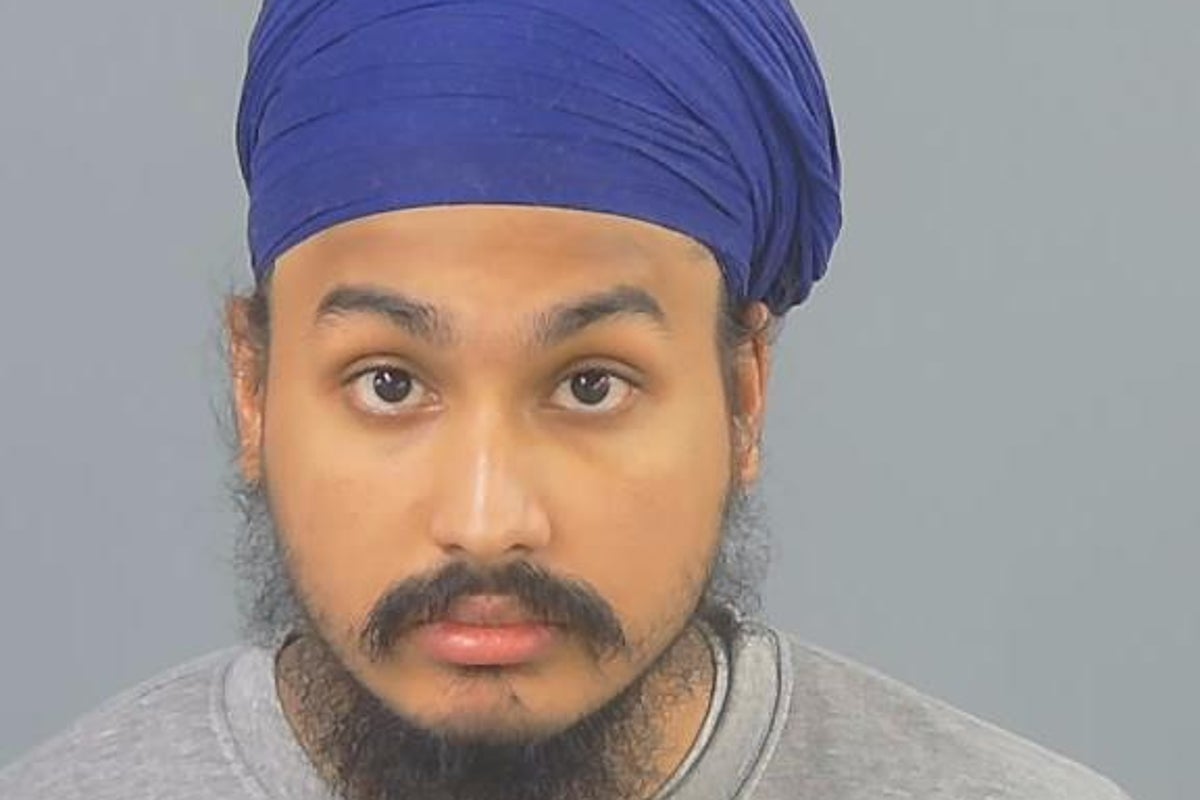


Transgender golfer Hailey Davidson has filed a lawsuit against the LPGA and the USGA after she was barred from participating in a US Women’s Open qualifier last year.
The 33-year-old, who was born a biological male and didn’t transition until after puberty, sought to compete in USGA events but was prohibited from doing so after the organization and the LPGA, the women’s top tour, changed their eligibility policy.
The USGA and LPGA changed gender policies for events in 2025 and beyond, declaring that players must be assigned female at birth or have transitioned to female before going through male puberty to be eligible to compete.
Davidson didn’t transition until after puberty. She competed in a US Open qualifier and LPGA Qualifying School under a different policy in 2024, falling short in both efforts.
She named the golf club hosting the qualifier along with the USGA, the LPGA and three LPGA officials in a lawsuit filed Thursday in New Jersey. She’s seeking unspecified damages.
The LPGA said in a statement it was aware of the lawsuit and would ‘let that process play out on (sic) the proper forum.’
Transgender golfer Hailey Davidson has filed a lawsuit against the LPGA and the USGA
‘The LPGA’s gender policy was developed through a thoughtful, expert-informed process and is grounded in protecting the competitive integrity of elite women’s golf,’ the statement said.
Davidson claimed in the lawsuit that the new policy effectively bans transgender women from competing in USGA women’s events or the LPGA because many states prevent children from taking hormones or blocking puberty.
When the USGA denied her entry into the qualifier, Davidson claimed the Hackensack Golf Club violated the law by saying the USGA controlled all decisions regarding eligibility.
Davidson began hormone treatments in her early 20s and last competed as a male golfer in 2015 and in 2021 underwent gender-affirming surgery, which was required under the LPGA’s previous gender policy.
She won two years ago on a Florida mini-tour, claiming victory at the Women’s Classic at Mission Inn Resort and Club in January 2024.
The victory allowed the player to take a step closer to the LPGA with the NXXT awarding its top five players exemptions to the Epson Tour – a step below the top tier of the women’s game.
However, the circuit then announced on International Women’s Day that year that it had reversed its gender policy and that, effective immediately, competitors must be a biological female at birth to participate.
The LPGA followed suit months later, announcing its new gender policy for 2025 onwards in December 2024.

Davidson, who played NCAA men’s Division II and III golf, is seen in 2015 prior to transitioning

She claims that the change unlawfully barred her from a 2025 US Women’s Open qualifier
The tour’s U-turn sparked a fiery response from Davidson, who took to Instagram to slam the situation at the time.
Players assigned male at birth must now prove they have not experienced any part of puberty beyond the first stage or after age 12, whichever comes first, and then meet limitation standards for testosterone levels.
‘Can’t say I didn’t see this coming. Banned from the Epson and LPGA,’ Davidson wrote in an Instagram Stories post. ‘All the silence and people wanting to stay ‘neutral’ thanks for absolutely nothing. This happened because of all your silence.
‘And somehow people are surprised the suicide rate for transgender people is around 50%. Situations just like this are part of the reason.’
The LPGA and USGA said their policies were geared toward being inclusive of gender identities and expression while striving for equity in competition.
The LPGA said its group of experts advised that the effects of male puberty allowed for competitive advantages in golf compared with players who had not gone through puberty.
But Davidson slammed the studies, claiming she should have also been consulted as part of the decision process.
‘For the record, I was not involved nor asked to be involved in any of the “studies” that any golf organization has just used to ban me, the only active golfer who is actually affected by these policy changes,’ she wrote in another post.
The tour’s change came after months of pressure from female professionals who wrote to the LPGA, pleading for it to take action.


