Cases of the lesser-known respiratory virus human metapneumovirus are continuing to spike in Georgia and states around the country.
The pneumonia- and bronchitis-causing infection made up 6.4 percent of the Peach State’s positive tests for respiratory viruses in the first week of March.
At the same time last year, the positivity rate was three percent, according to state data.
Rates are also continuing to rise at wastewater treatment plants in Northern California, the public database WastewaterScan Dashboard shows. Wastewater testing serves as an early detection tool for virus spread.
In New Jersey, which has seen elevated levels of the virus, the number of positive tests started to fall. Still, levels around the U.S. are higher than at the same time last year.
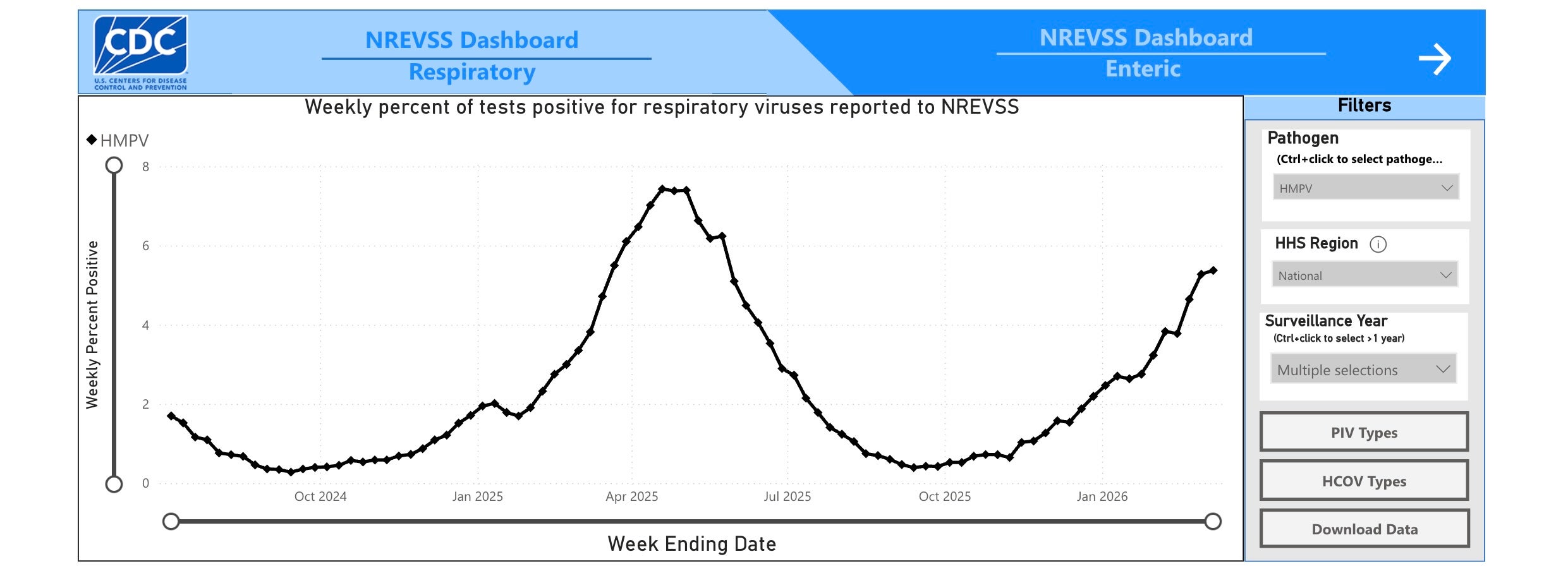
And nationwide, the virus, also known as “HMPV,” accounted for more than five percent of positive tests for respiratory viruses for the week ending on March 7, the U.S. Centers for Disease Control and Prevention shows.
Testing positivity was at 3.82 percent during the first week of March 2025.
So, how worried should you be about infection and what do you need to know to stay safe?
First discovered in 2001, HMPV is a seasonal virus that circulates in the winter and spring. Cases in the U.S. have been trending up since October 2025 and a new study has found that the virus peaks later than influenza – in April.
Infection typically causes symptoms similar to a cold that last for only a few days to a week.
But, it may also result in more serious symptoms, like middle ear infections, life-threatening asthma attacks and a barking cough, experts caution.
In rare instances, infection can result in death in more vulnerable patients, including infants, the elderly and people who are immunocompromised, researchers say.
An estimated 12 hospitalizations occurred per 100,000 people each year from 2016-2019, a federal report from 2025 showed.
“In general, a human metapneumovirus will often be more severe than the more mild viruses like rhinovirus,” Dr. Andrew Thornton, a physician with Wellstar in Cobb County, Georgia, told Healthbeat Atlanta.
“It also has a lot to do with the patient and their current medical conditions and immune status,” he said.
Nearly everyone will catch at least one strain of HMPV during the course of their life, according to the Mayo Clinic.
If you’re older than five, you’ve probably already had it at least once, the Cleveland Clinic says.
Still, unlike the flu and RSV, there are no vaccines to prevent HMPV infections, which are diagnosed through laboratory testing.
HMPV can spread through direct contact, sneezing, coughing or touching infected surfaces.
To prevent infection, the CDC recommends people regularly wash their hands with soap, clean surfaces and stay home when they are feeling unwell.
“HMPV may be prevented by following good respiratory hygiene,” Blumberg said. If you have cold-like symptoms, take the following steps to prevent spreading the virus,” Dean Blumberg, chief of pediatric infectious diseases at U.C. Davis Health, said in a statement.