


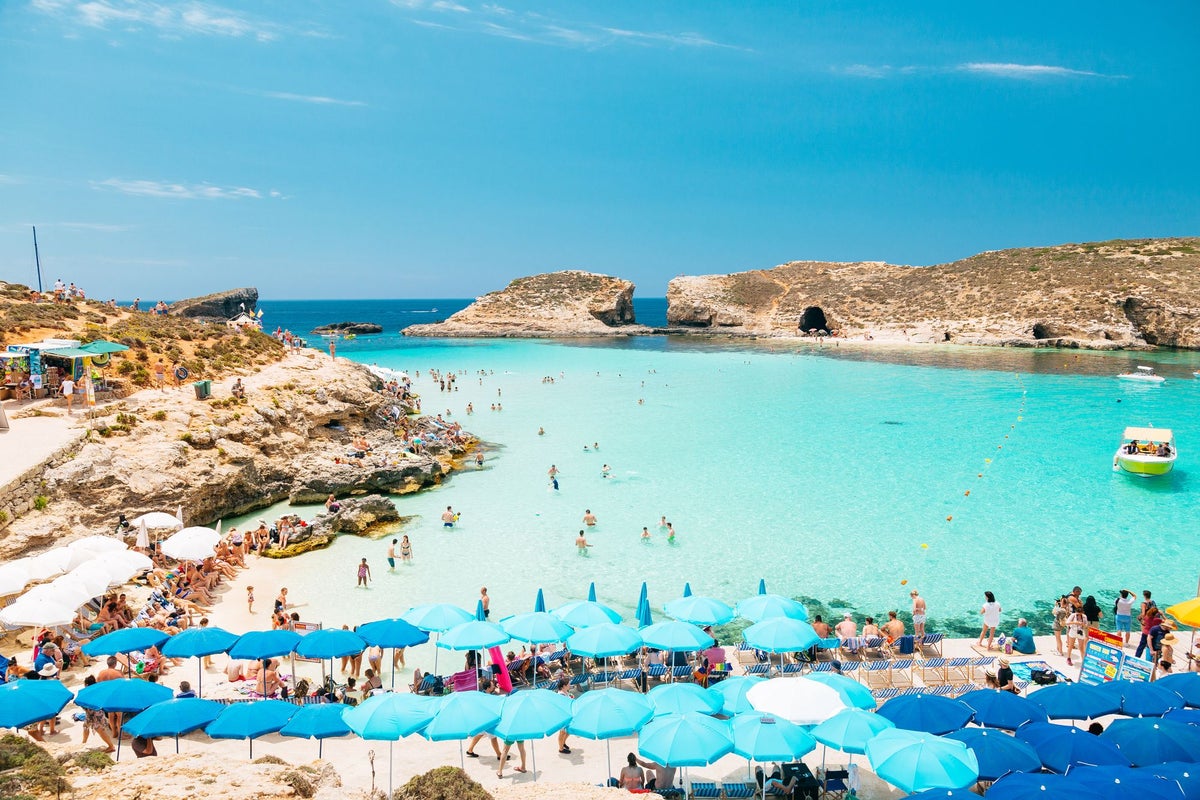
Even among the Mediterranean’s ravishing coastlines, Malta’s is a standout.
The archipelago — comprising the islands of Malta, Gozo and Comino — has sensational shorelines that are peppered with beautiful beaches, otherworldly lagoons, tranquil inlets, striking rock formations, and waters teeming with marine life that hide diveable wrecks. The Maltese coast is also steeped in fascinating history.
Here, we guide you to the top spots and recommend great hotels nearby.
We pinpoint the bay that harbors a 200-foot-tall limestone monolith; the waters where you can scuba-dive to a scuttled oil tanker, a patrol boat and a World War II destroyer; and a lagoon so blue it feels unreal.
Our seaside tour also includes Malta’s top-tier beaches, featuring a stretch of sand that’s an unusual rust color, an inlet that looks like a miniature Norwegian fjord, and some of the best treks for epic coastal views.
We also highlight some of the coastline’s incredible architecture — colossal forts that helped keep invaders out in bygone centuries.
Sculpted by the sea — dramatic rock formations
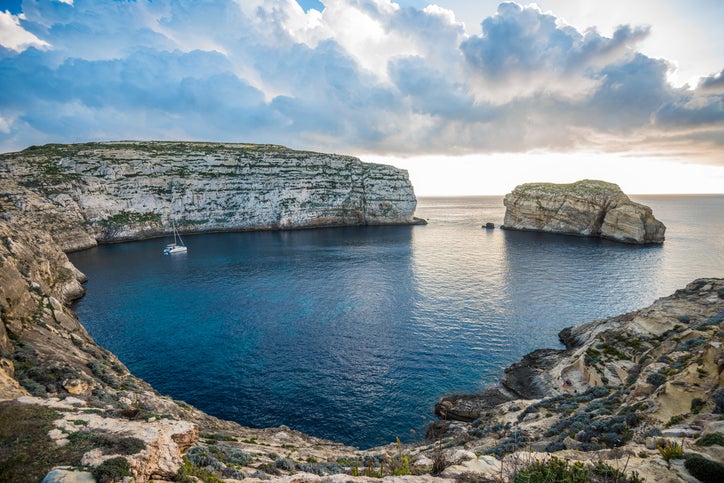
Malta’s coastline is packed with geological theater — a fact that’s underscored by its appearance in Game of Thrones.
The wedding scene of Daenerys Targaryen and Khal Drogo was filmed at Dwejra Bay on Gozo’s west coast, where the archipelago’s most spectacular rock formations can be found.
The bay is guarded by the imperious, 200-foot-tall Fungus Rock, named for a rare plant that grows on it, thought by The Knights of St. John — who came from noble families around Europe and ruled Malta from 1530 to 1798 — to be a cure for dysentery and ulcers.
A second photogenic limestone behemoth, Tilt Rock II, lies just to the north. And beyond that is Crocodile Rock, a low-lying reptilian-shaped formation whose “snout” points towards the nigh-legendary “Blue Hole” dive and snorkel site, and the Inland Sea, a seawater lagoon that’s linked to the Mediterranean by a cave tunnel.
Great place to stay: Kempinski Hotel San Lawrenz (rooms from $250) is an excellent base for discovering Gozo’s hypnotically wild western coastline, with Dwejra’s caves and dive sites just 20 minutes away by foot.
Read more: Exploring Gozo, Malta’s wilder, quieter island
A diver’s dream — from reefs to wrecks
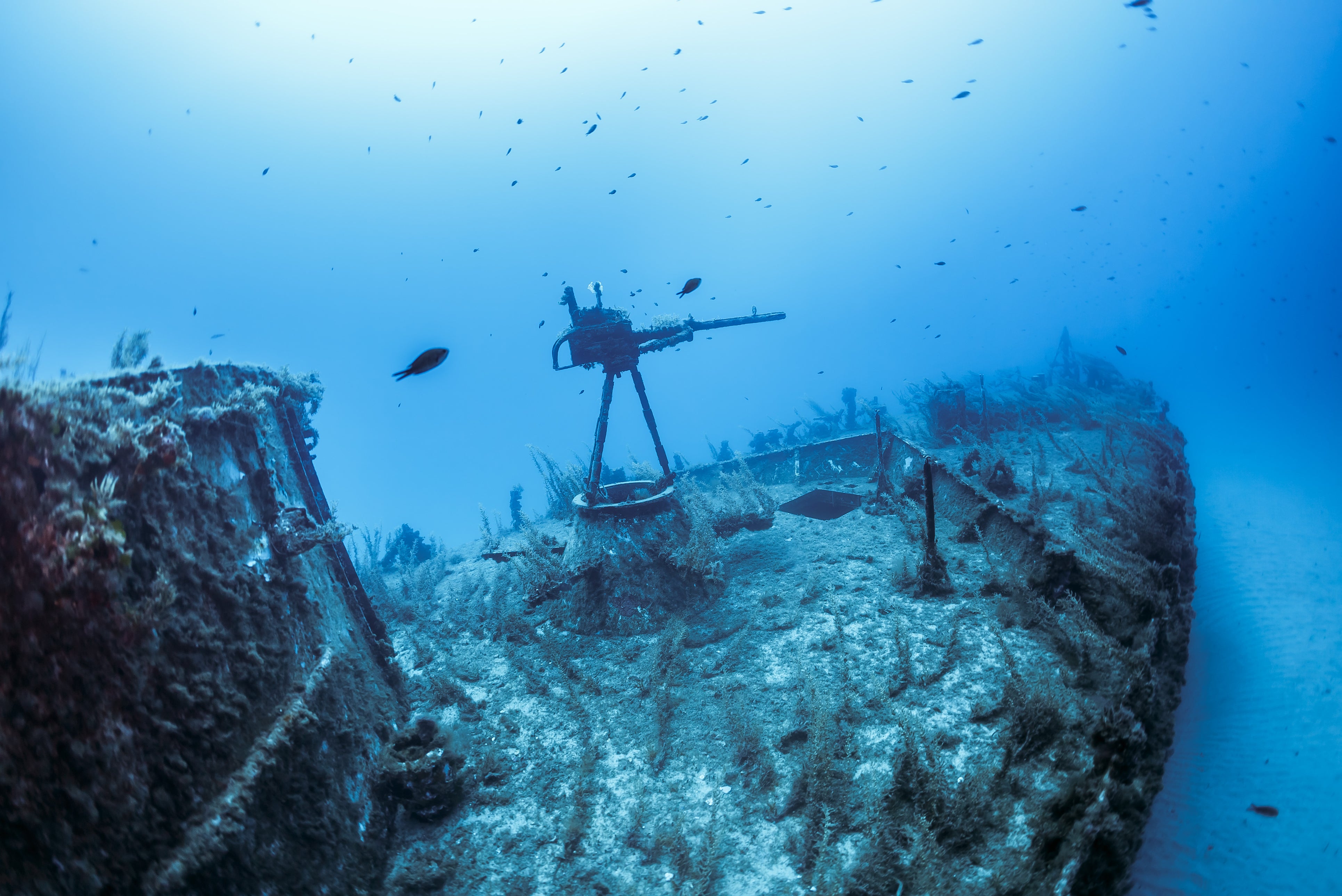
Go beneath the surface of Malta’s coastline and you’ll discover sights as jaw-dropping as those above, as the archipelago offers a world-class range of dive and snorkel sites.
The calm, non-tidal waters mean visibility often exceeds 100 feet. There are caves, tunnels, reefs and shipwrecks to explore, and many of the sites are accessible from the shore. What’s more, even in winter the water temperature rarely dips below 55F. Whatever your ability, you’ll find mesmerizing spots to enjoy and you’ll be surrounded by marine life, from octopuses to stingrays and from parrotfish to maned sea horses (if you’re lucky).
One of the flagship sites is the surreally beautiful Blue Hole on Gozo, where divers can descend through a 50-foot-deep rock shaft then glide underneath a huge underwater arch into the open Mediterranean.
Similarly cinematic are the dozen or more wrecks you can investigate. Off the south coast of Malta is the oil tanker Um El Faround, deliberately scuttled to form an artificial reef, and in the north, near Cirkewwa, even inexperienced divers can explore the wreck of a P29 patrol boat. Beginners, too, can discover HMS Maori, a destroyer sunk by German aircraft in the Second World War that rests in the harbor of the capital city, Valletta.
Guiding and gear are available from more than 50 licensed dive schools.
Great place to stay: Db Seabank Resort + Spa (rooms from $200) is a short drive from the Cirkewwa dive area.
Read more: My friend is getting divorced – so I took her on a romantic getaway
The Blue Lagoon — impossibly turquoise
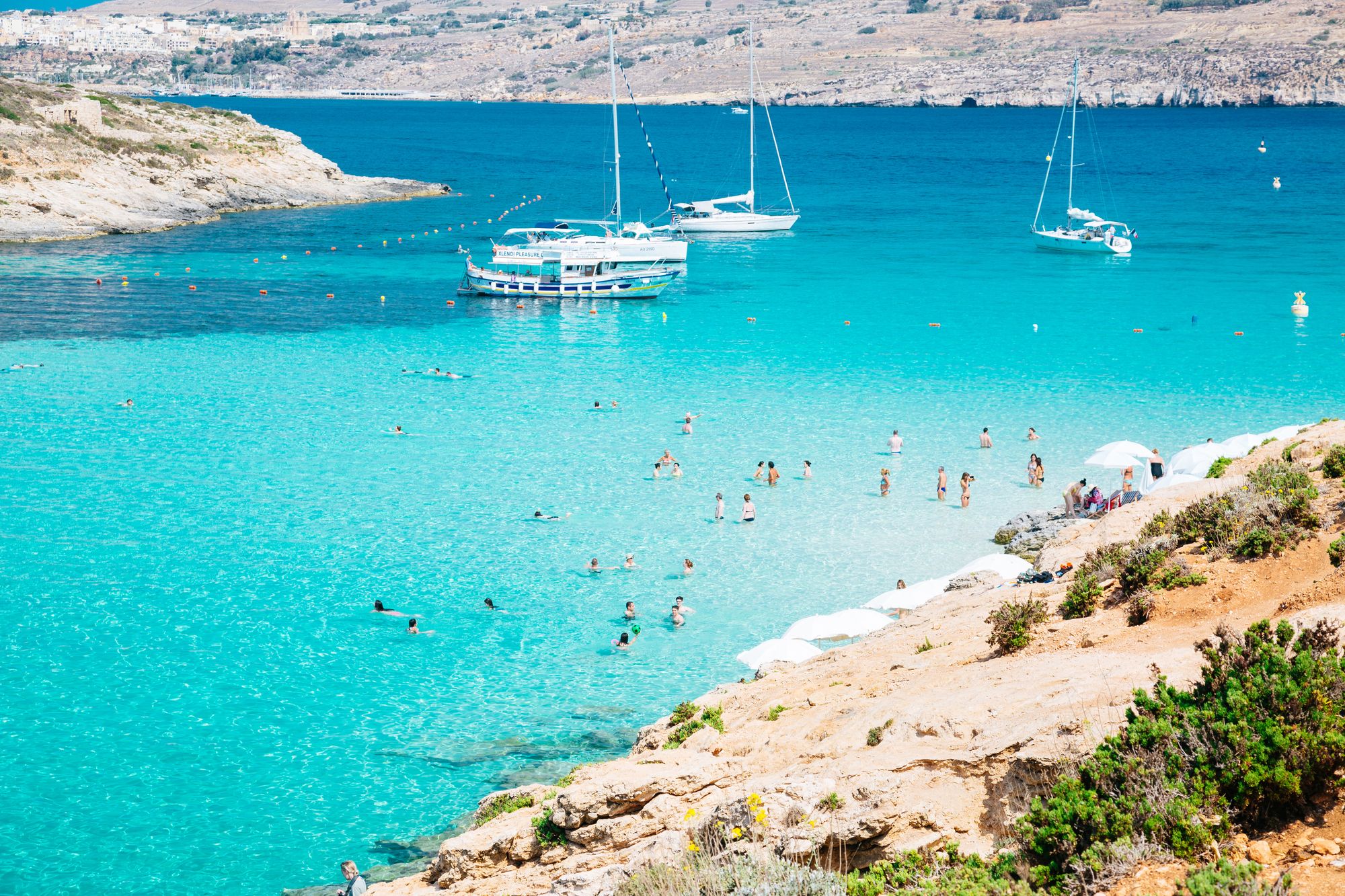
Between the western end of tiny Comino island and the uninhabited islet of Cominotto lies the Blue Lagoon, where impossibly azure waters partner with a white-sand seabed to create a scene that feels almost unreal.
At this sea pool, it’s as if you’ve stepped into a brochure photograph with the colors turned up to maximum intensity.
In calm conditions, snorkelers enjoy extraordinary visibility and non-swimmers can wade far out from the shore.
It’s one of the archipelago’s most premium shoreline destinations and can get busy at the height of summer. However, go early, or linger late, and you’ll enjoy the water at its most glassily serene.
Great place to stay: Hotel Ta’ Cenc & Spa on Gozo (rooms from $230) is just a short boat ride from the Blue Lagoon and comes with sensational views from its clifftop plateau location.
Read more: The Xara Palace, Malta, hotel review
Beautiful beaches — gorgeous grains and glistening waters
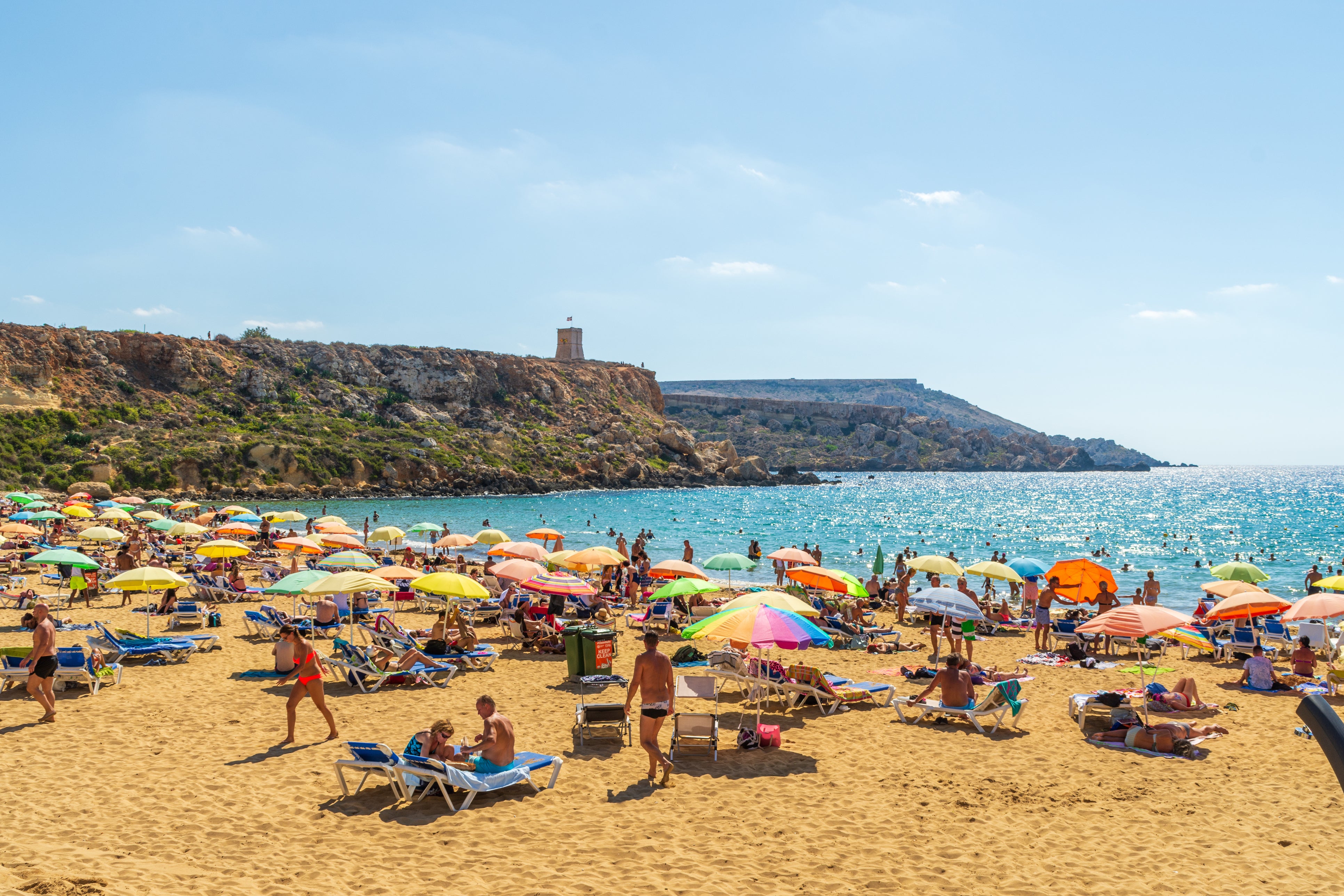
Mixed in among Malta’s stunning limestone rock formations is a generous peppering of classy beaches — and, beguilingly, a range of colors to choose from.
One of the most popular is Golden Bay on Malta’s northwest coast. It’s a classic entry in the archipelago’s beach inventory, a generous sweep of honey-hued sand that arcs around calm, crystal-clear water.
Just south of Golden Bay is the rugged and wilder Għajn Tuffieħa Bay, accessed via a steep staircase that descends the cliffs to a truly scenic strand.
Elsewhere on the island lies Mellieħa Bay, Malta’s largest sandy beach — a half-mile-long stretch designated as a Blue Flag beach, meaning it meets the highest standards of cleanliness and safety. The horseshoe-shaped bay is particularly popular with families and vacationers keen on watersports such as paddleboarding and windsurfing.
The standard-bearers on neighboring Gozo are San Blas Bay, where the grains are an alluring rust color, and Ramla Bay, where the sand is strikingly red-gold thanks to its high iron content. According to local legend, the cave overlooking the bay — Calypso’s Cave — was where the nymph in Homer’s Odyssey held Odysseus captive.
Great place to stay: Radisson Blu Resort & Spa, Golden Sands (rooms from $260) sits on a cliff right above Golden Bay.
Read more: Seven European lakes you must visit at least once — from A-list favorites to under-the-radar gems
Secret coves — hidden pockets of paradise
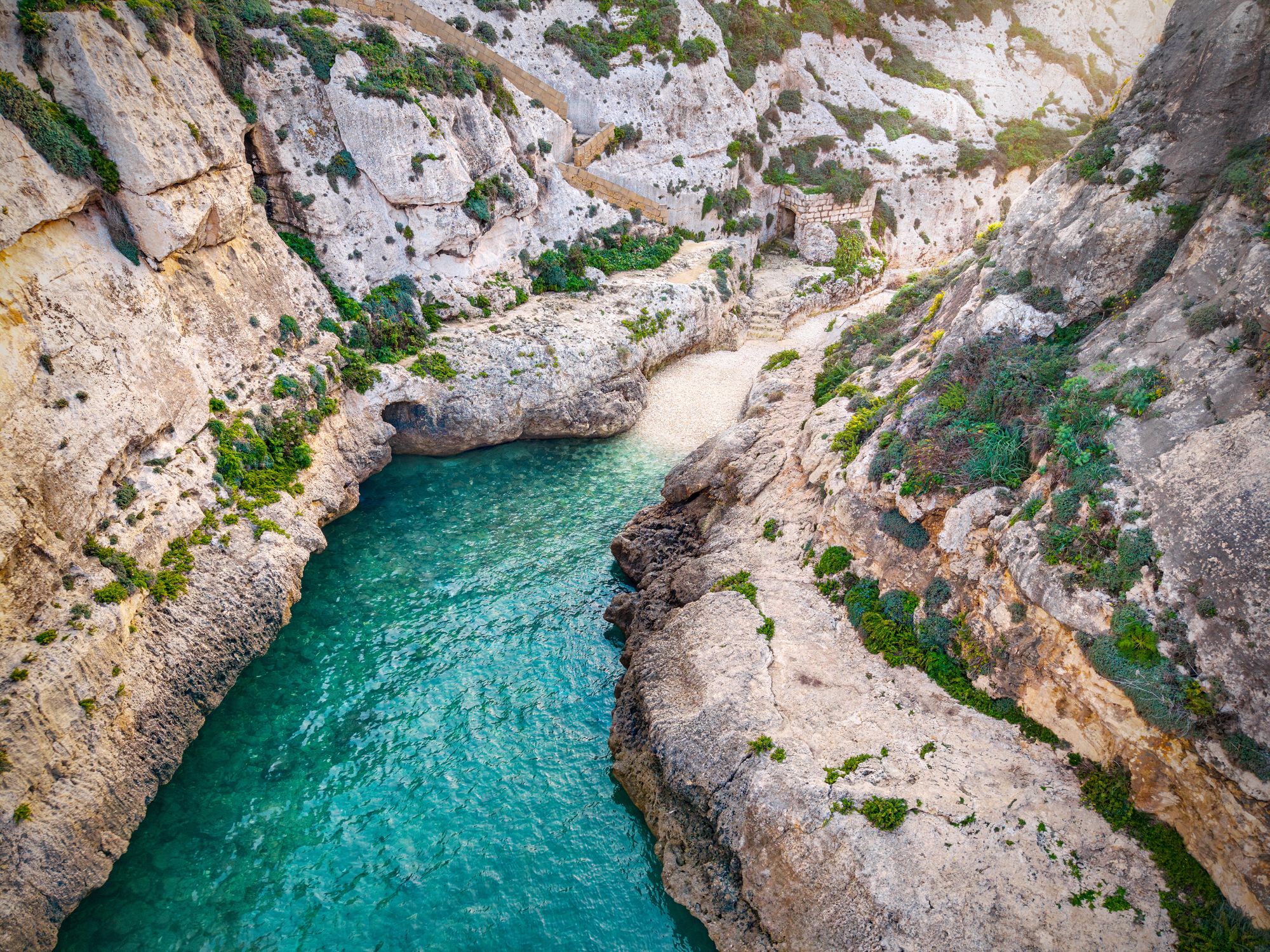
The archipelago’s coast is punctuated by beautiful natural inlets — magical spots where you can swim and snorkel in blissful seclusion.
On the main island, there’s camera-roll-baiting St Peter’s Pool, near Marsaxlokk, a spectacular natural swimming basin carved into the limestone cliffs where exhilarating leaps into the sapphire water are a popular way to cool off.
Fomm ir-Riħ (meaning “mouth of the wind”), on the west coast, has an altogether more otherworldly vibe — it’s secluded and rugged, and characterized by white, curved boulders and towering vertical cliffs. The swimming here is excellent, but the cove is challenging to reach — while there is a steep hiking path descending from the clifftop, most visitors arrive by boat.
On Gozo, one of the most photogenic coves is Wied il-Għasri, an inlet so narrow and long that it takes on the appearance of a small fjord. Another gem on the island is Mġarr ix-Xini, which made an appearance in the movie By the Sea starring Brad Pitt and Angelina Jolie. Stop by to relax amid fishing boats bobbing in electric-blue water.
Great place to stay: Cugo Gran Macina Malta in Senglea (rooms from $240) has a striking harborfront setting, with Marsaxlokk and St Peter’s Pool within easy reach by car.
Read more: Ten awe-inspiring European road trips everyone should experience at least once
Epic clifftop views
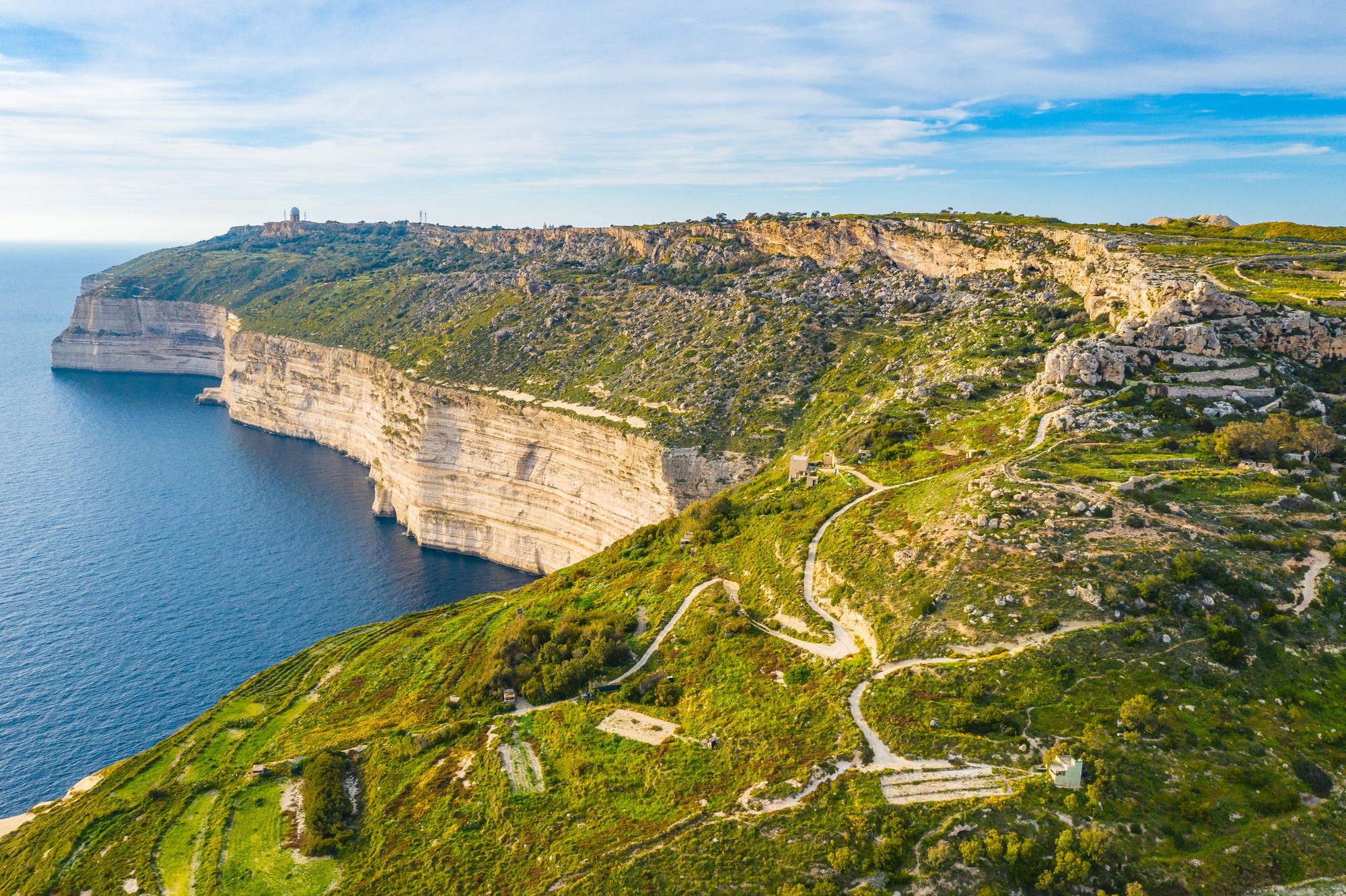
Pack your hiking boots, because you’ll find trekking Malta’s clifftops for the majestic views they offer irresistible.
On this front, the marquee attraction is the Dingli Cliffs on the main island, which, at 830 feet above sea level, form the highest point in the archipelago.
From the edge you can gaze towards Malta’s most southerly land mass, the uninhabited islet of Filfla. For decades the islet was used for target practice by the RAF, but today it is a protected nature reserve.
Stirring vistas also await on Gozo, most enticingly along the southern coast near Sannat, where the Ta’ Ċenċ Cliffs rise from the Mediterranean to a height of nearly 500 feet and provide vital sanctuary for Cory’s and yelkouan shearwaters.
To experience the clifftops at their most enchanting, visit as the sun sets, when the limestone rock faces glow gold.
Great place to stay: The Xara Palace Relais & Châteaux in the medieval hilltop city of Mdina (rooms from $350) makes a luxurious headquarters from which to explore western Malta. From here, the Dingli Cliffs are just a short drive away.
Read more: Seven Unesco sites in Europe that are worth the hype
A coastline steeped in history
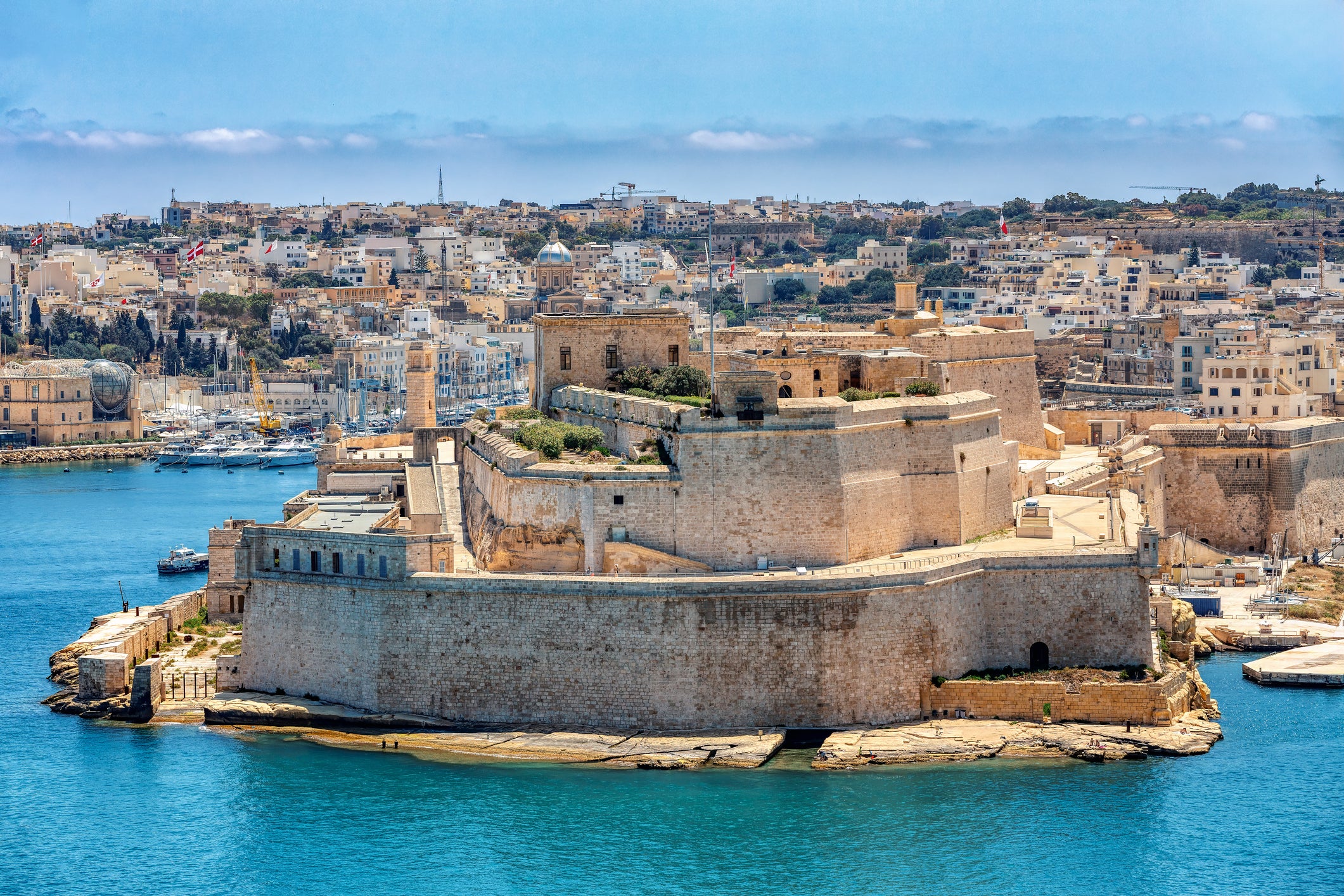
There aren’t just natural wonders along Malta’s coastline — you’ll find architectural magnificence, too, mighty fortifications built or strengthened by the wealthy Knights of St. John to defend the strategically prized island from would-be invaders.
One of the most spectacular examples is the star-shaped Fort St Elmo, built in 1552 at the tip of Valletta, the walled capital. It played a key role in the Great Siege of Malta in 1565, when the Knights of St. John repelled an Ottoman invasion.
Opposite, across the waters of the Grand Harbour, is the massive Fort Ricasoli, used as a filming location for movies including Gladiator (when it stood in for Rome) and Troy.
Fort St Angelo in Birgu, meanwhile, was used as a headquarters for the knights during the Great Siege, and Fort Tigné, at the entrance to Marsamxett Harbour, is notable for being one of the first polygonal forts in the world.
Great place to stay: The Phoenicia Malta in Valletta (rooms from $300), the country’s first five-star hotel, occupies a grand historic building just outside the city gates, offering elegant rooms and sweeping harbor views. Past guests include Brad Pitt and Antonio Banderas.
Read our full review of The Phoenicia Malta