
Eating a diet high in fat could have an unintended effect on the brain, according to researchers at Emory University in Georgia.
A new study in mice that ate a fat-heavy diet showed that live bacteria from an imbalanced gut – a digestive tract that contains more bad bacteria than good bacteria – can enter the brain using the vagus nerve: the part of the nervous system that connects the brainstem to the heart, lungs and stomach.
The findings have potential implications for neurological health, according to the researchers. The researchers also found low levels of bacteria in the brains of mice with Alzheimer’s and Parkinson’s disease.
“One of the biggest translational aspects of this study is that it suggests that the development of neurological conditions may be initiated in the gut,” Dr. David Weiss, a professor at the Emory Vaccine Center and Emory School of Medicine’s Division of Infectious Diseases, explained in a statement.
“This may shift the focus of new interventions for brain conditions with the gut as the new target of the therapy,” the microbiologist added. “That potential anatomical shift of the target could have an unbelievable impact on how people with neurological conditions benefit from therapies.”

The mice consumed a high-fat and high-cholesterol diet known as Paigen’s Diet over the course of nine days.
Similar to a Western Diet – what Americans eat – it is made up of 45 percent carbs and 35 percent fats.
The Western diet is characterized by refined grains, high-fat dairy products, ultraprocessed meats, sugary drinks, sweets and fried foods.
Previous research has tied the diet to an increased risk of cardiovascular disease, cancer, premature death, stroke and cognitive decline. A new study from researchers at Tulane University tied eating ultraprocessed foods to poor bone health.
Still, the products make up more than half of the American diet, according to data from the U.S. Centers for Disease Control and Prevention.
The foods are also made with additives that disrupt our gut bacteria, leading to inflammation and a leaky gut, allowing toxins and inflammatory molecules to enter the bloodstream and go to the brain, Harvard Health points out.
The mice also saw leaky guts on these diets, enabling bacteria to travel from their intestines to the brain – without any detectable amounts of bacteria in the blood or other organs, the researchers said.
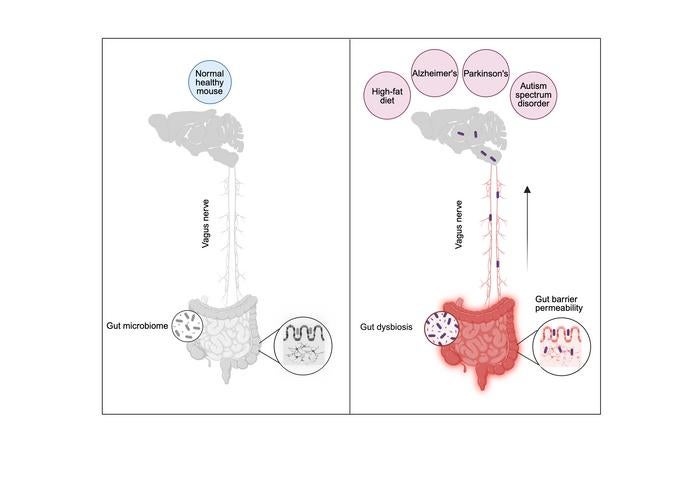
And when mice were fed an engineered form of the bacterium Enterobacter cloacae, which causes bacteremia, or bacteria in the bloodstream, after being given antibiotics that kill gut microbes, the strain was found in the vagus nerve and brains of the mice.
Returning the mice to a normal and well-balanced diet helped to restrict the amount of bacteria in the brain, indicating to the researchers that the impact of a high-fat diet on bacteria reaching the brain can be reversed.
“This research highlights the need for further study into how dietary shifts have a huge influence on human behavior and neurological health,” Dr. Arash Grakoui, a professor of medicine, microbiology and immunology at Emory, said.