



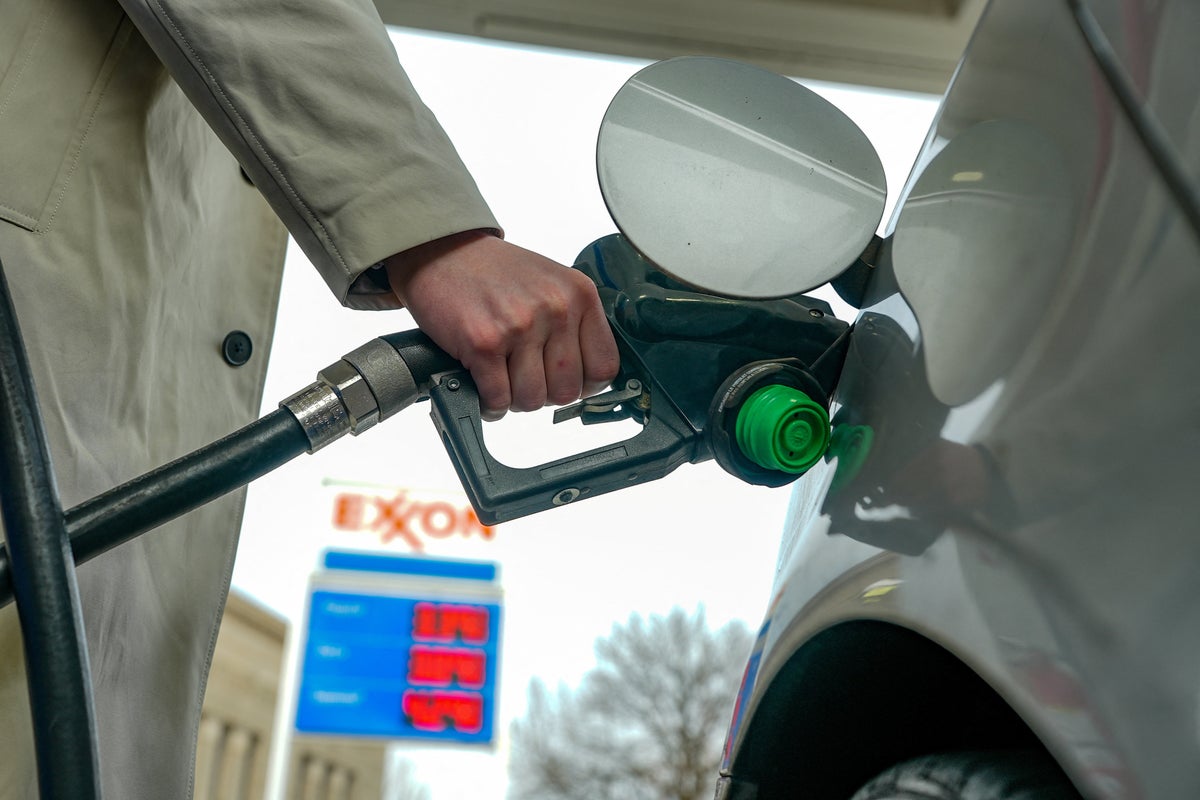
Gas prices have risen almost 17 percent since the U.S.-Israeli airstrikes on Iran began just over a week ago.
Prices climbed again early Monday, hitting an average cost of $3.48 per gallon according to the American Automobile Association.
There are currently big regional variations in how much drivers are being asked to pay at the pumps, however, with California motorists paying as much as $5.20 per gallon, compared to their Kansas counterparts on $2.92,
Gasoline costs are closely tied to oil prices and the latest explosion of violence in the Middle East has badly disrupted the flow of crude oil from the Persian Gulf, sending oil soaring beyond the $100 per barrel mark for the first time since the outbreak of the war in Ukraine in 2022.
Brent crude, the international benchmark, is currently trading at $104.76 per barrel and West Texas Intermediate is up to $102.28 per barrel.

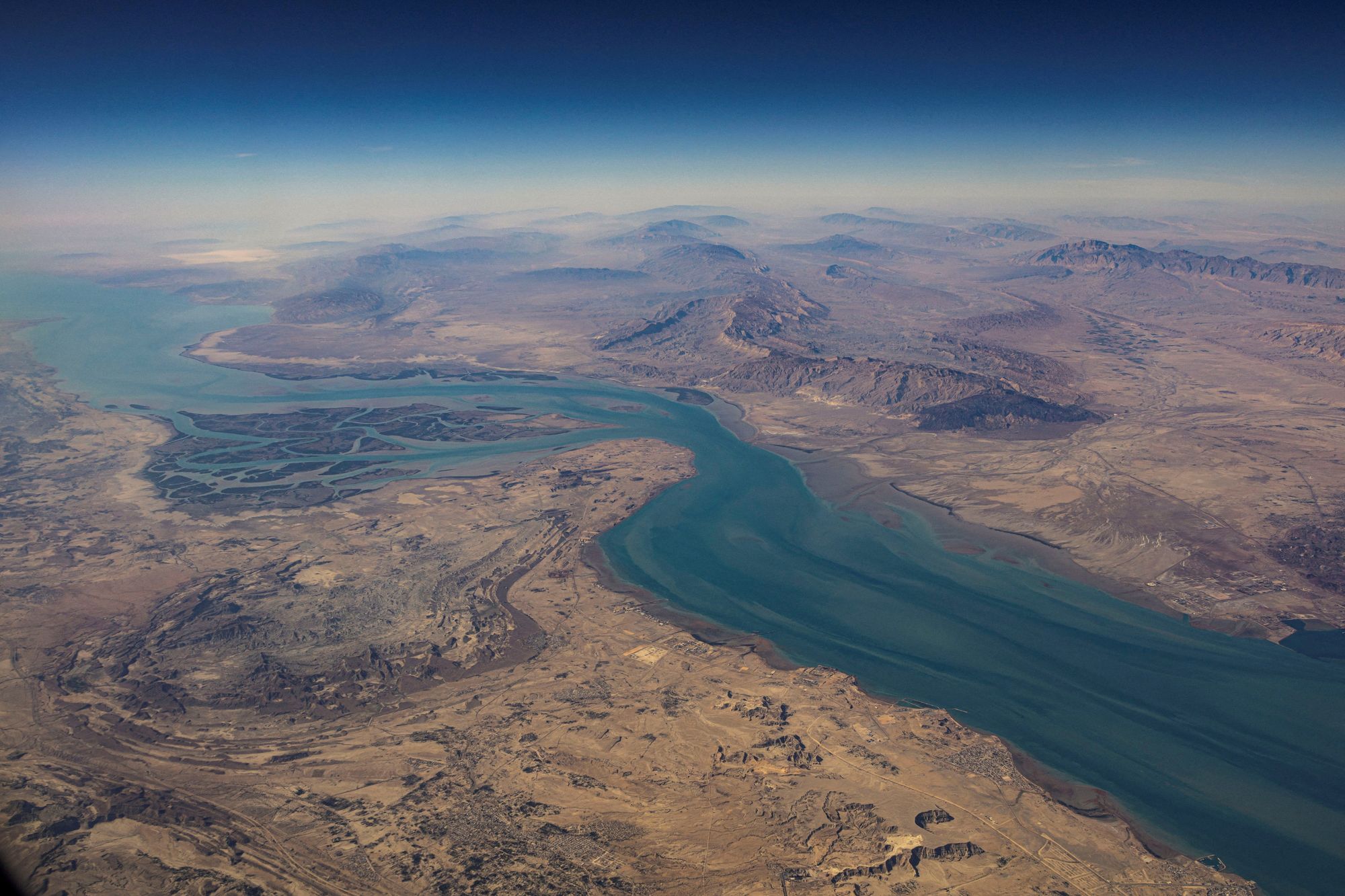
Iranian threats against tankers intending to cross the key Mid East shipping route Strait of Hormuz has led to their idling in port rather than risk being attacked. As a result, shipments are going undelivered and the world faces being cut off from around one-fifth of its supply.
Iraq, the U.A.E. and Kuwait have responded to the impasse by making precautionary cuts to their domestic oil production in anticipation of forthcoming storage issues if their exports remain grounded, according to CNBC.
G7 nations are meanwhile reportedly now considering releasing supplies from their strategic reserves in order to ease the situation.
President Donald Trump has so far attempted to downplay the problem on the homefront, posting on Truth Social Sunday: “Short term oil prices, which will drop rapidly when the destruction of the Iran nuclear threat is over, is a very small price to pay for U.S.A., and World, Safety and Peace.”
That followed him telling Reuters dismissively last week: “If they rise, they rise.”
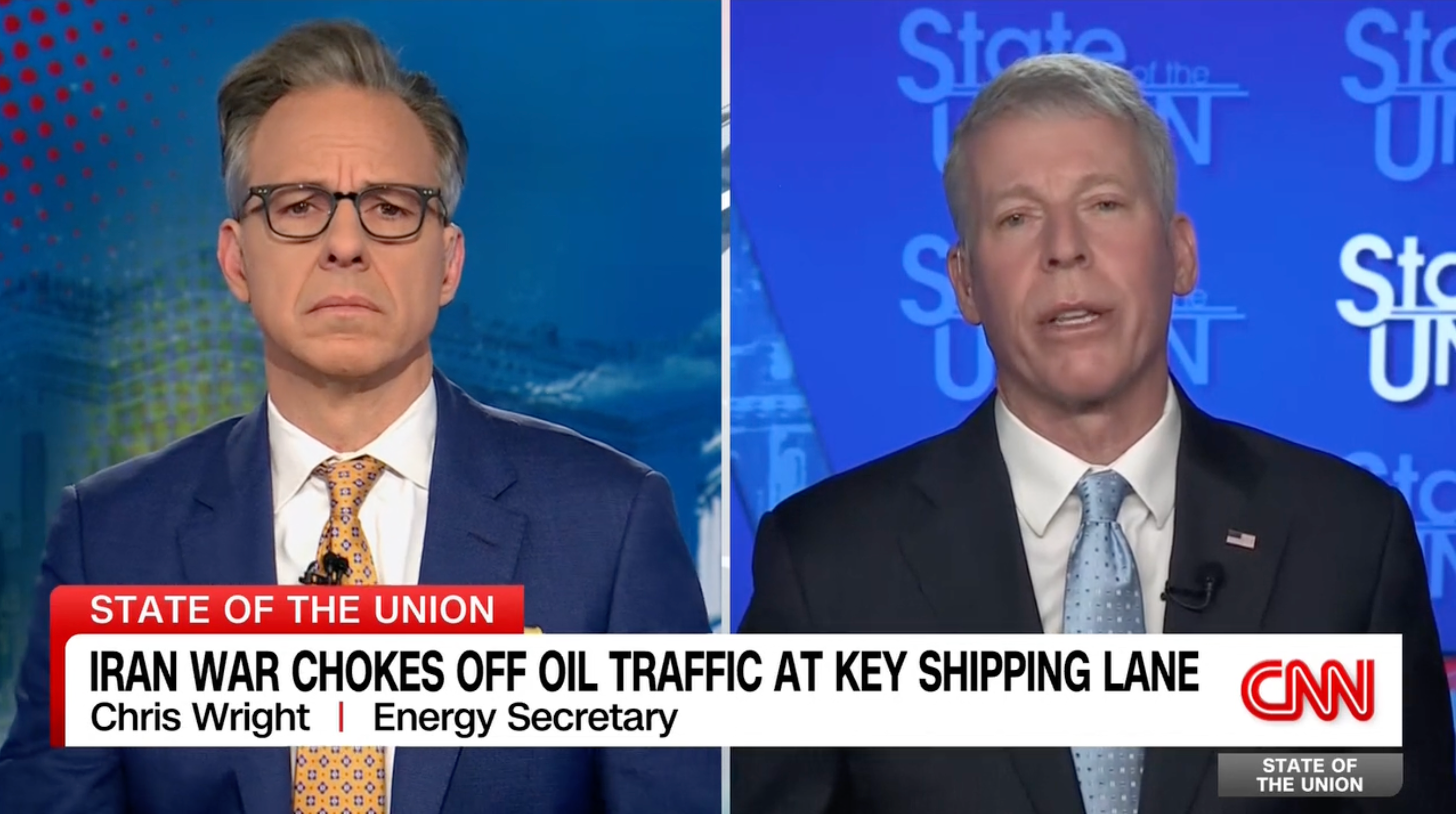
Also speaking for the Trump administration Sunday was Energy Secretary Chris Wright, who appeared on CNN’s State of the Union and told host Jake Tapper: “Gasoline today is still $1.50 a gallon cheaper than it was in the middle of the Biden administration.
“We want it back below $3 a gallon. And it will be again before too long.”
Pressed by Tapper on what he meant by “too long,” Wright answered: “You never know exactly the timeframe of this, but, in the worst case, this is a weeks… this is not a months thing.
“You’re seeing a little bit of fear premium in the marketplace, but the world is not short of oil today or natural gas.”
Patrick De Haan, head of petroleum analysis for GasBuddy, estimated Sunday that, if present trends continue, there is an 80 percent chance the national average gasoline price will reach $4 in the next month.
The problem is likely to become more acute for Trump if the war persists, given that polling suggests a majority of Americans disapprove of Operation Epic Fury and remain concerned about affordability at home – two headaches he will need to address well in advance of November’s midterm elections.
Members of the public have already begun to express their frustration with the president.
New Jersey bartender Kelly Sharp told USA Today last week: “He promised to bring prices down, but he never did.
“They’re going up. I’m mad at him and a lot of the things he’s doing… It’s a shame, those young kids being killed.”
Ironically, just four days before the Iran conflict commenced, the president had boasted about bringing down the cost of gas in his State of the Union address to Congress, saying his predecessor Joe Biden had presided over a “disaster.”
