


In 1984, during an Air France flight from Paris to London, actress Jane Birkin dropped her diary, scattering notes, receipts and papers across the floor. By chance, Jean-Louis Dumas – then CEO of luxury company Hermès – was seated beside her. Birkin complained that no bag was large enough to hold her notes and diary. No sooner said than done the executive promised to create a larger, personalised bag. And so, somewhere above the English Channel, a style icon was born – though few could have imagined that a market was being created at the same time.
Today, Birkin bags are not only objects of desire for millions of consumers, but also an asset class, complete with daily price indices and online forums where dedicated investors discuss valuations and specific models.
In recent years, the boundary between luxury goods and finance has become increasingly blurred, fuelled by a boom that pushed the prices of these and many other iconic objects sharply higher. The secondary market for Hermès handbags, like that of other luxury goods, expanded rapidly in the early 2020s before declining sharply in 2025. According to Bernstein data reported by CNBC, the resale price of a Birkin reached a peak of 2.2 times the retail price in the first quarter of 2021, before falling to 1.4 times in the final quarter of 2025, with some specific models trading second-hand without any premium.
In practical terms, handbags on the secondary market are now sold on average at “only” 1.4 times the list price, in a context where the base retail price has nearly doubled since 2015. This price dynamic closely resembles that of a speculative bubble beginning to deflate. Behind this reversal lies not only a normal shift in trends, but what many analysts describe as the end of the luxury super-cycle.
From 2021 onwards, ultra-wealthy consumers – alongside an aspirational middle and lower-middle class – fuelled a genuine consumption frenzy that convinced some observers that purchasing certain objects could become not only a personal indulgence, but also a sound financial decision. On TikTok – a sanctuary of Generation Z hyper-consumerism – influencers promoted Hermès Birkin bags as a better investment than the S&P 500 (the stock market index tracking the stock performance of 500 leading companies listed on stock exchanges in the United States).
Watches, classic cars, fine wines, artworks, exclusive clothing, as well as yachts and prime real estate in the years following Covid, demand for these assets – which we might collectively label as luxury goods – surged dramatically, driven by economic and social dynamics that transcended geographical and cultural boundaries.
But by the end of 2025, the tide began to turn. Bain & Company, a strategic consulting firm based in Boston, estimates that the number of active luxury consumers fell from 400 million in 2022 to 330 million in 2025. Meanwhile, shares in the French luxury conglomerate LVMH – diversified across multiple segments – lost roughly half their value by July last year compared with their 2023 peak.
This trajectory – from pent-up lockdown demand to oversupply and slowing consumption – offers important lessons. Like any financial story, it intertwines economics and society, imagination, aspiration and values. How did this bubble form? And can luxury ever truly be considered a safe investment?
What makes a good “luxury good”?
In economics, luxury goods are characterised by particular demand and supply dynamics. On the one hand, they often display low price elasticity for some consumers, higher prices can increase perceived value, producing ambiguous effects on demand. On the other hand, luxury goods show high income elasticity, meaning spending rises more than proportionally as disposable income increases.
In some cases, this combination gives rise to Veblen goods, for which demand may increase as prices rise, because price itself becomes part of the product’s symbolic value.
Another feature of certain luxury goods is their ability to retain value over time. When this occurs, a secondary market can develop and these consumer goods begin to be perceived as assets. However, not all luxury items meet this criterion.
What truly qualifies a good for this category is a difficult-to-measure mix of perceived quality and symbolic value. A £10,000 handbag or a finely engineered mechanical watch is not purchased for practical utility, but for what it represents. Luxury, in other words, is less about solving problems than about signalling status, taste, or belonging.
The sector spans high fashion and leather goods, watches and jewellery, performance cars, ultra-prime real estate, fine wines and spirits, art and collectibles. Yet luxury is far from monolithic. Analysts distinguish between “absolute luxury” and “aspirational luxury”.
Ultra-wealthy consumers in the absolute luxury segment are relatively insensitive to price and tend to maintain spending regardless of the economic cycle. Aspirational luxury, by contrast, is driven by upper-middle-class consumers and is far more sensitive to real income trends. These consumers are often the first to cut spending when macroeconomic conditions deteriorate.
As a result, many major groups such as LVMH and Kering are now heavily exposed to aspirational consumers, who have become more cautious amid inflation and declining purchasing power. This segmentation helps explain why the luxury bubble has deflated unevenly – though it does not fully explain the scale of the post-Covid boom.
Why did the bubble inflate?
As is often the case, speculative bubbles arise from a combination of factors rather than a single cause. For luxury goods, the first driver was the exceptional macroeconomic environment created by the pandemic easy money, near-zero interest rates, and restricted lifestyles generated excess savings that flowed into symbolic consumption once economies reopened.
In the United States alone, the Federal Reserve estimates that households accumulated more than $2 trillion in excess savings between 2020 and 2021 compared with pre-pandemic trends. At the same time, equity and property markets rallied strongly, boosting wealth disproportionately among higher-income groups.
Low interest rates and volatile markets pushed some investors towards tangible and alternative assets. Wealthy collectors began viewing handbags, watches, art and automobiles not only as consumption goods but also as diversification tools, inflation hedges, or stores of value.
Cultural and technological trends reinforced this dynamic. The cryptocurrency boom of 2021 and the rise of the influencer economy created a new generation of wealthy consumers particularly inclined towards visible, identity-driven consumption.
Social media played a central role. The online glorification of exclusive lifestyles broadened luxury consumption to younger demographics. Research published by TikTok in 2025 suggests many first-time luxury buyers were influenced more by social media than by traditional advertising. Nearly half of respondents described luxury as a form of self-expression, while many associated purchases with self-reward.
Financial and tax considerations also contributed. High-value goods are often portable, difficult to standardise in valuation, and sometimes stored in freeports – high-security bonded warehouses in jurisdictions such as Switzerland, Singapore, and Luxembourg – where items can be traded with deferred taxation. Such structures can encourage speculative behaviour, even as regulatory scrutiny increases.
The peak and the decline
These forces peaked simultaneously in 2021. Luxury companies and auction houses recorded unprecedented demand – but also laid the groundwork for the downturn. Brands raised prices aggressively and expanded supply. Eventually, high prices, stabilising supply and slowing economic growth weakened demand.
Emerging markets, long the frontier of luxury expansion, began to slow. China – which accounted for roughly 16% of global luxury spending before 2024, according to Bain – experienced declining consumer confidence. The mainland Chinese luxury market contracted by around 18-20% in 2024, returning to levels similar to 2020.
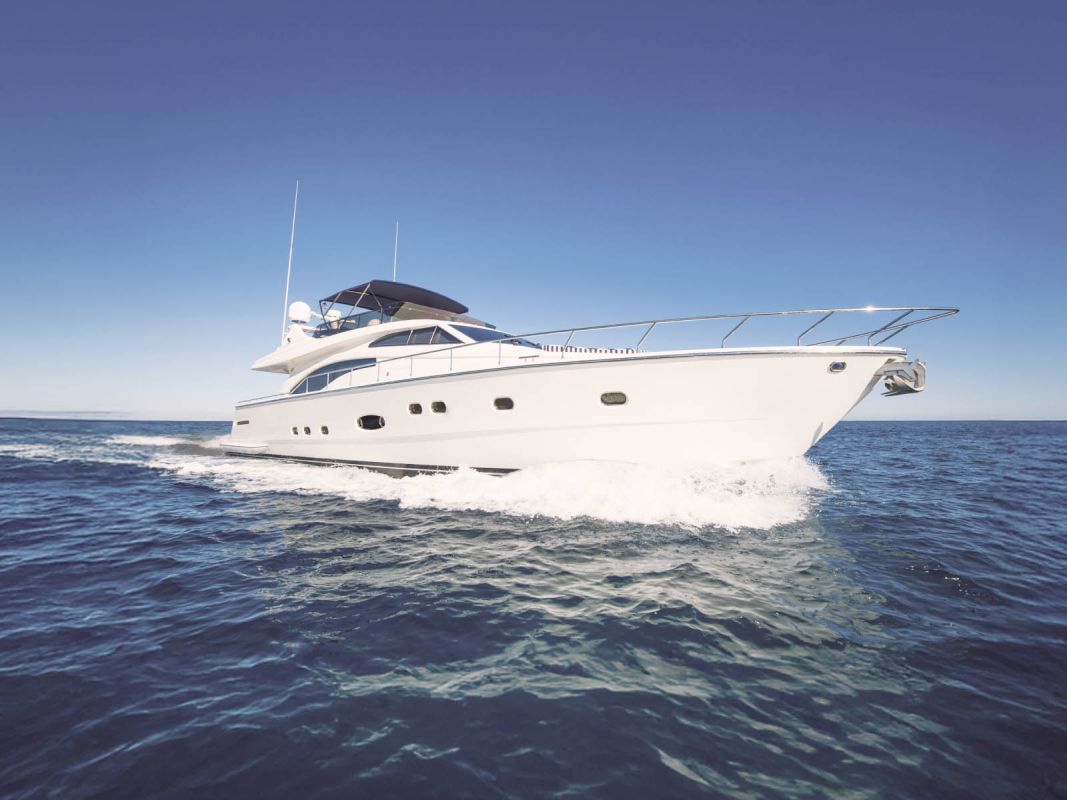
Even the ultra-high-end segment showed signs of cooling. Private jet sales declined modestly in 2024, while new yacht sales in the 30–50 metre segment fell by about 5%, although demand for mega-yachts remained resilient.
At the same time, consumer preferences began to shift – particularly among the wealthy – from objects to experiences. Exclusive travel, private expeditions, and once-in-a-lifetime events increasingly became the ultimate status symbols.
The end of luxury?
The recent correction does not mean the luxury market has reached its end. Long-term drivers – wealth concentration, the emergence of new global elites, and identity-driven consumption – remain intact.
However, the episode serves as a reminder not to treat luxury goods too lightly as investment assets. These markets are illiquid, narrative-driven, and highly sensitive to economic cycles. Opportunities for profit may exist, but they require expertise, patience and caution.
Looking ahead, luxury remains a complex intersection of business, culture and finance, closely tied to global wealth dynamics, consumer confidence, and the evolving ways in which people construct and communicate identity.
*As with all investing, financial instruments involve inherent risks, including loss of capital, market fluctuations and liquidity risk. Past performance is no guarantee of future results. It is important to consider your risk tolerance and investment objectives before proceeding.

