

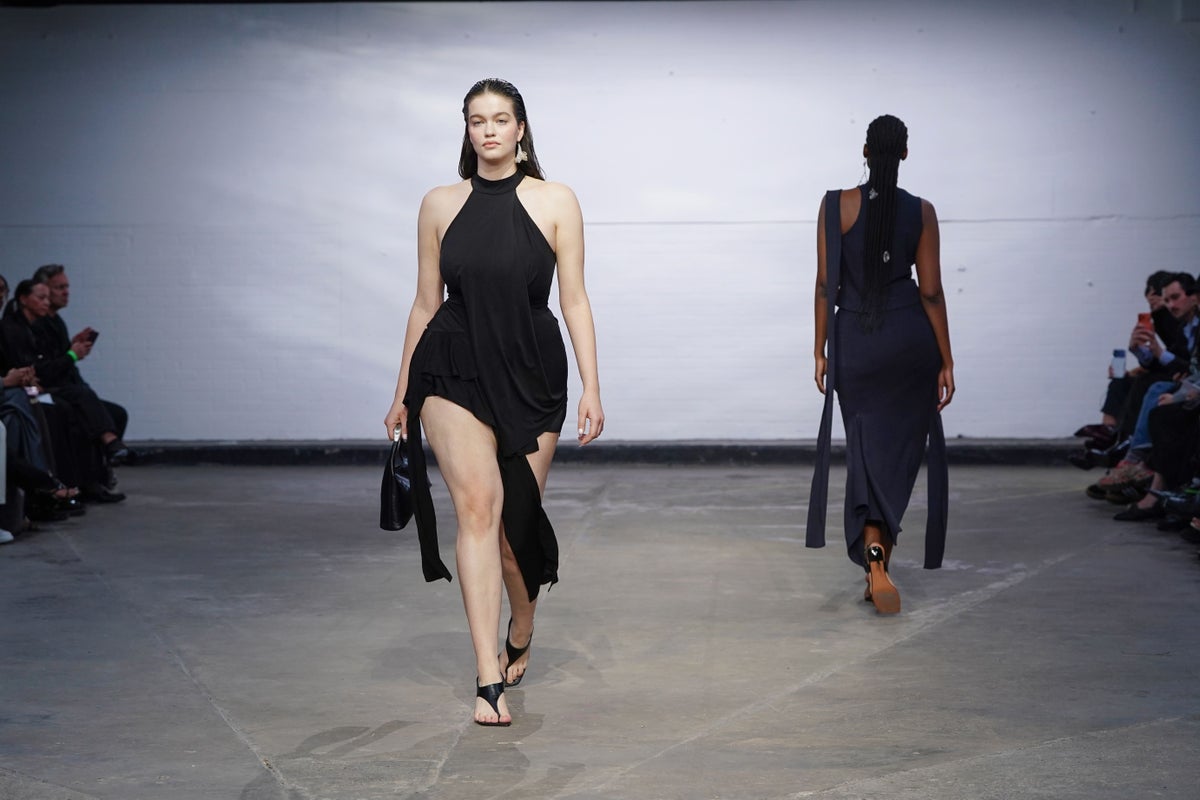
Karoline Vitto’s autumn/winter 2026 show delivered a pointed reminder that body diversity isn’t radical – it can, and should, be standard practice.
The Brazilian-born designer presented a runway cast with visible size diversity, from XS through to fuller, curvy models, all wearing the same fluid, body-conscious silhouettes.
At a time when industry headlines have questioned the absence of curvier bodies on international catwalks, the show at the BFC NewGen space in London offered a confident reaction.
Rather than treating inclusivity as a seasonal theme, Vitto embedded it into the structure of the collection.
Models of varying proportions wore identical draped dresses, silk separates and sculpted jersey pieces, reinforcing the designer’s long-standing position. As she has previously said, she sees herself as a designer who “puts the body first, especially bodies that are overlooked by fashion”.
Backstage, she framed her work as responsive rather than escapist. “I think it’s a reaction to society,” she said. “I like to think what is going on and react to it.” That reaction materialised this season in a softened, liquid approach to tailoring, with sheer and silk emerging as dominant textures.
A cream slip dress set the tone. Cut with fine straps and a central vertical cut-out secured by minimal hardware, it skimmed the torso and gathered gently at the hips.
The fabric clung without constricting, creating subtle shaping through drape rather than rigid internal structure. On a curvier model, the same piece emphasised natural contours, the cut-out drawing attention to the waist and midriff without apology.
Sheer layering continued in an ivory look that paired a softly structured asymmetric top with a translucent skirt. The skirt moved fluidly, catching the light and revealing the outline of the legs beneath. The transparency felt deliberate and controlled, aligned with a broader runway trend towards exposed layering and liquid finishes.
In deeper tones, silk separates brought richness to the collection. A navy satin bra top worn with a low-slung, asymmetrically draped skirt balanced minimalism with sensuality.
The skirt pooled slightly at the hem, creating movement with each step. The simplicity of the cut allowed the focus to remain on the body itself – hips, stomach and shoulders framed rather than disguised.
Jersey pieces provided a more sculptural looks. A black halter dress featured asymmetric draping and a ruched side panel that enhanced curves without over-structuring them. A grey midi dress incorporated precise cut-outs at the waist, echoing Vitto’s signature interest in framing the torso.
Executed in stretch fabric, the silhouette adapted across sizes, demonstrating the brand’s technical understanding of fit.
Even the more utilitarian looks retained a sensual undercurrent. A cropped grey jacket styled with high-cut briefs and sheer knee socks combined tailoring with exposure, while wide-leg sage trousers were paired with a fitted sleeveless top and elongated scarf detail that created a strong vertical line through the body.
The collection was in collaboration with the high-street brand Pull&Bear, which introduced an accessible dimension to Vitto’s aesthetic. While her hallmark sculptural thinking remained visible in seam placement and hardware accents, the pieces felt wearable: silk slips, fluid skirts and soft jersey dresses that could translate beyond the runway.
When asked which woman inspires her most stylistically, Vitto resisted naming an individual. “There’s not one single woman,” she said, “it’s more the idea of a collective of women that represent something intense and beautiful.” That collective was reflected in the show’s casting and repetition of silhouettes across different body types.
If transparency and fluid-finished dressing are emerging as defining trends this season, then Vitto’s show offered a deeper reading of both.
The fabrics may have been sheer, but the message was opaque: design begins with the body in front of you.