

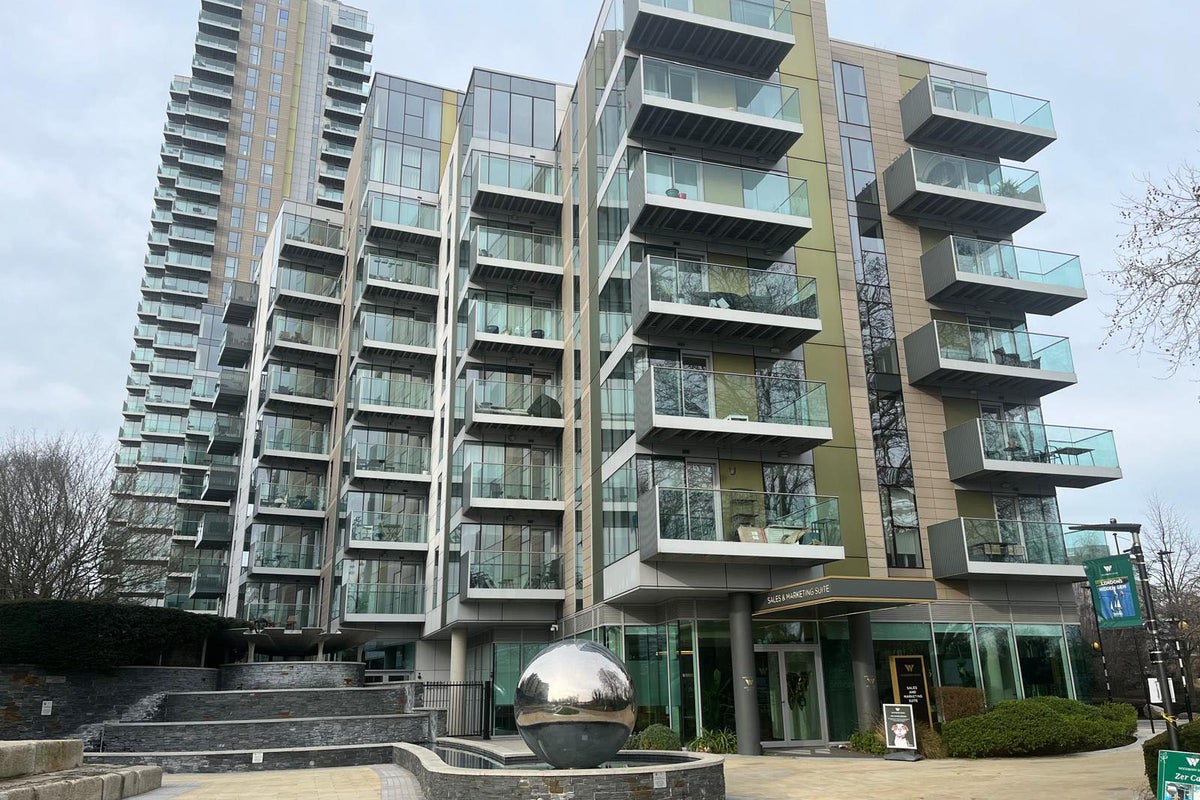
A couple who bought a luxury waterside flat in London are suing in a £3.6m High Court fight, after complaining about badly-fitted toilets in their home which risk people falling off while sitting on the loo.
Julian Thirsk and Emma King spent nearly £700,000 on their apartment on the banks of former reservoir and now idyllic nature park, Woodberry Wetlands, – dubbed “London’s best kept secret” – near Finsbury Park, in north London, in 2012.
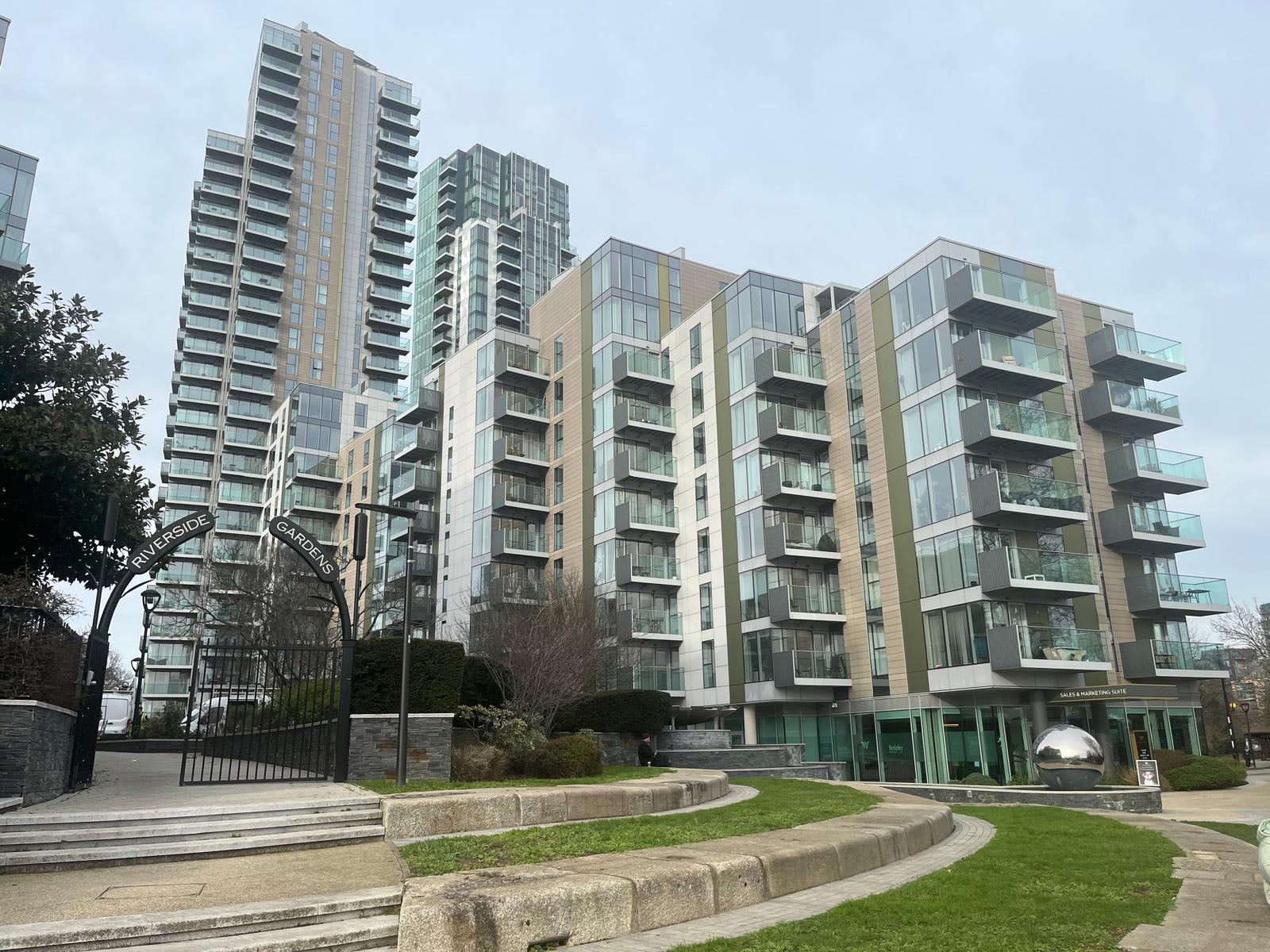
Their flat is part of a prestigious 5,000-plus home development overlooking the nature park, which is popular with birdwatchers and walkers and was officially opened by Sir David Attenborough in 2016.
But Mr Thirsk, 54, and Mrs King, 49, are now locked in a multimillion pound court fight with developers Berkeley Homes over a series of alleged “defects” in the property.
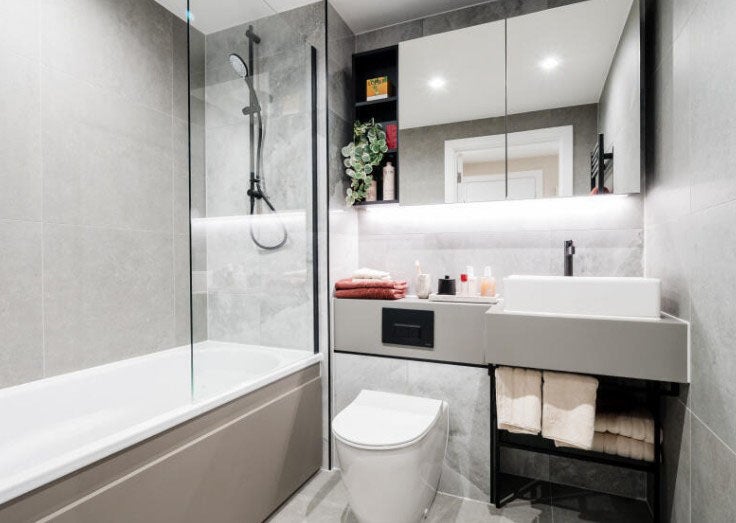
Among other complaints, they say defective toilets have leaked six times and even pose “a risk of personal injury due to their pans being installed in a manner which fails to prevent users being tipped forward.”
The couple also claim the three-bed apartment suffers with poor water pressure and that the bath plug does not seal properly, causing the bath to drain away too quickly to use.
They also complain of “wobbly tiles” on the terrace, smells emanating from other flats and rooms overheating due to a “curtain wall” designed to keep out solar heat not working properly.
They are now suing for more than £1.2million in compensation, in a case which a High Court judge said was likely to also run up lawyers’ bills totalling around £2.4million.
But lawyers for two companies in the Berkeley Homes group are denying liability and accuse the couple of overstating the problems with their flat.
According to documents filed at the High Court, Mr Thirsk and Ms King, a research director at an international professional services firm, paid almost £700,000 for their flat in 2012.
The apartment, which came with a £30,000 parking space, is in a block on the development which features an on site gym and swimming pool, as well as a 24-hour concierge service.
The Woodberry Downs development is a 30-year programme to replace older housing on the edge of the former reservoirs with luxury modern designed blocks.
The development, which began in 2009, is expected to eventually include more than 5,500 properties, set around leafy garden spaces and within metres of the water’s edge.
The two reservoirs, which had been closed to the public since the 19th century, are now host to a sailing lake and nature reserve, with reed-fringed ponds attracting migratory birds, butterflies, moths, dragonflies and frogs.
Mr Thirsk and Mrs King say they first noticed “defective construction works” after moving into their flat in June 2012 and ultimately agreed a list of works to be done with Berkeley Homes (Capital) Plc in 2014.
The work was to include work on the ventilation system, sunlight and temperature controlled automatic blinds, work on floors, plumbing, and other “snagging.”
They moved out to allow the work to be done in July 2014, moving back in March 2015, but say it was not carried out adequately and that several of the defects remained.
They are now suing for over £1.2million, including the cost of putting the alleged problems right and other losses associated with defects, including the cost of rental when they had to move out.

For the couple, barrister Daniel Benedyk says in court documents that the problems with the flat are myriad, affecting toilets and plumbing, ventilation, heat, floors and the terrace, among other things.
He referred to the “defective installation of toilets within the main bathroom and the en-suite bathroom to the master bedroom contrary to manufacturer instructions and/or the poor quality of their components.”
This “has caused flooding on six occasions and…presents a continued risk of flooding to the property and to other properties located within the block of flats,” he said.
The manner of the toilets being fitted also creates a “risk of personal injury due to their pans being installed in a manner which fails to prevent users being tipped forward.”
There is also a “risk of water damage to the property and to other properties within the Riverside Apartments due to their pans being installed in a manner which pulls on connected water service pipes and may cause those pipes to detach.”
The problems also included “the defective fixing of the toilets to their adjoining walls and the defective installation of the toilet flushing plate in the main bathroom of the property, which prevents access to the cistern of that toilet and which thereby prevents the claimants from being able to maintain the cistern including by treating mould growth.”
He said proper expansion joints were not factored in when flooring was fitted, with the result that tiles had “arched”, become loose and cracked.
“This has been caused, without limitation, by the tiles and screed expanding and contracting with temperature changes without expansion joints to absorb the excess movement,” he said.
The “curtain wall” system, designed to prevent heat transfer from the outside to the inside, had not resulted in the desired effect, he said.
Instead, the property was subject to significant “solar gain,” when the property is heated by sunlight through the glazing.
“The outdoor terrace paving is unstable and/or is subject to ‘rocking’ of a number of paving slabs,” he continues.
He said there was a “lack of soundproofing” in the master bedroom, lounge, main bathroom and hallway to prevent the noise of pipes, and also complained of “external odours” entering the kitchen from a neighbouring property.
The couple also have complaints about fire safety, including alleging that the fire escape steps are too narrow and too far from their door.
Mr Benedyk said it is the couple’s argument that “work has not been carried out in a workmanlike and/or professional manner and/or with proper materials.”
Their claim is against Berkeley Homes (North East London) Ltd, as freeholder, and Berkeley Homes (Capital) Ltd, as the Berkeley company which did the work after they moved in.
However Berkeley Homes (North East London) says it has not been the couple’s landlord since 2015 when their lease was transferred to another company and denies liability anyway.
And barrister Laura Adams, for Berkeley Homes (Capital), denies it is liable for any alleged defects and says many alleged problems could simply be fixed if the couple allowed workers access.
“To the extent that there are allegedly outstanding defects at the property, these are not necessarily defects for which Berkeley Homes (Capital) is liable but has offered on a number of occasions to address.
“The claimants however have refused access to the defendants when they have sought to carry out works and/or investigate the allegations made on multiple occasions.”
Addressing individual complaints, she continued: “The second defendant avers that the toilets in the property were properly installed and that there is no risk to personal injury.
“Should any remedial work be necessary, the minor works of bracing of the toilet could be completed if the claimants were to grant access as requested.”
Defects to tiles due to the lack of expansion or movement joints were also denied, because such joints are not advised by the makers in a space as small as that in the flat.
She continued: “No tenting, arching or raised tiles were observed by the defendants at the property.
“Without prejudice to the foregoing denial, it is admitted that there are small areas of missing grout in the corridor and a hollow sound to some areas when struck indicating that a full bed of adhesive has not been laid.
“It is admitted that minor remedial works are required which the defendant remains able and willing to complete. However it is denied that the entirety of the floor tiling needs to be taken up and replaced.
“This is disproportionate and unnecessary.”
“It is denied that any defect in the property has rendered the dwelling unfit for habitation. The claimants have occupied the property for over nine years since the completion of the agreed 2014 works without risk to their health or safety.
“The claimants’ pleaded defects include separate allegations of inter alia three wobbly terrace tiles and small areas of missing grout in floor tile.
“It is averred that on any sensible construction, these defects – individually and/or collectively – cannot render a property unfit for habitation.
“As such, the claimants have failed to particularise which of the alleged defects they contend rendered the property unfit for habitation.”
She said London Fire Brigade had also visited the property and said there had been “no significant failure to comply” with fire safety regulations.
The case recently reached the High Court for a decision on the amounts that each side will be allowed to spend bringing the dispute to trial.
Although it was agreed that the couple’s costs budget could be around £1.15million, there was a dispute over Berkeley’s combined costs budget of £2.1million.
Setting their costs at just over £1.2m, Judge Roger Ter Haar KC said the amount put forward as a budget by the Berkeley companies was “prima facie disproportionate.”
“Firstly, the amount put forward is just under twice the amount presently claimed,” he said. “Secondly, the amount put forward is approaching twice the amount of the claimants’ agreed budget.”
The case will now move on to a full trial of Mr Thirsk and Mrs King’s claim, to be heard at a later date unless the parties agree to settle outside court.