



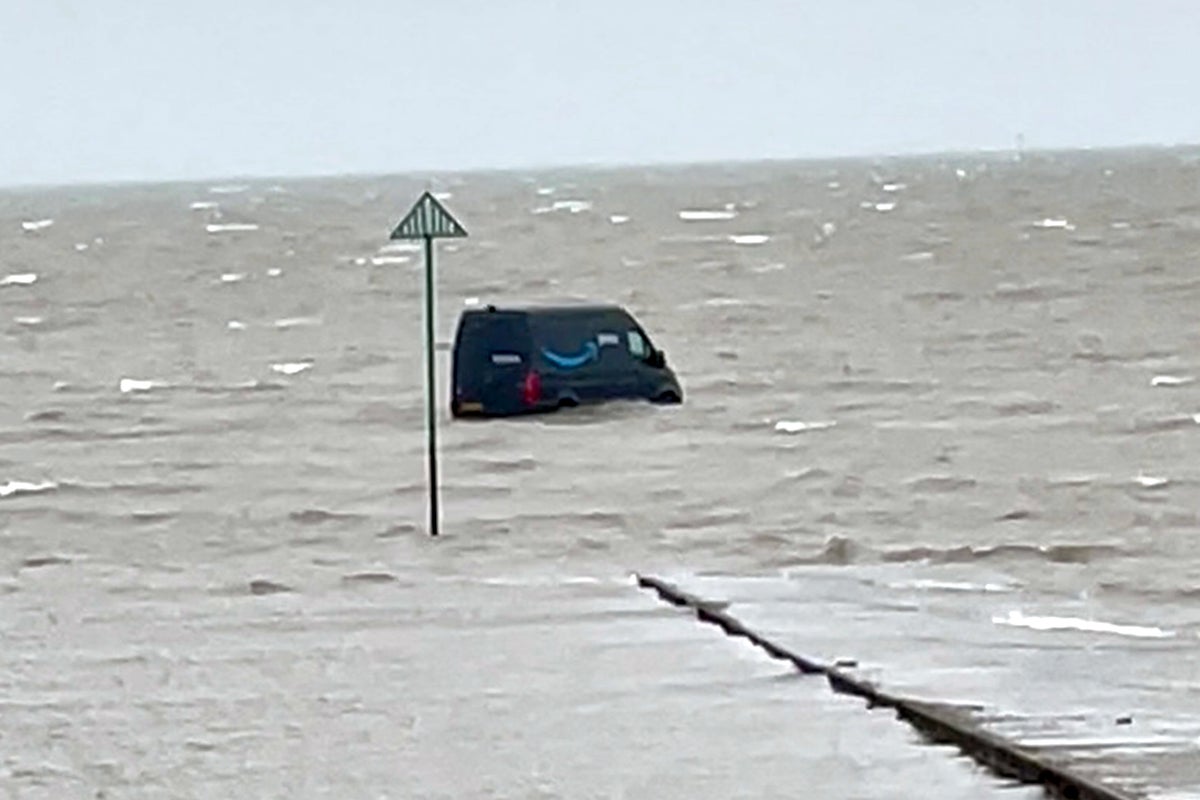
A delivery van got trapped in mudflats in Essex at an area locals refer to as the “deadliest footpath in Britain”.
HM Coastguard was alerted at 11.30am on Sunday to “a report that an Amazon delivery vehicle had driven onto The Broomway”, at Great Wakering in Essex.
The motorist had been following a GPS navigation to Foulness Island on Saturday evening. The delivery driver was forced to abandon the vehicle before reporting the incident to Amazon.
A HM Coastguard spokesperson told The Independent that the “Southend Coastguard Rescue Team attended the scene and after confirming there were no people in danger, stood down shortly afterwards.”
The Coastguard confirmed that Amazon were made aware of the incident and arranged recovery of the vehicle with a local farmer who extracted the van by 3.30pm.
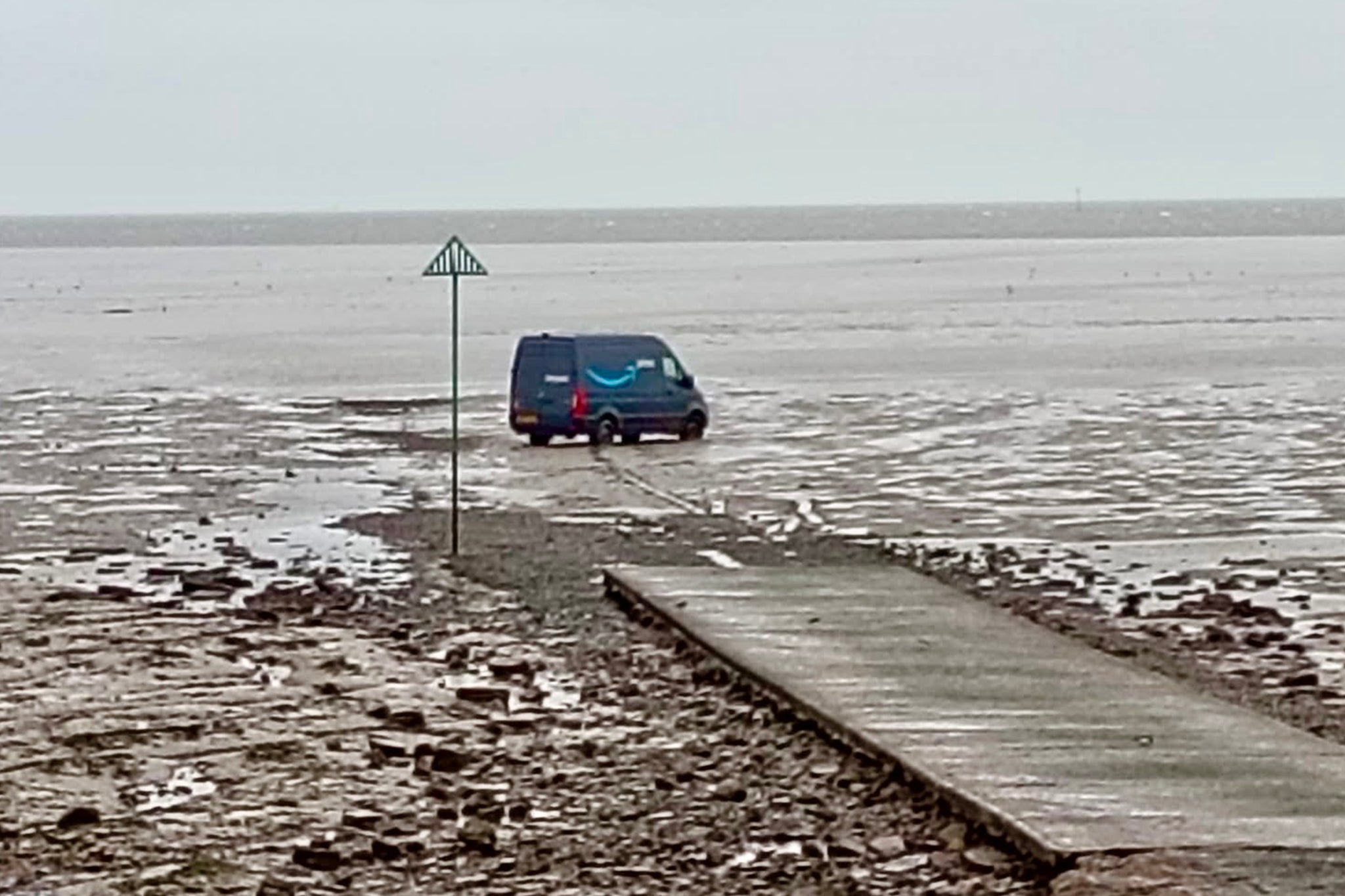
The Broomway is a 600-year-old, six-mile route across flat sands from the shore near Southend-on-Sea to Foulness Island.
The full route is not suitable for vehicles and instead people are advised only to walk there alongside an expert guide who is experienced with dealing with mudflats.
The pathway, managed by Essex Highways, is also a Ministry of Defence firing range managed by global defence and security company Qinetiq. The correct route to Foulness Island would have been through the left barrier via Qinetiq’s security office.
The HM Coastguard Southend stated “It is an extremely dangerous area and is on MOD property only free to access when the firing ranges are not active and the barrier is open.”
The emergency service said: “HM Coastguard’s primary concern was for the safety of the occupants and any possible pollution. With the occupants confirmed to be safe and the vehicle to be removed later today, Coastguard Officers were stood down.”
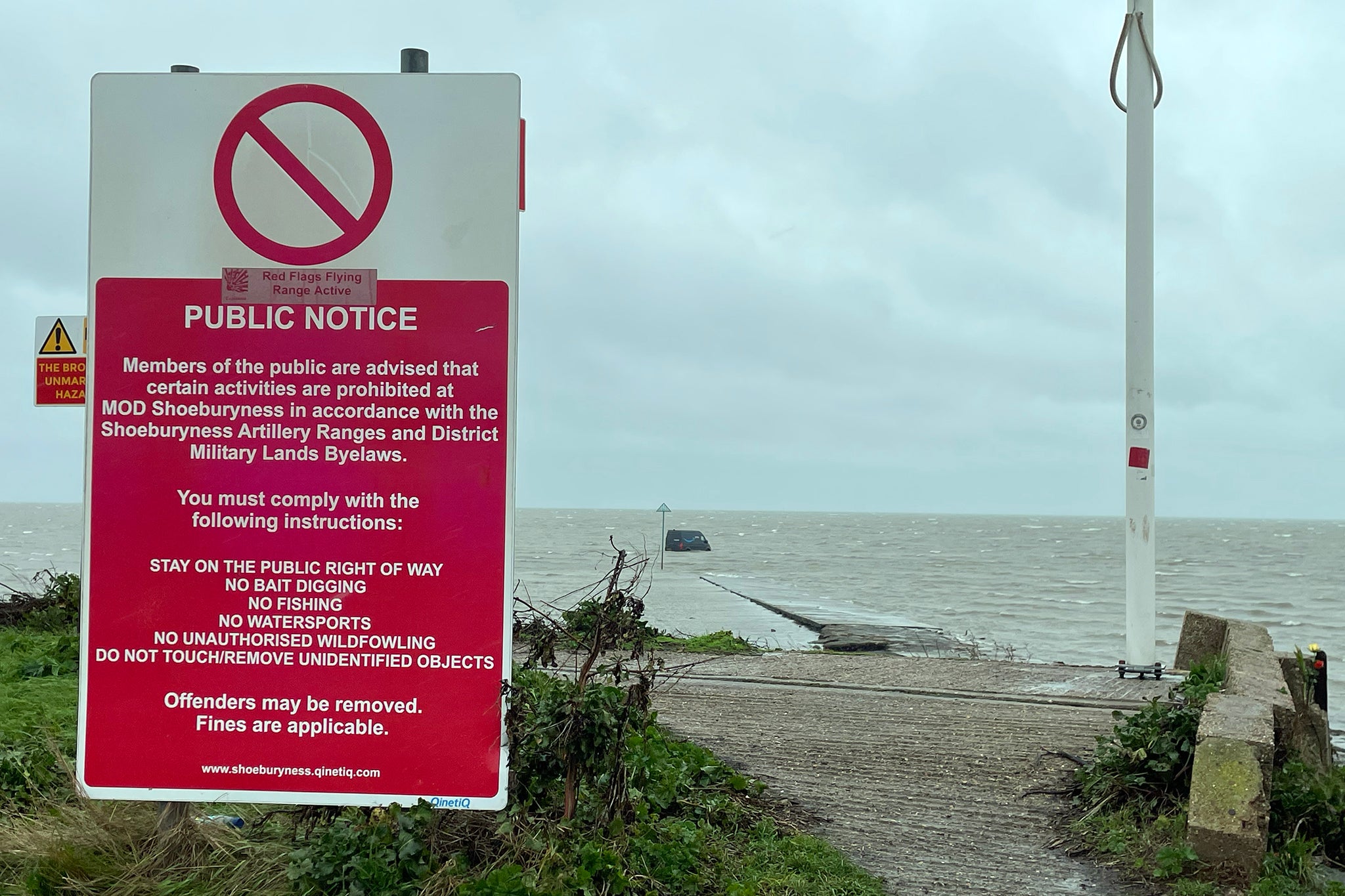
There is signage on site pointing out that “The Broomway is unmarked and very hazardous to vehicles and pedestrians”.
The location is notorious for being covered by fast moving tides and thick, disorientating fog which is widely acknowledged as catching people by surprise.
At least 100 people have died on The Broomway after becoming trapped in the tide or becoming lost due the lack of visibility, according to parish council records. The last known death was recorded in 1919.
The site has since garnered a reputation amongst the locals for being “the most dangerous pathway” in Britain.
The route was historically used by farmers and travellers in a time that pre-dates modern roads.
Amazon have not responded to The Independent’s request for comment.

