How do you follow up a show like Derry Girls? Over the course of three seasons, Lisa McGee’s comedy, set in her home city during the tail end of the Troubles and laden with semi-autobiographical elements, snowballed from an in-the-know Channel 4 favourite to a near-universally beloved Netflix hit. The five lead characters – four girls and a “wee English fella” – now grace a mural near Derry’s famous city walls, grinning in their green Catholic school uniforms.
For her next act, McGee has shifted her focus… 70 miles or so down the road. This time around, she’s still chronicling female friendship, and yes, there are a few flashback scenes that could well have been plucked from her previous show. But although How to Get to Heaven from Belfast might not be all that far from Derry Girls in geographical terms, and in some of its overarching concerns, tonally, it’s very different indeed.
Where its predecessor was very much a straightforward half-hour sitcom in scope, this eight-part Netflix series is much trickier to pin down, in the best possible sense. It’s a gleeful and giddy joyride through the genres, one that feels appealingly idiosyncratic in a TV landscape filled with identikit slop that has been deliberately engineered to be watched with one eye on your phone.
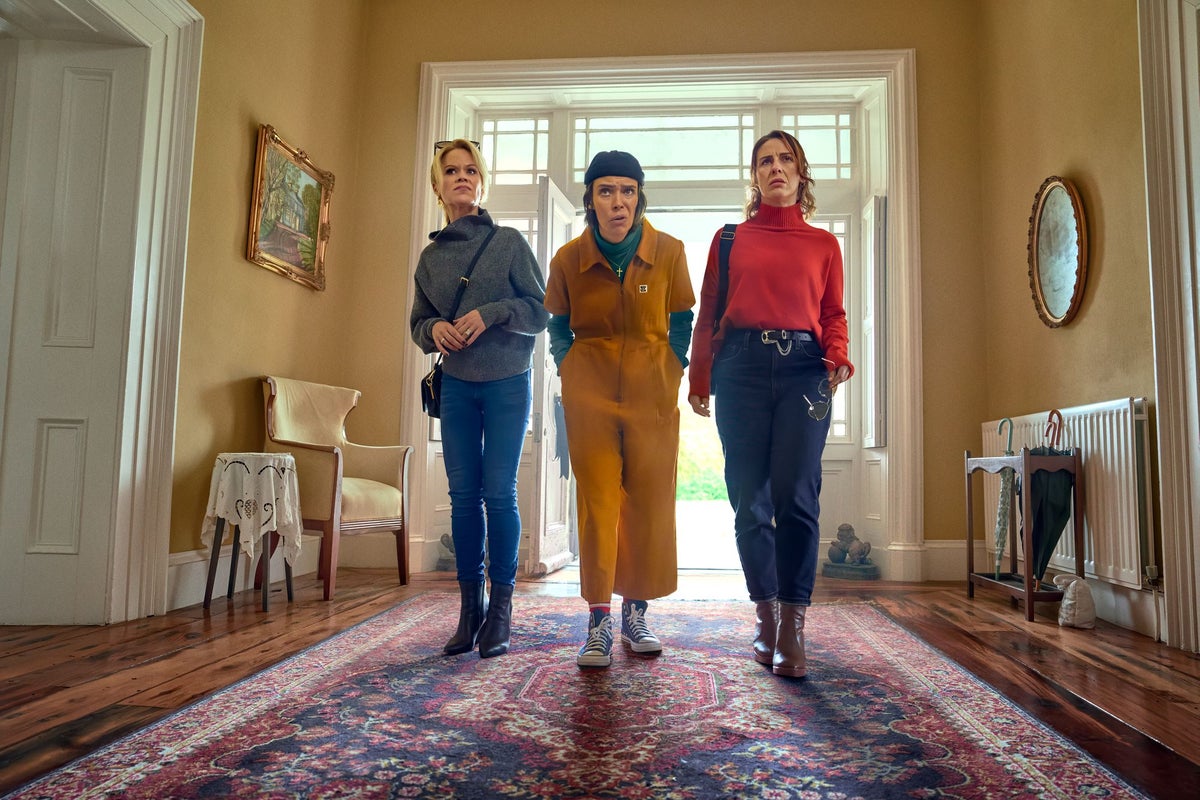
McGee has a real knack for conjuring up platonic bonds that feel lived in, quickly sketching out the sort of friendships that have somehow outlasted the awkward teenage phase and grown all the stronger (and funnier) for it. Her central trio, Saoirse, Robyn and Dara, have been pals since secondary school, and stayed close despite their life paths diverging in their thirties.
Saoirse, played by Roisin Gallagher, is the successful writer of a TV crime show who seems to hate both her fiancé (Tom Basden) and her leading lady (a wonderfully smarmy Leila Farzad). Robyn (Unforgotten’s Sinéad Keenan) is a glamorous but put-upon mum of three young lads. When we first meet her, she is on the phone to the beauty salon, her call punctuated by the shrieks of her battling boys. “I basically want you to erase my current features and draw on new features,” she tells her make-up artist. Meanwhile, Dara (Caoilfhionn Dunne) has put her own life on hold to look after her ageing mother.
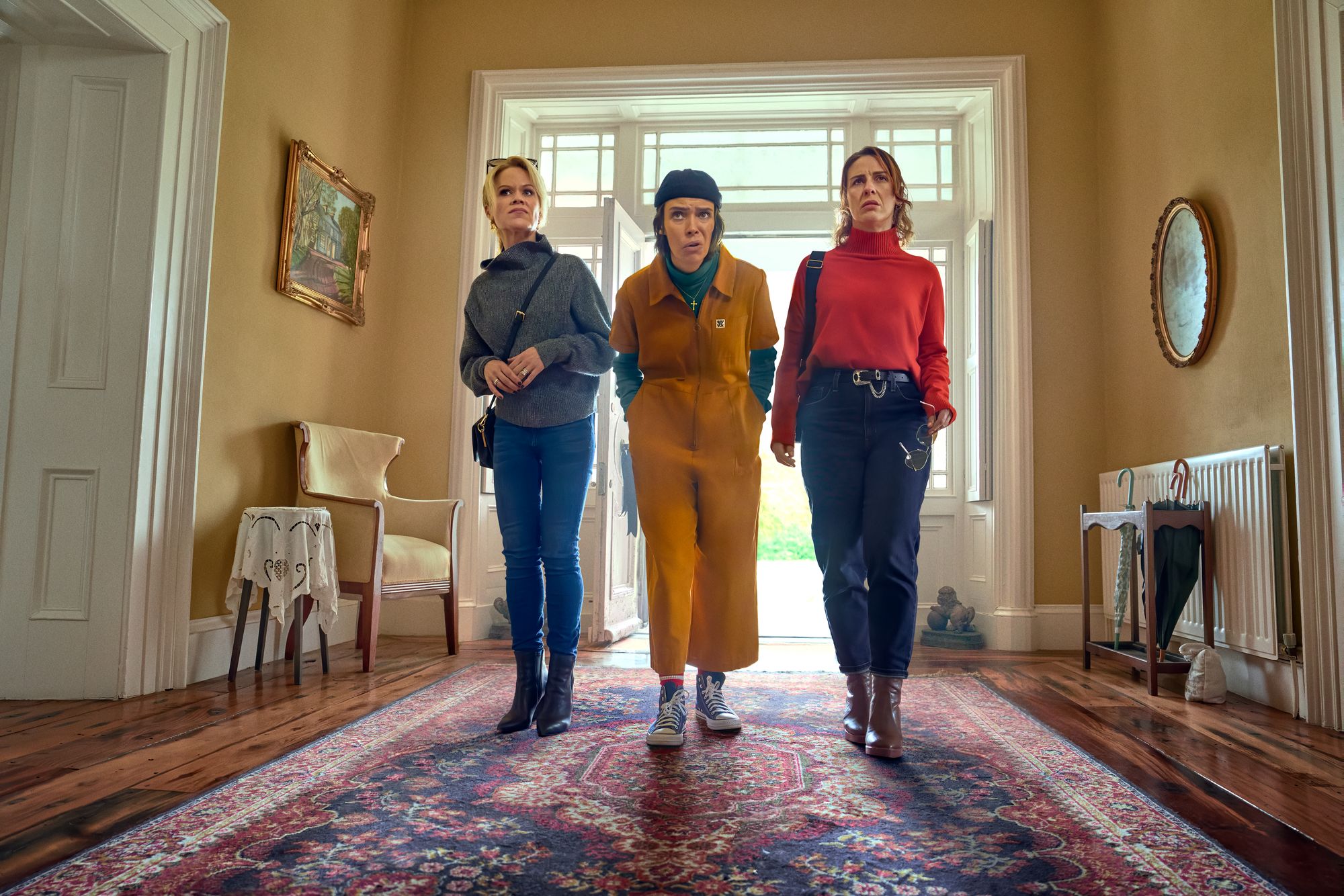
Out of the blue, they all receive an email inviting them to the wake of their friend Greta, who was once the fourth member of their gang. When they arrive, it becomes clear that there are huge, glaring question marks hanging over Greta’s untimely death. Soon they become embroiled in a madcap sort of mystery that forces them all to reckon with an event from their adolescence they’d long thought buried.
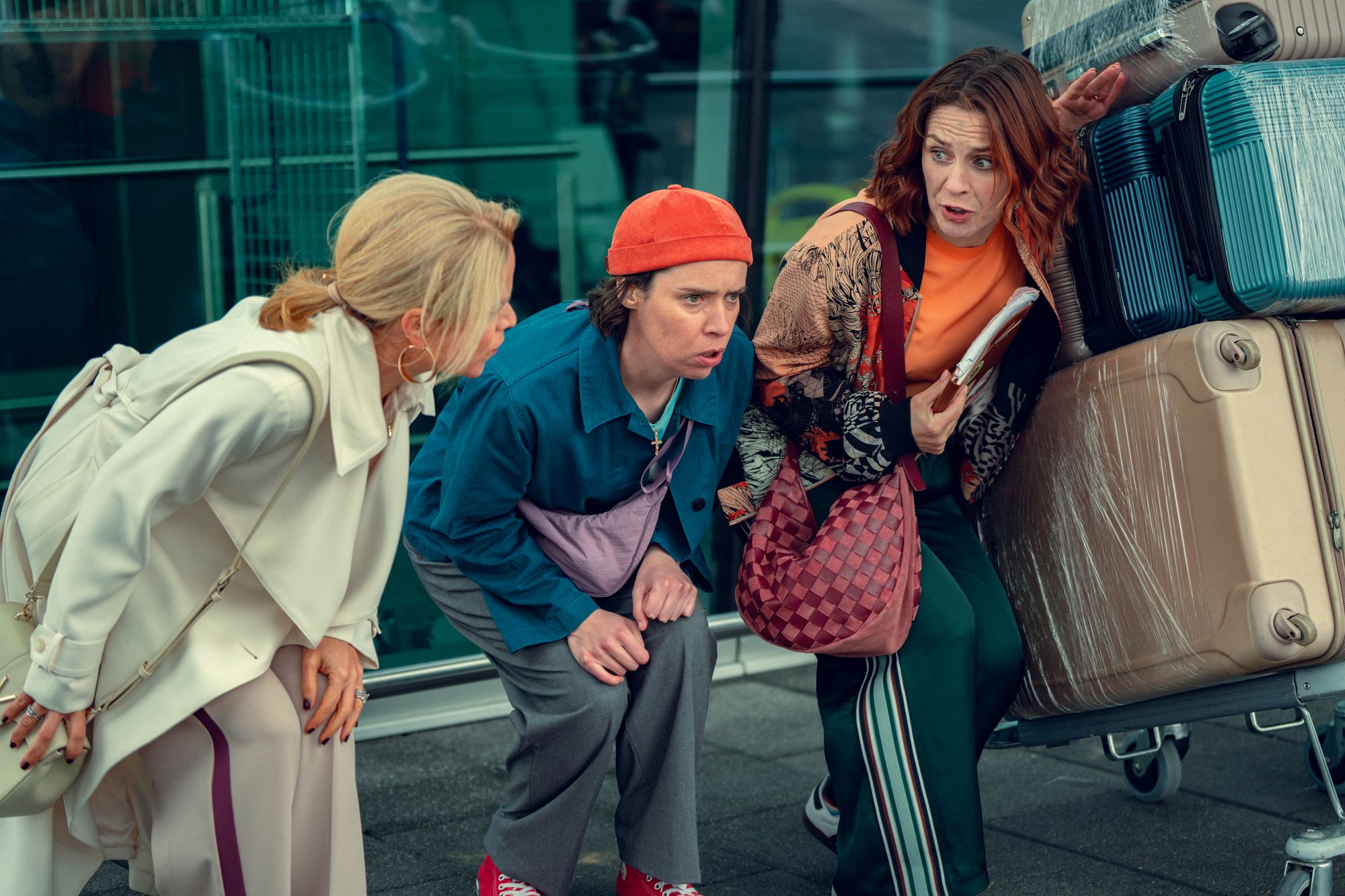
How to Get to Heaven from Belfast is hard to categorise, but the word “caper” feels like a good start. Tonally, it veers from dark comedy to kitsch adventure to action thriller; it occupies a world that is at once entirely recognisable (the three women’s shifting relationship dynamics, and the demands placed on them by the outside world, are particularly well observed) and totally surreal, crammed with odd side characters. My personal favourite? A biker priest who won’t take confession out of hours (“Rome’s encouraging us all to preserve our work-life balance,” he says).
A handful of Derry Girls stars pop up as a sort of McGee-centred repertory company: Art Campion, who played the much swooned-over Father Peter in the sitcom, appears as Robyn’s underwhelming husband, and Saoirse-Monica Jackson joins later on in a very extravagant purple wig. And if Derry Girls boasted a brilliant Nineties playlist, this new show has a whale of a time with Noughties pop. “The Ketchup Song”, “Whole Again”, “Gotta Get Thru This” and the best of Girls Aloud add up to a very millennial-friendly soundtrack.
The overall effect of all this? Bonkers but brilliant. It’s a real treat to see a writer having this much fun.