


With Netflix’s Bridgerton back on our screens, Regency era style is again in the spotlight, highlighting how pop culture shapes not only fashion trends but the way we design our homes.
But the “Regencycore” trend is not about recreating a period set; instead, translates historic elegance for modern living: sweeping drapery, decorative mouldings, and soft pastel tones balanced with contemporary finishes, practical layouts, and everyday comfort.
Soft shades sit at the heart of the aesthetic. Interior designer Emma Sherlock explains: “Pastel colours were a hallmark of the Regency era’s decorative style, reflecting a shift toward elegant and lighter schemes, moving away from the deeper, richer tones of the Georgian period.
Powder pinks were often paired with pale blues, apple greens, and soft yellows – tones that feel perfectly at home on the Bridgerton set.
“Today, however, the key isn’t to recreate the period exactly, but to reinterpret it for a contemporary interior,” she advises. “Pair pastels with darker, sludgy shades to add depth, and use them sparingly as too much pink in a room can quickly feel overwhelming.”
With this colour palette as a foundation, wallpaper often becomes the next point of focus, instantly conjuring up romance and refinement. Interior designer Rebecca Hughes recommends “sweeping, hand-painted-style botanicals or damasks, paired with curved furniture, gilded accents, sumptuous velvet upholstery, and silk drapery.
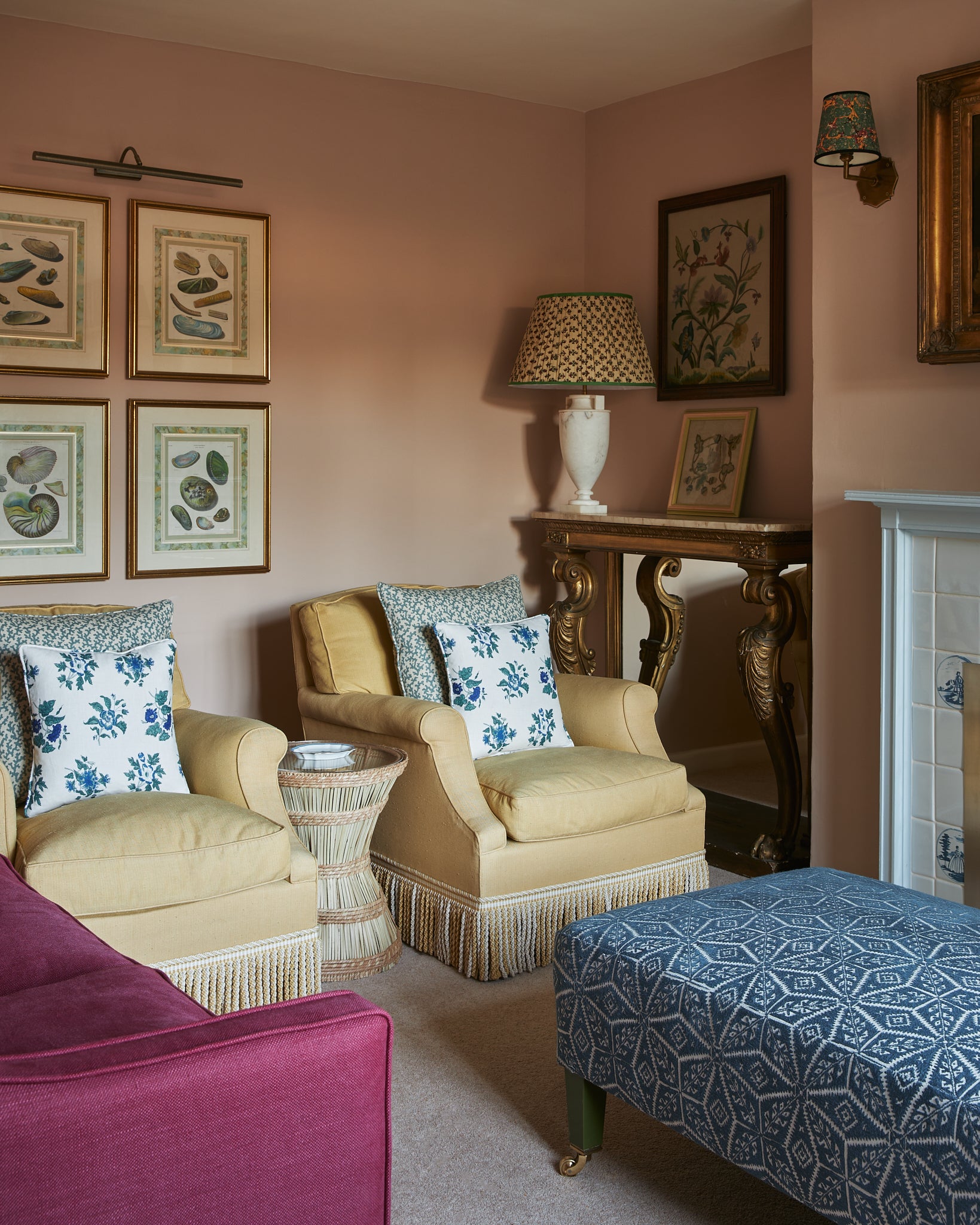
“Regencycore is all about creating a space that feels nostalgic but still effortlessly sophisticated.”
That balance continues in the way furniture is arranged. Regency interiors prized order and calm but with the use of symmetry to create harmony, rather than formality. “Matching chairs, paired lamps, and centred mirrors created a sense of balance,” says Martin Waller, founder of furniture and textile design house, Andrew Martin.
“The pieces themselves were graceful rather than bulky, defined by slender legs, delicate inlays, and touches of brass.”
For a modern take, he suggests mixing old and new: “A contemporary sofa alongside a coffee table with classical legs, or modern art set in an antique-style frame – it’s that contrast that keeps a space feeling current.”
Flooring, too, played an important architectural role during the Regency era, bringing elegance and rhythm to the grand townhouses and formal reception rooms of the period.
.jpg)
“Ornate, geometric floor patterns such as herringbone, chevron, and Parquet de Versailles were hallmarks,” says Neel Bradham, chief executive at flooring brand Parador.
“These designs lent a sense of refinement and structure to spaces, and today they translate beautifully into both period restorations and modern homes.” He notes that opting for engineered wood – rather than reclaimed hardwood – allows homeowners to “capture the refinement of historic flooring while benefiting from enhanced stability, durability, and compatibility with contemporary living conditions.”
Antiques add a final layer to the look, introducing a sense of history and individuality. Chinese-inspired designs, known as Chinoiserie, gained immense popularity during the Regency period, reflecting a growing taste for the decorative and the exotic.
To source these pieces today, Hughes recommends online platforms such as Decorative Collective, 1stDibs and The Hoarde.

“Beautiful vintage pieces can also often be found affordably at one of the many antiques fairs across the country – my favourite being Sunbury Antiques Market at Kempton Park Racecourse, held twice a month,” she adds.
Layered together, these elements create a home that feels romantic yet restrained, richly detailed yet practical – a modern interpretation of Regency elegance that proves the Bridgerton effect shows no sign of fading.