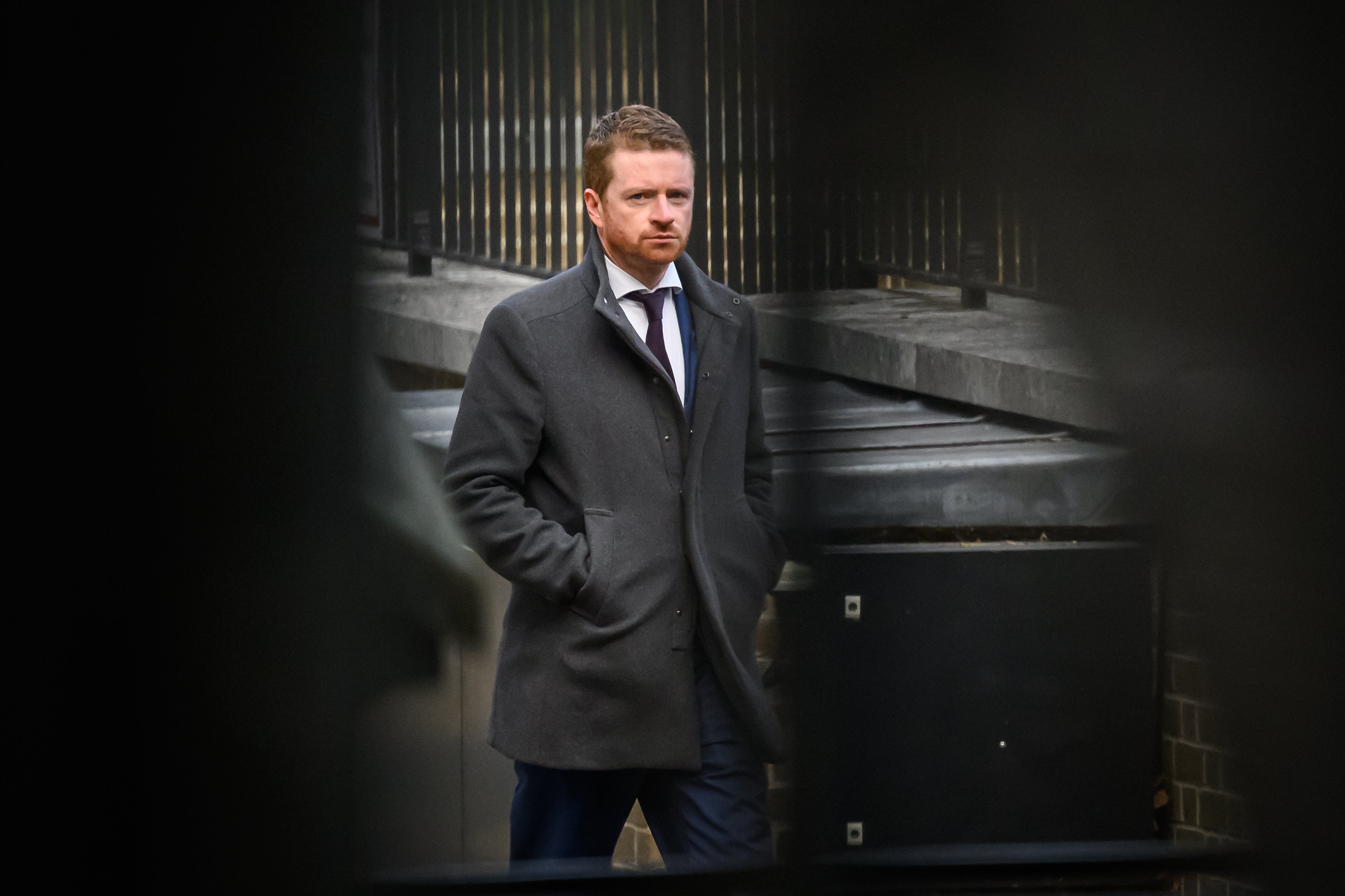
The name Morgan McSweeney may not have been on the lips of many people down the pub or at the school gate, but it has been one that those in the Westminster bubble are obsessed with.
Now, though, he has become the biggest scalp yet in the rapidly escalating scandal over Peter Mandelson that threatens to also engulf the prime minister.
The departure of the man who was responsible for Sir Keir being the leader of the Labour Party, the architect of the subsequent election victory and central figure in running the government leaves a weak prime minister very badly exposed.
Labour MPs were always aware of the now former Downing Street chief of staff’s power and importance, as something they considered to be either a toxic poison at the heart of government or a means to future preferment and promotion.
Such were the concerns of the toxicity of the Downing Street operation under him that ambitious young Labour special advisers (spads) told The Independent that they would not go and work there, preferring outlying departments instead.
Just last week, one spad told The Independent: “You wouldn’t catch me dead there.”
Cabinet ministers would complain about it in private, but everyone knew that with McSweeney, there was no Starmer and vice versa.
One trusted senior minister said: “Keir has to sort out the toxicity in Downing Street or else we will get nowhere.”
There had at times even been mutterings in Westminster’s corridors that this was not Starmer’s government at all, but rather McSweeney’s – that the prime minister was, in many ways, the frontman for a project that is actually being directed by an unelected official in Downing Street.
Tales from the last ministerial reshuffle last year emphasised his influence. The three people removed from the cabinet were all people McSweeney wanted out, according to sources.
Angela Rayner may have been forced to resign over her tax affairs, but there had been a long, concerted campaign by the Blairite wing of the party, of which McSweeney remains a key member, to remove her. Who was it that authorised the revealing and damaging readout of Rayner’s comments on immigration in a cabinet meeting just before the summer? That could only have happened with McSweeney’s blessing.
Lucy Powell, now back after winning the election to be the party’s deputy leader, was removed as Commons leader because “she kept standing up to McSweeney and telling him he was wrong”, according to an ally of hers.
Ian Murray was replaced by Douglas Alexander as Scottish secretary “because of McSweeney’s obsession with Blair-era figures”. Alexander, a very capable individual, was a minister and campaign chief in Tony Blair’s and Gordon Brown’s governments.
“McSweeney was desperate to get him in the cabinet, and Ian was expendable,” a source told The Independent.
More worryingly, Paul Ovenden, one of his key lieutenants, was sacked from Downing Street when emails with lurid remarks about veteran Labour MP Diane Abbott emerged.
But now McSweeney’s poor judgement of character has unravelled over his links with Mandelson.
The 48-year-old not only pushed for Mandelson’s appointment as ambassador to the US, but also tried to prevent his sacking, according to reports.
But to understand the current project, you need to go back to the Jeremy Corbyn years, when McSweeney was at the forefront of trying to save the party from disappearing forever down a far-left black hole.
As director of Labour Together, he effectively organised the fightback and handpicked Starmer as the man to take over from Corbyn and turn the ship around.
Labour’s success in the general election, which McSweeney ran, was the vindication of that project, but unfortunately, the party came into office without much of a policy plan.
And it all started with McSweeney removing an obstacle to his authority – Sue Gray, who had been brought in as the original chief of staff before he replaced her.
As the welfare crisis mounted last year, with scores of Labour MPs threatening to vote the government’s policy down, the calls to remove McSweeney grew very loud indeed. And they have not really quietened since.
The Mandelson scandal, however, sent them stratospheric.
But herein lies the problem. If this government were more a McSweeney government than a Starmer one, the prime minister would struggle to survive without his chief of staff.
Without McSweeney, Starmer is hugely weakened, and the suggestions of a leadership coup within weeks become very realistic.
Sir Keir plans to brazen it out appointing two insiders from the existing team – Vidhya Alakeson and Jill Cuthbertson – to replace McSweeney as joint chiefs of staff. He plans to continue the focus on the cost of living issues and put himself front and centre of the fightback.
However, with the crucial by-election in Gorton and Denton coming up on 26 February and beyond that the local and devolved elections on 7 May, Labour MPs may decide they want a new resident in Downing Street long before the summer.