



Chinese scientists have developed a compact ultra-powerful energy generator, paving the way for next-generation weapons that could one day be turned on satellite swarms like SpaceX’s Starlink constellation.
High-power microwave weapons have gained traction in recent years as a low-cost alternative to missiles and guns due to their near-unlimited firing capacity.
Researchers in the US, Russia, and China in particular have all been investigating whether the technology could be developed into directed-energy weapons that can disrupt satellites.
Destroying a satellite in space is a messy business, with conventional weapons likely to create large amounts of orbiting debris that can have unpredictable consequences, including for a nation’s own satellites.
In theory at least, microwave weapons could disable a satellite with the creation of minimal debris and allow for plausible deniability, making them strategically advantageous.
These weapons operate by storing electrical energy and releasing it all at once in a powerful pulse – similar to a Tesla coil.
The massive power spike they are capable of producing can run microwave generators, which in turn can be used to disrupt electronics.
Until now most prototypes for these pulse generators have been large, measuring at least 10 metres long and weighing over 10 tons, making them difficult to install in smaller weapons systems.
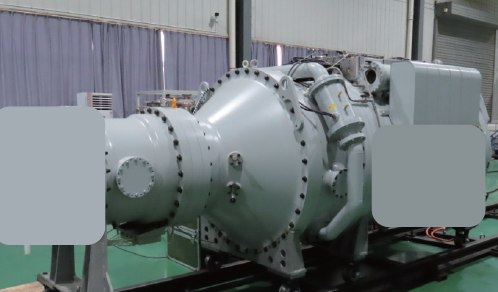
In a new study, Chinese scientists from the Northwest Institute of Nuclear Technology (NINT) used a special liquid insulating material, dubbed “Midel 7131”, to achieve higher energy storage density, stronger insulation, and reduced energy loss, helping create an overall much more efficient and smaller device.
“By adopting a high-energy-density liquid dielectric Midel 7131 and a dual-width pulse-forming line, the study achieved miniaturisation of an integrated Tesla transformer and pulse-forming system,” scientists wrote in the study published in the journal High Power Laser and Particle Beams.
Measuring just four metres (13 feet) long and weighing only five tons, the new device is the world’s first compact driver for a high-power microwave (HPM) weapon.
Designated TPG1000Cs, it is small enough to be mounted on trucks, aircraft, and even other satellites, researchers say.
“The system has demonstrated stable operation over continuous one-minute durations, accumulating approximately 200,000 pulses with consistent performance,” researchers wrote.
Experts say a ground-based microwave weapon with an output over 1 gigawatt (GW) could severely disrupt Starlink satellites in orbit.
TPG1000Cs can achieve extremely powerful electrical pulses reaching 20 GWs, researchers said, according to SCMP.
China has published a number of studies stating the need to find ways to disrupt Elon Musk’s Starlink satellites.
“The potential military application value of the Starlink megaconstellation has been highlighted in the Russia-Ukraine conflict,” Chinese researchers from Nanjing University of Aeronautics and Astronautics wrote in a study earlier this year.
“In recent years, the militarisation of space has intensified, posing a significant threat to China’s space security. It is particularly important to track and monitor its operational status,” they wrote in the research published in the journal Systems Engineering and Electronics.
Last year, scientists from Beijing Institute of Technology (BIT), which consistently contributes to China’s defence research, simulated a way to disrupt Starlink satellites spread over an area the size of Taiwan.