

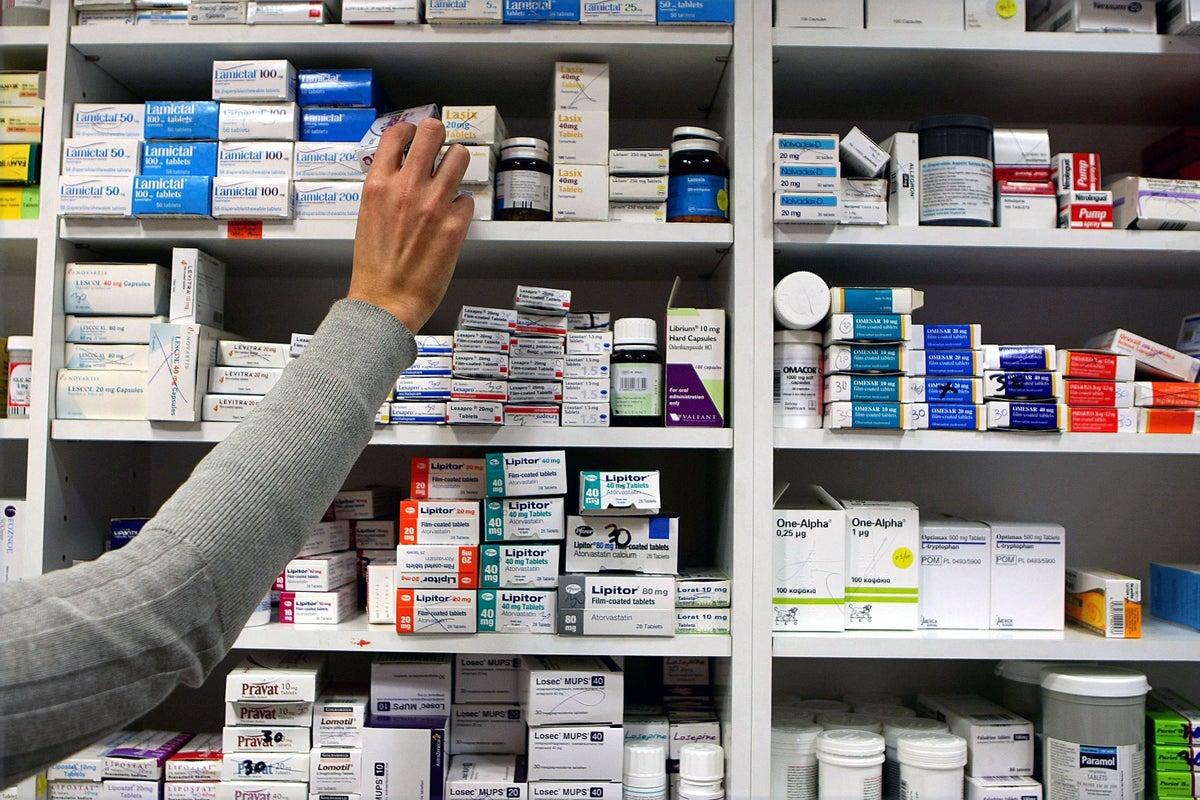
Cancer and stroke drugs are among nearly 400 medicines at risk of shortages in the UK, The Independent can reveal.
NHS England has identified 378 medicines as having either no supplier or only one supplier, including bendamustine, a chemotherapy drug used to treat cancers such as non-Hodgkin lymphoma and some leukaemias.
Other at-risk medicines, according to Medicines UK, which represents manufacturers of generic drugs in the UK, include ukokinase, which is used to treat blood clots and pulmonary embolism – a life-threatening blockage of the lung that can cause a stroke – and flupentixol, which is used to treat schizophrenia.
Around 80 of those included on NHS England’s new list are medicines for which there is no manufacturer, meaning they would be hit by shortages if the current supply ran out. The remaining 300 drugs have only one manufacturer signed up, meaning supplies could be hit if those suppliers chose not to continue their contracts.
Medicines UK warned that this could mean doctors will have to find alternatives for patients, and could leave the UK having to pay higher prices if demand outstrips supply.
Mark Samuels, chief executive of Medicines UK, said: “The list includes products of critical priority and the ambition is to target those medicines representing the most serious risk to supply resilience, which could lead to shortages affecting patient care.”
The news comes following a turbulent time for drug supplies in the UK, following threats over increased tariffs from US President Donald Trump and a standoff between the UK government and pharmaceutical companies over how much the NHS spends on medicines.
Last week, widespread shortages of aspirin, a vital medication for preventing strokes and heart attacks in vulnerable patients, were reported, and since the pandemic, the UK has faced multiple medicines critical shortages, including key drugs such as Hormone Replacement Therapy (HRT), and Creon, a pancreatic enzyme replacement therapy (PERT) used by patients with cystic fibrosis.
The “critical” medicines were identified through a scheme launched by NHS England, Medicines UK and the Medicines and Healthcare Products Regulatory Agency called Project Revival. Through this scheme, manufacturers will be offered an incentive to sign up to supply the drugs on the list, with promises to fast-track their licence approvals and guarantee them approval to be able to supply.
The scheme, due to be operational next year, aims to incentivise manufacturers to supply medicines that may previously have been considered commercially unviable.
Mr Samuels said the scheme was a “tangible” example of something which will help mitigate the impact of potential shortages of important medicines.
He said: “We have long stated that medicine shortages cannot be solved in isolation, and this project shows what can be achieved by working together. By working with NHS England and MHRA, we hope that this new model provides more certainty to enable companies to produce and supply medicines for use in the NHS.”
In a report due to be published this week, Medicines UK will set out the fragility of medicines supplies in the UK, after a survey of its supplies found that more attractive markets overseas were a significant barrier to increasing UK supply.
Fiona Bride, NHS England’s interim chief commercial officer and director of medicines value and access, said: “Ensuring a resilient and stable supply of medicines is fundamental to delivering patient care, with pharmaceuticals being the most common healthcare intervention in the NHS, and this collaborative pilot initiative aims to strengthen that supply chain by incentivising more companies to become NHS suppliers, or deepen existing partnerships.”
Julian Beach, executive director, healthcare quality and access at the MHRA, said a pilot of Project Revival will run for 12 months, and a long-term programme will be made in early 2027.