

Italy has declared a state of emergency across its southern regions following a devastating storm last week, pledging swift financial aid to rebuild roads and businesses.
The severe weather brought relentless rain, powerful winds, and waves as high as nine metres (30 ft) that battered Sicily, Sardinia, and Calabria for two days, pushing water inland and overwhelming coastal defences.
Officials estimate the damage exceeds €1 billion ($1.19 billion), though no casualties were reported despite the scale of destruction.
Prime Minister Giorgia Meloni’s government has set aside an initial €100 million to address the immediate needs of the hardest-hit areas, Civil Protection Minister Nello Musumeci confirmed.
“In the coming days, the government will adopt a new interministerial measure to allow the restoration and reconstruction of the damaged infrastructure,” Musumeci said.
Sicily alone suffered around €740 million worth of damage, the regional government said last week, but the island’s governor, Renato Schifani, warned on Monday that the final amount could be double that.
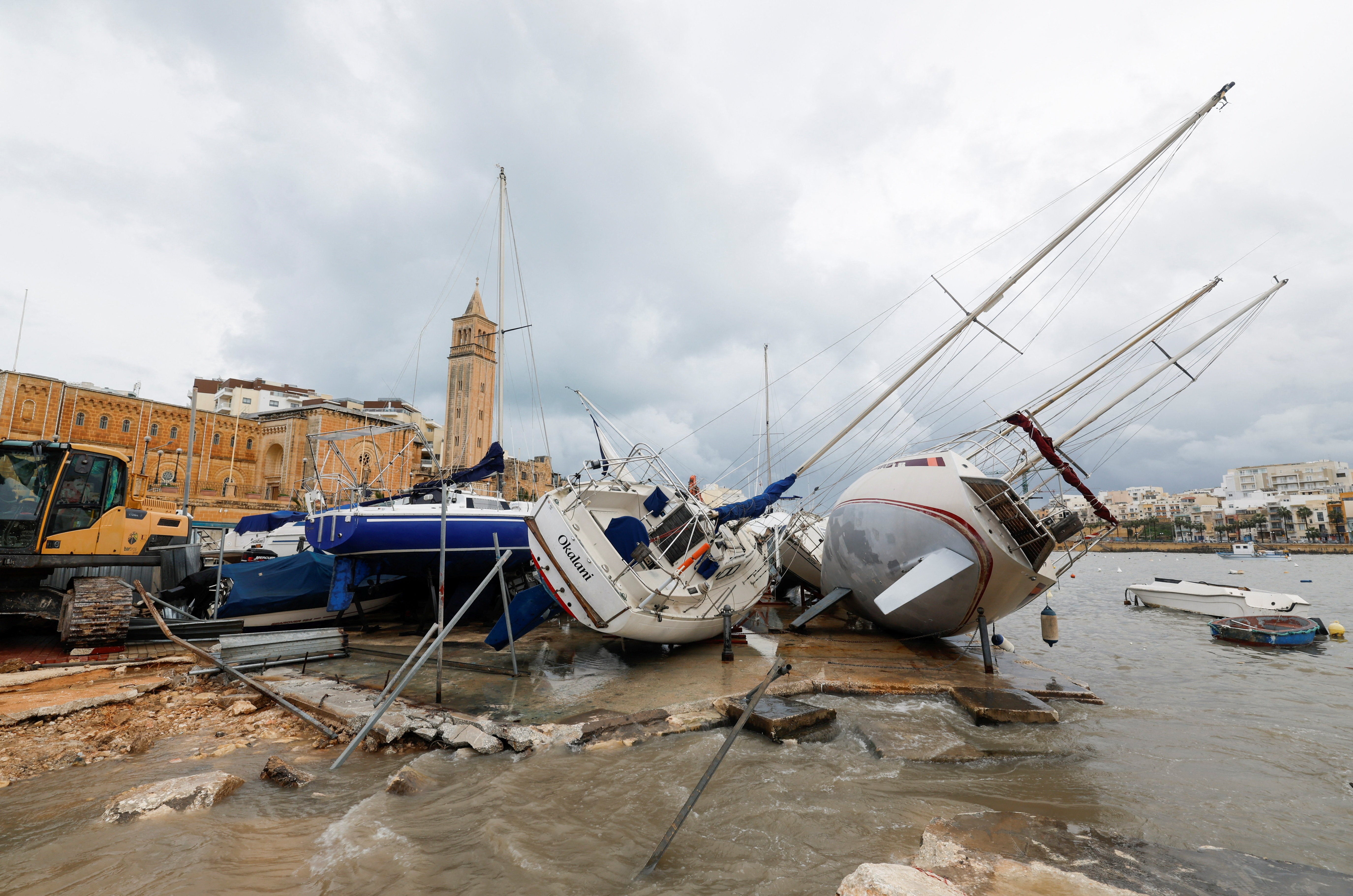
The sea flooded streets in popular hotspots near Taormina, wrecking infrastructure such as wastewater treatment facilities, and raising concerns over the forthcoming tourist season. In Catania, a section of sidewalk collapsed on the seafront.
Land subsidence, probably triggered by the bad weather, is now threatening the town of Niscemi, in central Sicily, and around 1,000 people have had to be evacuated from their homes, the civil protection said in a statement.
Sardinia was also badly hit. Beniamino Garau, the mayor of Capoterra in the south of the island, said the sea had pushed about 100 metres inland.
In Calabria, the regional administration said the storm caused “major damage to agricultural business…with serious repercussions for the rural economy” in one of Italy’s least developed areas.
Extreme weather events have become more frequent in Italy in recent years. Floods have devastated cities across the country, killing dozens of people and amplifying risks of landslides and floods also in historically less exposed areas.
However, locals said regional civil protection alerts issued ahead of the storm had persuaded people to stay at home, preventing any deaths or serious injuries.