
NHS England is set to significantly enhance its bowel cancer screening programme, aiming to detect thousands more cases at an earlier, more treatable stage.
From next month, the national health service will lower the detection threshold for its home-screening stool kits. This move aligns England’s approach with established practices already in place across Scotland and Wales.
The adjustment is projected to identify an additional 600 bowel cancer cases early each year, marking an 11 per cent increase on current figures. Thousands more individuals will be checked for signs of the disease.
Furthermore, approximately 2,000 more people with high-risk polyps – growths in the bowel that can develop into cancer – are expected to be picked up by the change.
Consequently, the NHS anticipates carrying out 35 per cent more colonoscopies, equating to around 34,000 additional procedures annually, to help diagnose or rule out bowel cancer.
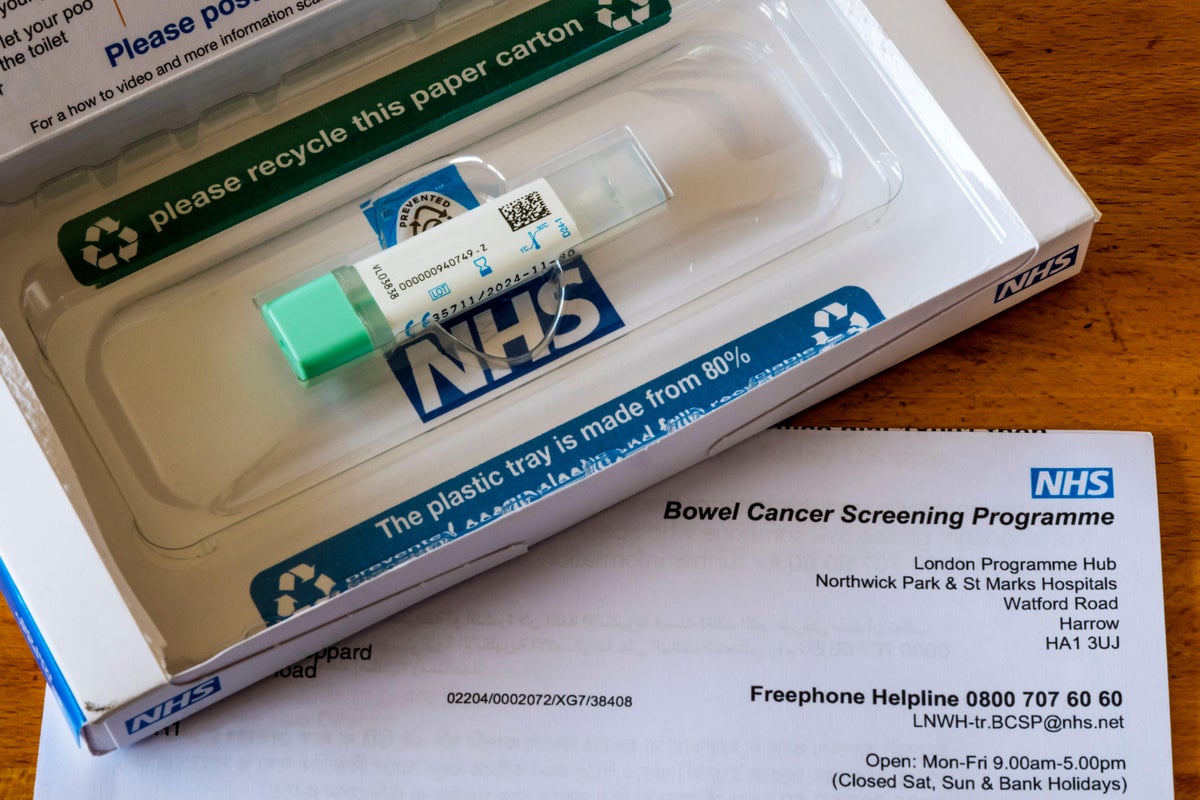
The home-testing stool kit, known as the faecal immunochemical test (FIT), is offered to everyone aged 50 and over and works by picking up signs of blood in a stool sample.
It measures micrograms of human haemoglobin per gram of faeces. People simply put a sample of poo in a tube at home and return it by post to the NHS for testing.
The definition of a positive or negative result can be changed by altering the threshold at which further investigations – such as colonoscopy – are triggered.
The FIT screening threshold is already 80µg Hb/g in Scotland and Wales but was set at 120µg Hb/g in England and Northern Ireland.
Now, the changes from NHS England mean the FIT threshold in England has been reduced to 80µg/g, bringing it into line with Scotland and Wales.
Once fully implemented, testing at the lower threshold is expected to cut late-stage diagnoses and deaths from bowel cancer in England by around 6 per cent and could save the NHS £32 million each year.
The UK National Screening Committee (NSC) recommends that the optimal threshold is 20µg/g.
However, owing to the increased demand this puts on NHS services such as colonoscopy and pathology, the UK NSC has recommended working towards this optimal threshold over time.
NHS England said on Monday it will also launch new digital alerts to tell people the kits are in the post in a bid to boost uptake.
The Government’s National Cancer Plan, which will set out how it plans to transform cancer care by 2035, will be published next week.
Peter Johnson, national clinical director for cancer at NHS England, said: “This is a major step forward in bowel cancer detection and will help save hundreds more lives from this devastating disease.
“Testing at a lower threshold will now provide a better early-warning system for bowel cancer, helping us to spot and treat cancers earlier, often picking up problems before symptoms appear.
“Earlier detection can mean less intensive treatment and ensures the best chance of survival, and in many cases people could avoid facing cancer altogether by having dangerous polyps removed before they cause harm.
“I would strongly encourage everyone who is sent a bowel screening test to complete it and return it as soon as possible — it really could make all the difference.”
Genevieve Edwards, chief executive of Bowel Cancer UK, said: “This is great news for people living in England.
“Increasing the sensitivity of the test means more cancers will be prevented and found earlier, saving more lives from the UK’s fourth most common cancer.”
Michelle Mitchell, chief executive of Cancer Research UK, said: “This vital step from NHS England to lower the threshold for further tests after bowel screening will save lives.
“It means more cancers will be detected at an earlier stage, when treatment is more likely to be successful, while also preventing some from developing in the first place.
“Bowel cancer is the second biggest cause of cancer death in England, so it’s crucial that progress like this continues.
“Screening is for people without symptoms, so if anyone spots something that isn’t right for them, they should speak to their GP. It probably won’t be cancer, but if it is, finding it early can make a real difference.”
Currently, around 2 per cent of people who take the FIT test need further investigation. This is now expected to rise to 3 per cent.
In Northern Ireland, the FIT threshold will remain at 120µg.