The government has approved plans for the controversial Chinese “super-embassy” in London, despite major security concerns and warnings from international allies.
Local Government Secretary Steve Reed gave the plans the green light on Tuesday, undeterred by calls for the government to block the development.
Beijing’s controversial proposals for the building at Royal Mint Court, a site near the Tower of London, is reportedly to include 208 secret rooms and a hidden chamber.
Critics fear the hidden chamber would be located in close proximity to data cables, which are crucial for financial sector communications between the City of London and Canary Wharf.

There are also concerns the secret rooms, located in the site’s basement, could be used for the detention of dissidents who have fled the Chinese state for Britain.
Labour MPs revealed on Monday that several UK allies have raised fears about the plans, and have urged the government not to “open Pandora’s Box”.
Sarah Champion, chairman of the international development select committee, said in an urgent Commons debate: “We’ve now had interventions from the Dutch government, Swiss parliament, Swedish parliament and two interventions from the White House about the risks posed to UK infrastructure by the cabling that runs along the Royal Mint Court.
“Once planning is given we cannot take it back, we will have lost control. This is not a risk we can afford to take and the Government should refuse this disastrous plan.”
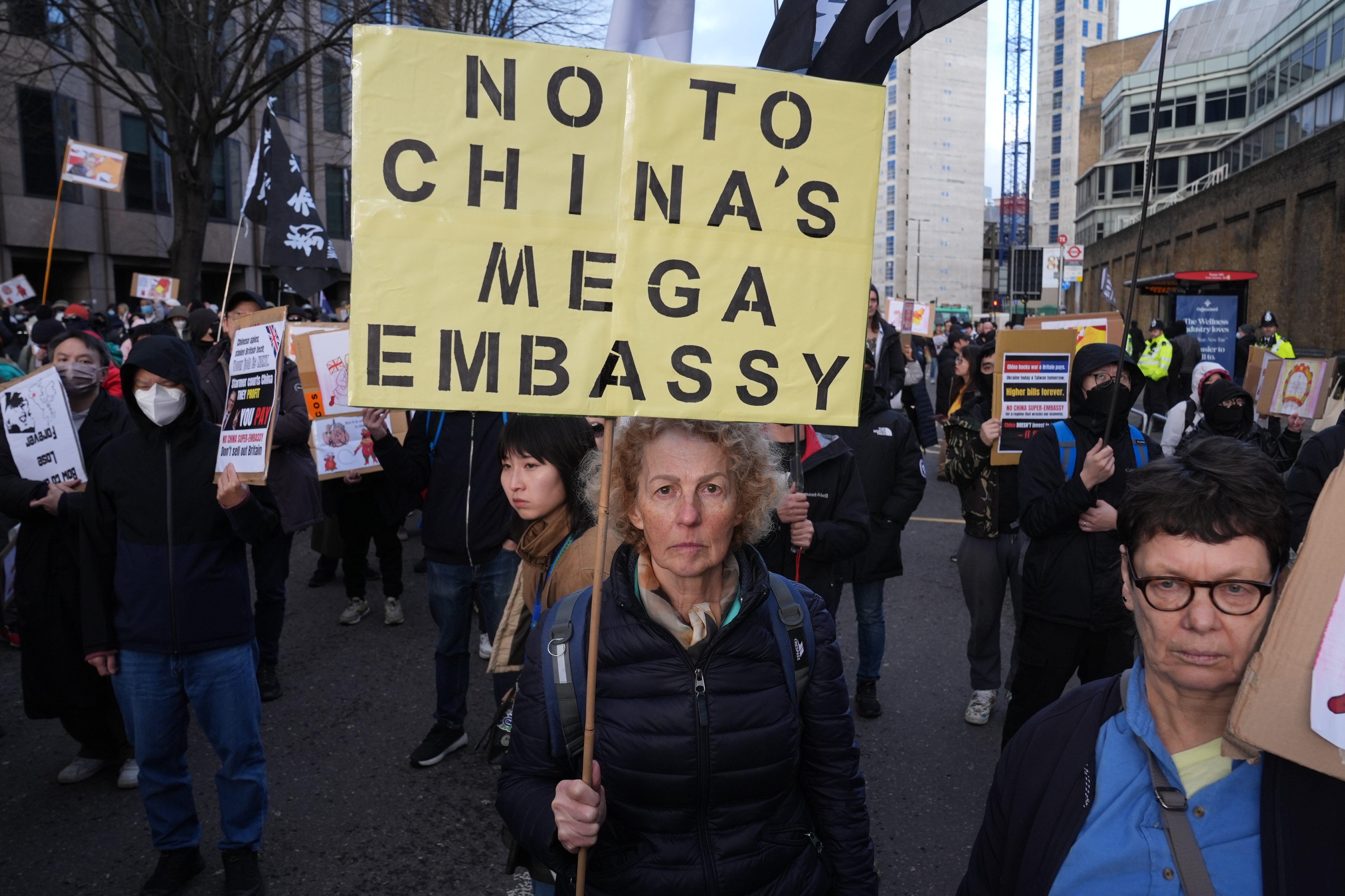
But the government has argued that it would consolidate Chinese diplomatic presence from seven buildings to one, which could have security benefits.
The decision removes a diplomatic hurdle in the relationship with Xi Jinping’s government, clearing the way for Sir Keir Starmer to make a widely-expected visit to China – possibly within weeks.
Ciaran Martin, former chief executive of GCHQ’s National Cyber Security Centre, last week dismissed concerns about the proposed embassy’s location.
In an article for The Times, he said the plans would have been thoroughly scrutinised by the UK’s security services, and that “no Government would override their advice were they to say the risks were too great”.

But critics of the scheme plan to challenge the decision in the courts, with local residents raising money to launch a judicial review against the project.
Luke de Pulford, head of the Inter-Parliamentary Alliance on China, told the Press Association: “Years of campaigning about the obvious and manifold risks posed by this embassy development have not been enough to outweigh the UK Government’s desire for Beijing’s money.”
More follows on this breaking news story…