


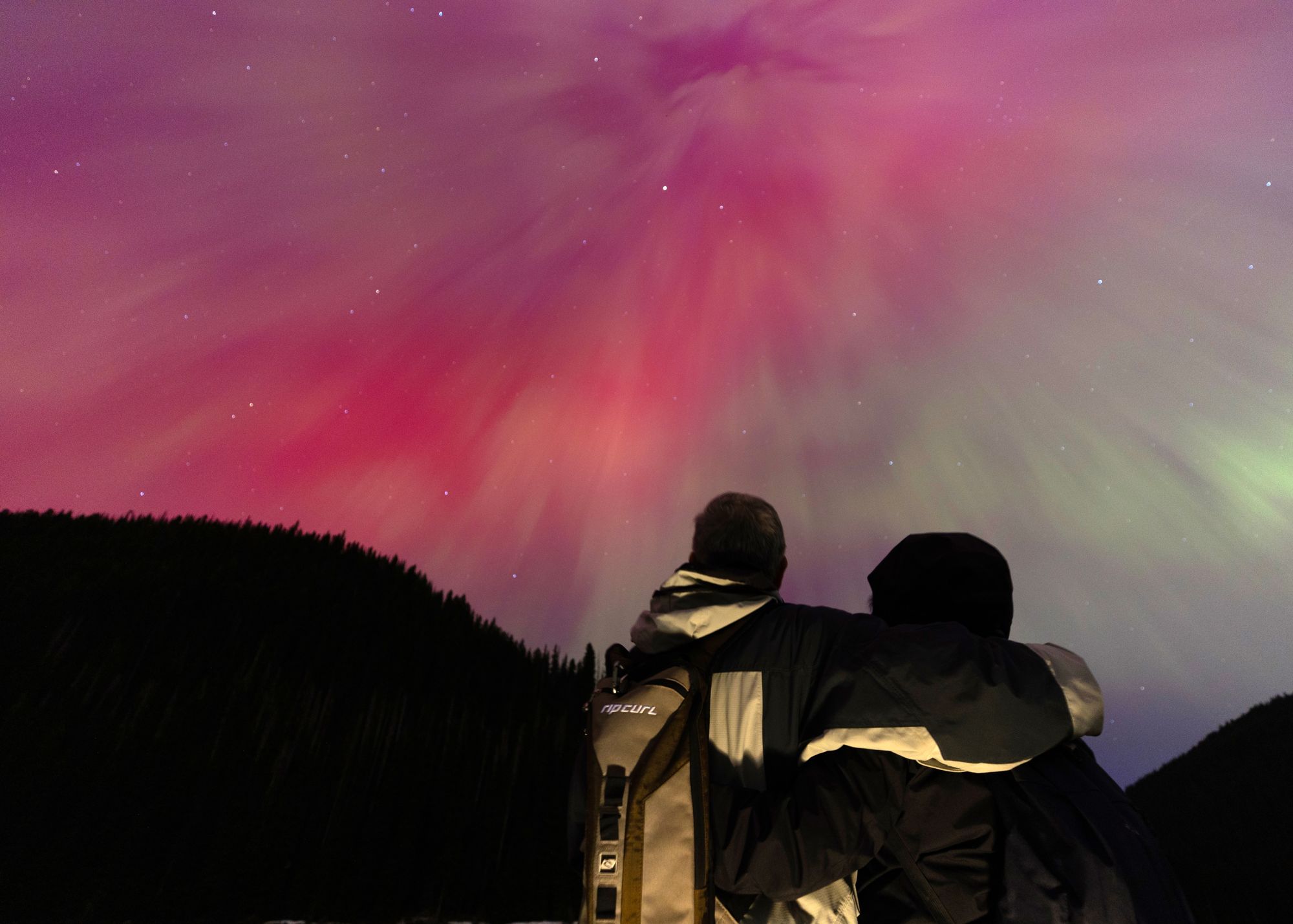
Colorful auroras could dazzle skywatchers again on Monday night amid a severe geomagnetic storm and what the National Oceanic and Atmospheric Administration said was the largest solar radiation storm in more than 20 years.
The northern lights may be seen in the majority of northern states, with an agency forecast extending as far south as Missouri and the Midwest. Although snow over Michigan and Montana could shroud some skies.
The solar radiation storm is the largest seen since October 2003, according to NOAA, creating the geomagnetic storm.
And, the severe geomagnetic storm – the most impactful level of the storms – was expected to block high-frequency communications in polar regions with an “enhanced risk” to high flyers.
“Potential effects are mainly limited to space launch, aviation and satellite operations,” NOAA said on social media.
The agency said it had notified FEMA, power grid operators and aviation interests about both storms and had been in contact with NASA about the health of astronauts on the International Space Station.
“We’ve been making all these phone calls to ensure that we are keeping all the critical technological infrastructure operators in the know of what’s happening,” Shawn Dahl, the service coordinator at NOAA’s Space Weather Prediction Center, explained in a video.
The aurora is forecast at a level eight on the Kp scale. The scale, which measures the aurora’s intensity, ranges from zero to nine.
The best way to view them is to find a north-facing view with a clear horizon at around midnight to 2 a.m. local time.
Why is this happening?
The storm and aurora are the result of a powerful coronal mass ejection: a huge, X-class solar flare aimed at Earth. X-class is the most intense type of solar flare.
The coronal mass ejection was expelled from the sun on Sunday and is expected to arrive late Monday into the early hours of Tuesday.
Conditions are likely to weaken later on Tuesday, NOAA said.
Here comes the sun
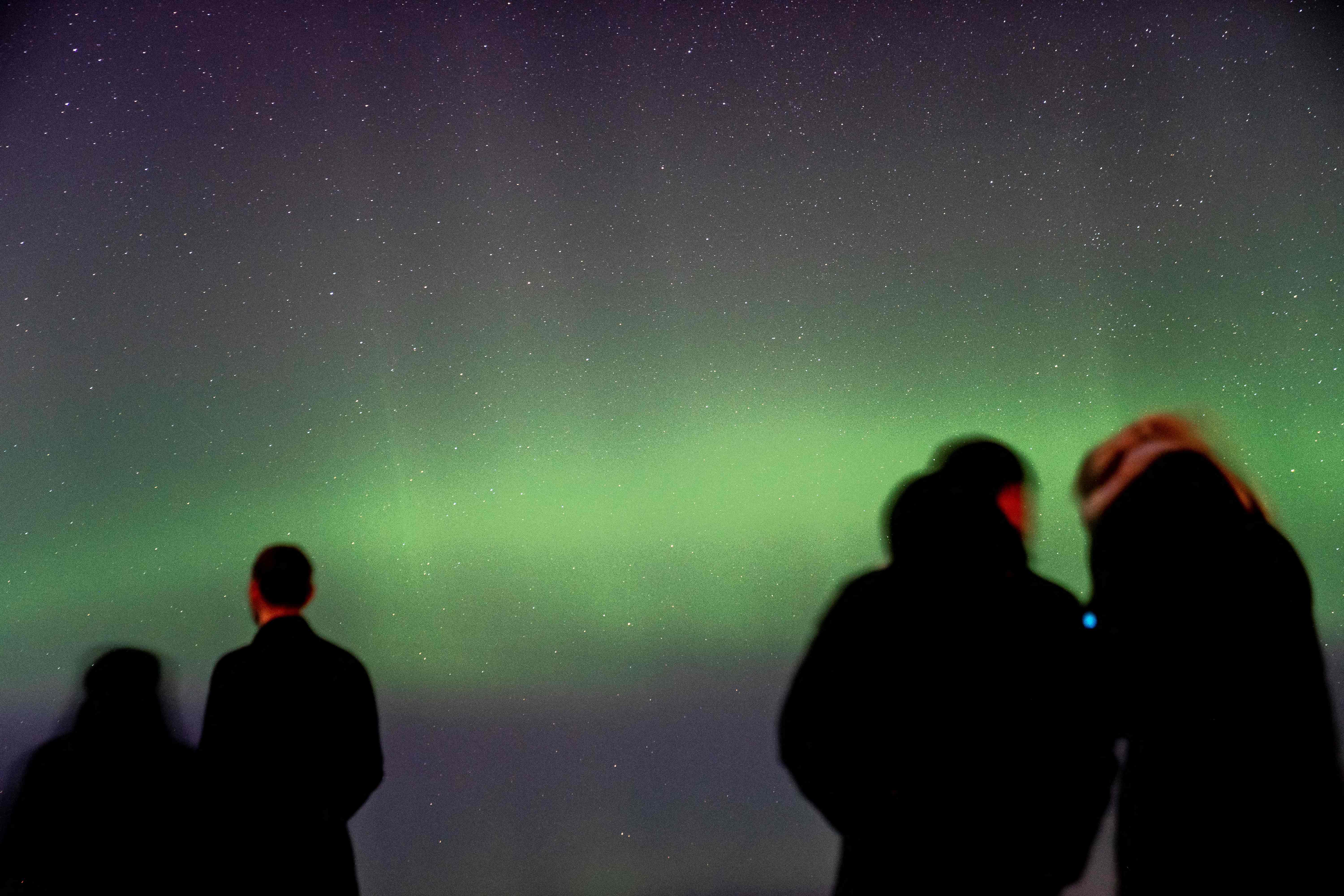
The northern lights are produced as particles from the solar flare collide with Earth’s magnetic field.
The storms come as the sun remains in its most active phase of its 11-year activity cycle, known as the solar maximum phase.
“During solar maximum, the number of sunspots, and therefore, the amount of solar activity, increases,” Jamie Favors, the director of the Space Weather Program at NASA Headquarters, explained in a statement.
“This increase in activity provides an exciting opportunity to learn about our closest star — but also causes real effects at Earth and throughout our solar system.”