
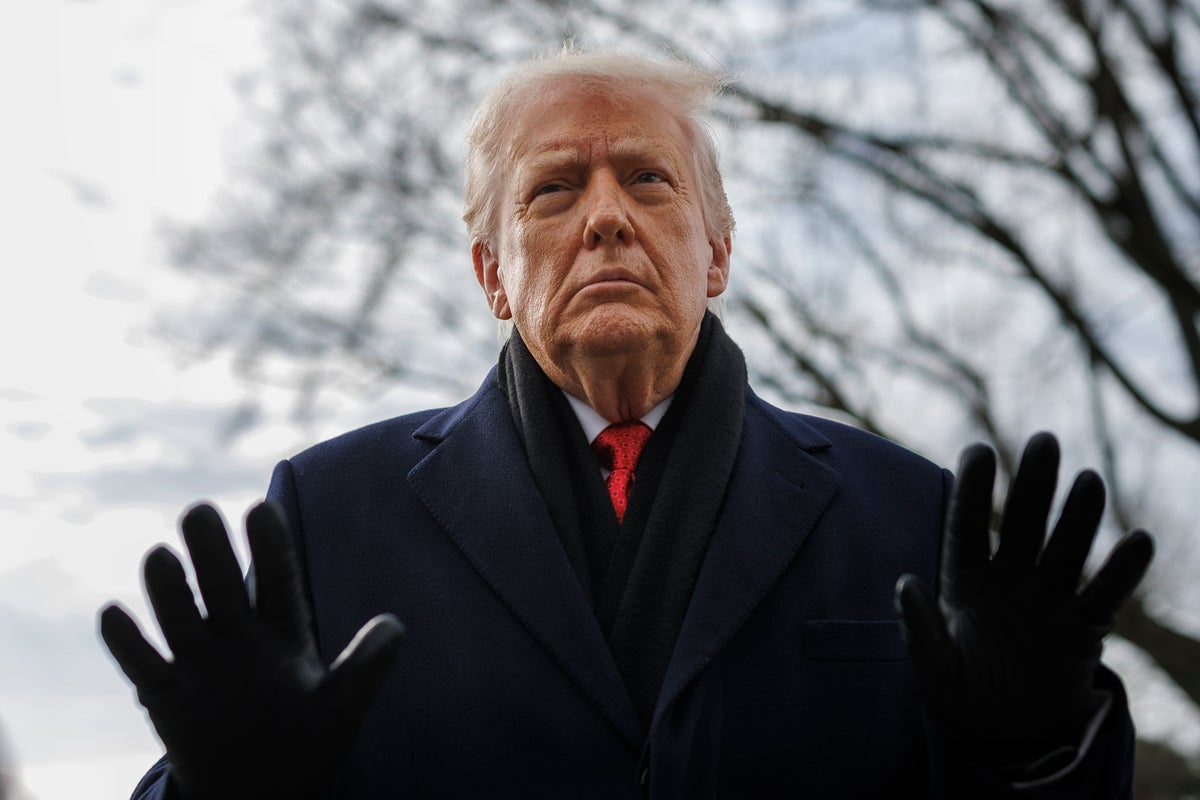
Among the 26 executive orders issued by Donald Trump on the first day of his return to the White House — targeting everything from Diversity, Equity and Inclusion programs to the renaming of US landmarks — there was one that had immediate, devastating consequences for hundreds of millions of people around the world.
“Reevaluating and Realigning United States Foreign Aid,” signed on January 20 2025, ordered a 90-day pause in all United States foreign aid for the “assessment of programmatic efficiencies” and to ensure “consistency” with United States foreign policy.
With Elon Musk’s Department of Government Efficiency (Doge) a key driving force in those early days of the Trump presidency, the weeks that followed saw more than 80 per cent of US overseas aid programs terminated. It also saw the formal closure of the US Agency for International Development (USAID): the overseas aid agency founded by JFK in 1961 to push US soft power abroad and fulfill America’s “moral obligation” to help poorer nations. It typically had a yearly budget of between $30bn and $40bn.
A clear picture of just how big a hit global aid took has not yet emerged, with data from 2025 continuing to trickle through. But ForeignAssistance.gov — the US aid tracking service —shows that the US made some $20bn in aid obligations over the first 11 months of 2025, compared to $82bn across the full year of 2024, while the UN Office for the Coordination of Humanitarian Affairs (Ocha) found that humanitarian aid coming from the US in 2025 fell by more than 75 percent compared to 2024.
The US historically only spent around 0.2 per cent of its GDP on foreign aid — but the sheer size of the country’s economy means that the US has long been the biggest aid donor globally. Savings will certainly have been made on aid in the US budget, but critics argue that Trump’s key legislation, the “Big Beautiful Bill”, includes tax cuts for the rich, so ordinary US taxpayers may be hard-pushed to feel any significant impact from those savings on their daily lives.
The same cannot be said, however, for the citizens of developing countries across the world that have for decades been supported by, and in many cases become dependent on, US aid in order to provide public services like health and education, and address humanitarian disasters.
In recent years, more than 30 per cent of the total aid received by countries including Sudan, Ethiopia, Liberia, and Somalia has come from the US. Across the past year, The Independent’s Rethinking Global Aid project has reported from these nations, and on Africa as a whole, as aid cuts have taken hold.
We have published dispatches from our reporters on the ground in countries including Uganda, Zimbabwe and Senegal, revealing how cuts have devastated HIV services, putting millions of people’s lives at risk.
We uncovered how countries across Africa have been running out of crucial contraception, and also reported on how efforts to tackle other diseases, such as malaria, have also been seriously affected.
Groundbreaking new medicines like the HIV vaccine are now set to have less of an impact than they might otherwise have done, while we have seen how public health and infection prevention initiatives have all but collapsed in many instances.
A decrease in the amount of US money available to respond to humanitarian disasters — in countries that include the Democratic Republic of the Congo and Nigeria — has left communities reeling, with funding for basic needs such as sanitation, shelter, and malnutrition drying up.
We have seen, too, how climate change adaptation efforts have been put at risk, and how the response to extreme weather events such as typhoons has been affected since the US implemented its cuts.
Also on the climate front, we reported from a village in Ethiopia that suffered catastrophic flooding followed by the exodus of nearly all humanitarian actors, and from the slums of Nairobi, in Kenya, where communities are being squeezed by the climate crisis as well as aid cuts. We have also explored how wildlife conservation has been crippled by US cuts.
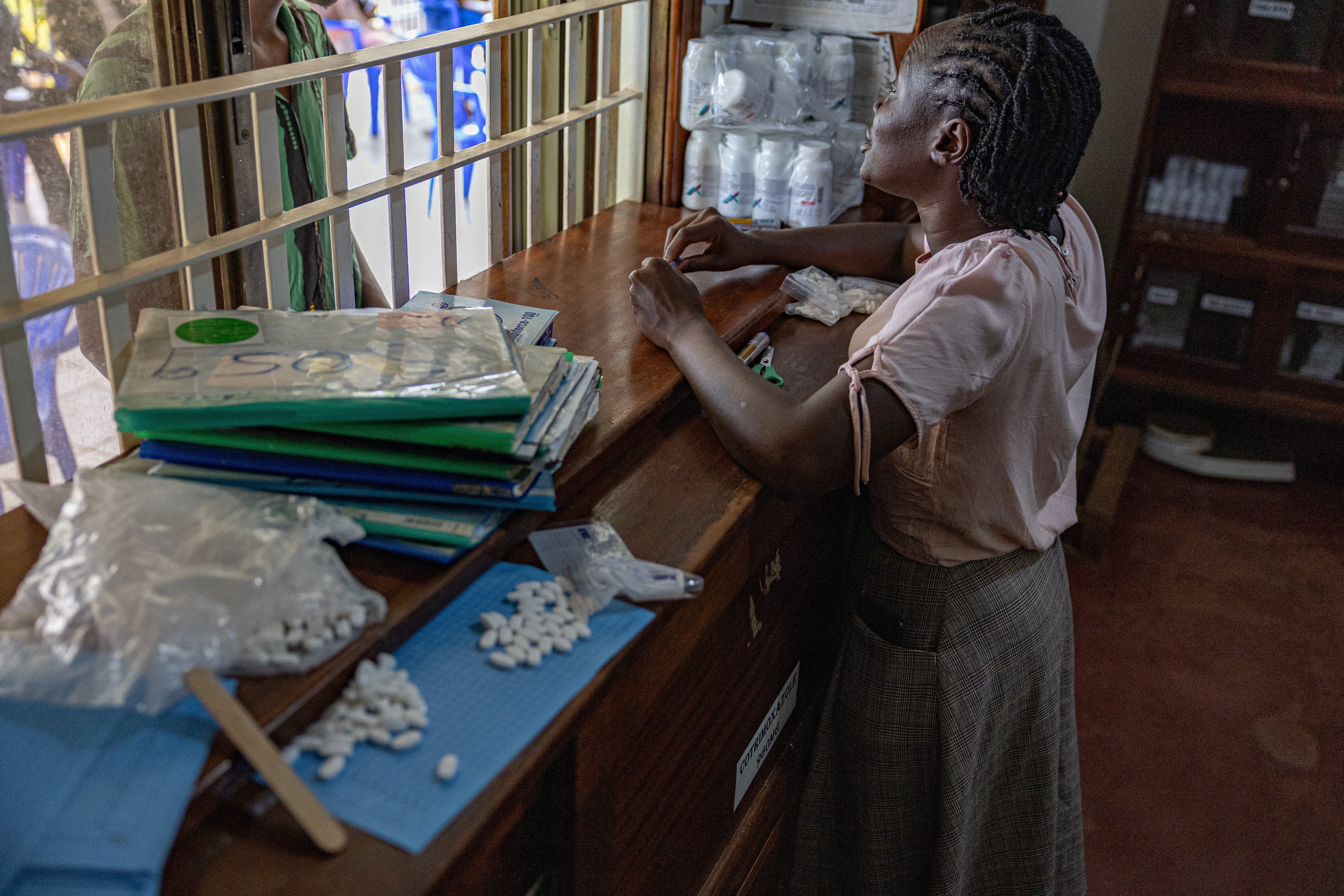
We have seen how the ripples from Trump’s decision to turn away from foreign assistance have spread far and wide, through reporting from key intergovernmental events including the UN General Assembly and the Cop30 climate conference in Brazil, where we saw how the absence of the US was arguably the key stumbling block and led to the talks’ disappointing outcome.
The United States has also recently said it will contribute only $2bn in United Nations humanitarian assistance — a small fraction of its traditional funding scope. This reduced commitment is in sharp contrast to the assistance of up to $17bn the US has provided in recent years, about $8bn to $10bn of which was made up of voluntary contributions, US officials say.
Such moves have also encouraged others to follow suit. The UK, Germany and France are slashing their aid budgets to spend more on defence. Oxfam says that this marks the biggest aid cut by G7 nations since 1960, with spending 26 percent lower in 2026 than it was in 2024.
A new kind of American aid
While Trump might have campaigned on an “America First” ticket, his interventions in Iran and Venezuela show that he is not afraid to intervene where he believes he has to. The paradox here extends to US foreign assistance: While Trump might have closed down USAID, he is keen on turning foreign assistance to what he sees as America’s advantage.
Rather than the key focus being on aid programs that work for the public good in the recipient country (and therefore help keep the US safer), the US government is now seeking to align programs more directly with its policy agenda. New “health compacts” for countries such as Kenya and Nigeria are controversially being offered in exchange for things like health data and mining rights.
Rather than focusing foreign assistance on the poorest countries, which might otherwise struggle to attract investment, Trump has also shown that he is willing to provide US public money to wealthier countries if it suits him, as exemplified by the $20bn currency swap with Javier Milei’s Argentina. Similarly, the Trump administration recently announced that it would reauthorise the US development finance institute, the Development Finance Corporation, with a massive $145bn boost to its portfolio investment cap, which will allow much more US public money to be invested in infrastructure projects around the world, including in many middle-income countries.
A new Congressional proposal for the US to provide some $50bn in foreign assistance for this financial year, announced this month, has offered a glimmer of hope for many in the humanitarian and development space who are still struggling to balance their books after the US cuts. According to Erin Collinson, from the Center for Global Development, the adjusted spending bill shows that lawmakers on Capitol Hill “still see value in US international assistance and in US participation in the multilateral system.”
However, the spending proposal still needs to be voted through Congress, and signed into law by Trump, whose original budget request for the sector was around $20bn lower. It is unclear whether Trump would actually sign off on such changes, even if they have the support of Republicans in Congress. Plus, with major parts of the US aid system weakened beyond recognition, and serious questions about the State Department now having the capacity to deliver, many doubt — even if the bill is approved — that it will be able to undo the upheaval of the past year.
“We have run out of words to describe the depths of suffering we have witnessed after President Trump took a sledgehammer to US humanitarian assistance and the entire global aid system,” says Abby Maxman, President and CEO of Oxfam America. “We are seeing years of progress unravel, and more children suffer and die preventable deaths because of these cuts.”
This article was produced as part of The Independent’s Rethinking Global Aid project