

A law to remove “useless grass” in Nevada to conserve water has so far killed 100,000 trees and caused around $300 million worth of damage, according to a new lawsuit.
The lawsuit, filed in Clark County, alleges that the enactment of Bill 356 has caused the death of the trees throughout the Las Vegas Valley, depriving locals of much-needed heat adaptation measures.
The law, first passed in 2021, targets what the Southern Nevada Water Authority refers to as “non-functional turf” and makes it illegal to irrigate such areas with water from the Colorado River, beginning in 2027.
Examples include grass that virtually no one uses in areas such as office parks, entrances to housing developments, and patches of turf less than 10 feet from a street, according to The Las Vegas Journal Review, which obtained the lawsuit.
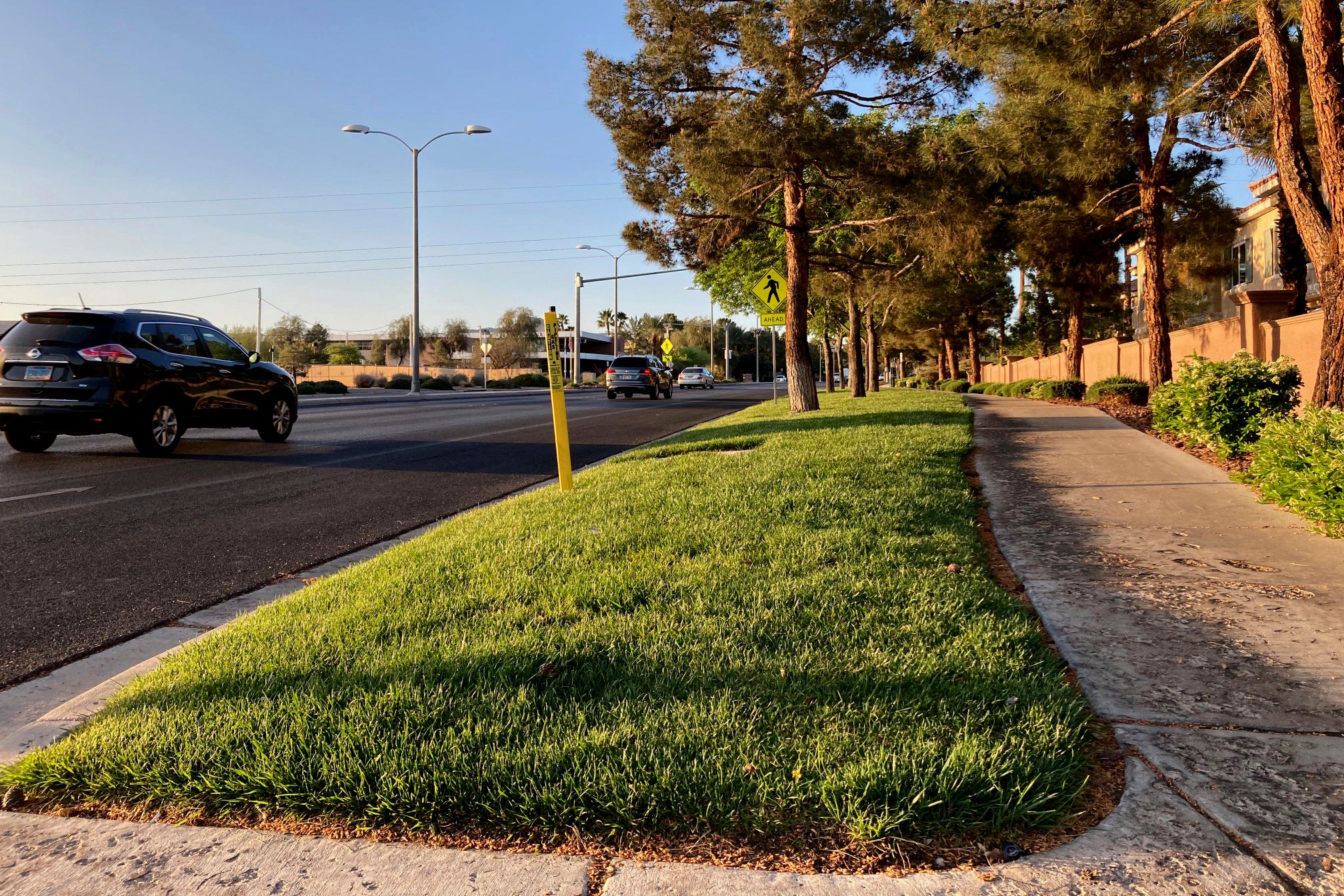
The ban excludes grass near single-family homes, parks and golf courses.
Bill 356 proposed replacing around eight square miles of grass in the metro Las Vegas area, which officials estimated would reduce annual water consumption in the region by 15 percent.
The turf is supposed to be removed by the end of 2026, but locals have pushed back on the legislation, saying that they are already seeing negative consequences.
“There have to be alternative ways to conserve water if we really are in jeopardy,” Kim Snyder, one of the four plaintiffs, told The Review Journal. “Why are we paying the price to conserve when we are the most conservation-oriented city in the world? Why come after us?”

The lawsuit also includes a declaration from Norm Schilling, a Southern Nevada horticulturist and owner of Mojave Bloom Nursery in downtown Las Vegas.
Schilling has broken down the data around the 100,000 deceased trees and the $300 million price tag, arguing that many trees cannot live once nearby grass is disturbed.
“Beyond monetary loss, the green mature canopy (and its heat mitigation benefits) cannot be replaced quickly,” Schilling wrote. “It will take decades for the Las Vegas Valley to recover, if it can at all,” Schilling’s statement reads, per The Review Journal.
The Independent has reached out to the Southern Nevada Water Authority for comment on the lawsuit.