

As households look for ways to cut energy bills and reduce carbon emissions, heat pumps are increasingly being presented as an alternative to traditional gas boilers. Backed by a £7,500 government grant in England and Wales, they are now moving from being niche technology to a mainstream home heating option.
But what exactly is a heat pump, how does it work, and is it suitable for your home?
How does a heat pump work?
A heat pump is an electric-powered system that provides heating and hot water by extracting heat from the environment. Most domestic heat pumps draw warmth from the air, although some take heat from the ground or nearby water sources.
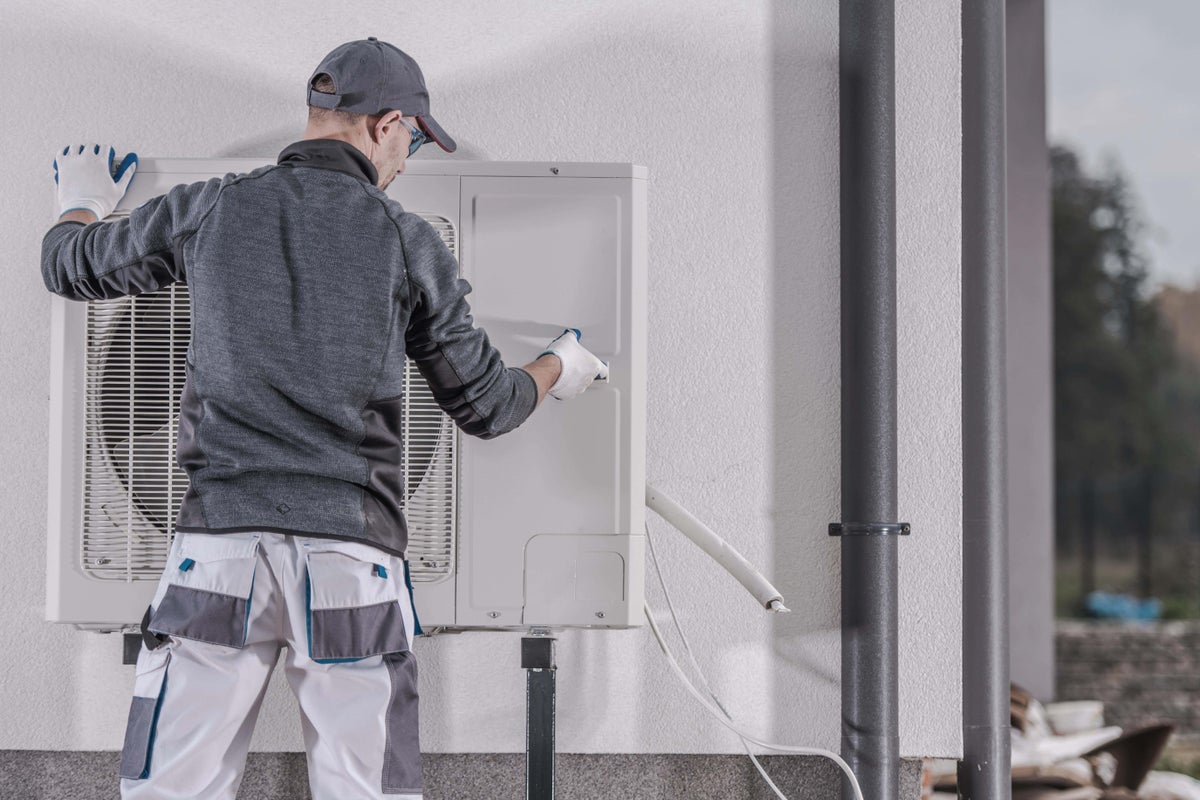
An air source heat pump, the most common type in the UK, looks a bit like an air conditioning unit installed outside the home. It works in a similar way to a fridge but in reverse, absorbing heat from the air outside – even in cold weather – and using it to warm water that circulates through radiators or underfloor heating.
Because heat pumps move heat rather than generate it by burning fuel, they are highly efficient. In many cases, they can produce around three units of heat for every unit of electricity they use, making them far more efficient than a gas boiler.
What types of heat pumps are available?
There are three main types of heat pump used in homes:
- Air source heat pumps, which extract heat from outside air. These are the most widely installed in the UK and can work in a wide range of properties.
- Ground source heat pumps, which take heat from the ground using buried pipes. These systems are very efficient but require more outdoor space and higher upfront costs.
- Water source heat pumps, which draw heat from a river, lake or other water source. These are less common and depend on having suitable access to water.
For most households, an air source heat pump is the most practical option.
Are heat pumps environmentally friendly?
Heat pumps are considered a low-carbon heating technology because they use electricity rather than burning gas or oil. As the UK’s electricity grid continues to rely more heavily on renewable sources such as wind and solar, the carbon footprint of running a heat pump is expected to fall further.
They also avoid local air pollution linked to gas boilers, such as nitrogen dioxide, which can affect air quality in built-up areas.
How much does a heat pump cost?
The upfront cost of installing a heat pump is higher than replacing a gas boiler. An air source heat pump typically costs between £7,500 and £12,000, while ground source systems are usually more expensive.
However, the government’s Boiler Upgrade Scheme currently offers a £7,500 grant towards the cost of installing an air or ground source heat pump in eligible homes in England and Wales. The grant is applied by the installer and deducted from the final bill.
VAT has also been removed from heat pump installations and associated insulation work, further reducing costs. Some energy companies, including Octopus Energy, say that when the grant is taken into account, the price of a heat pump installation can approach that of a new gas boiler in certain homes.
Are heat pumps expensive to run?
According to the Energy Saving Trust, heat pumps are highly efficient and generally ‘produce around three times more energy than they take in’. However, they may cost more to run than certain other systems, so this will need to be factored in.
Running costs depend on electricity and gas prices, how well your home is insulated, and the type of system you are replacing. While electricity is more expensive per unit than gas, heat pumps use energy far more efficiently.
During periods of high gas prices, some households switching from gas boilers to heat pumps have found running costs comparable to, or lower than, gas heating. Combining a heat pump with energy efficiency measures, such as insulation, or with solar panels, can further reduce bills.
Do you need a well-insulated home?
Good insulation is important for any heating system, including gas boilers. A well-insulated home retains heat more effectively, meaning the heating system does not need to work as hard.
Studies have found that most UK homes – including older properties – can be suitable for heat pumps. Some homes may need modest upgrades, such as loft or cavity wall insulation, to ensure the system operates efficiently. These improvements can also lower energy bills regardless of the heating technology used.
Will you need to change your radiators?
Because heat pumps operate at a lower temperature than gas boilers, some homes may need larger or upgraded radiators to deliver enough warmth. This does not always mean replacing every radiator, but older single-panel models may need to be swapped for double or triple-panel versions.
Underfloor heating works particularly well with heat pumps, but it is not essential. Most installations also require a hot water cylinder, as heat pumps do not provide instant hot water in the same way as combi boilers.
How do heat pumps feel compared to gas heating?
Heat pumps heat homes more gradually than gas boilers. Rather than delivering a rapid burst of heat, they work steadily to maintain a consistent indoor temperature.
This can feel different at first, but many systems are designed to run continuously at a low level, keeping homes comfortably warm without sharp temperature changes. Smart controls allow homeowners to programme heating around daily routines and holidays.
Are heat pumps the only alternative to gas?
Heat pumps are currently seen as the leading low-carbon option for individual homes, but they are not the only technology being explored. District heat networks, which supply heat from a central source to multiple buildings, are expanding in some towns and cities. Hydrogen heating has also been discussed, although it remains expensive and less widely available.
For now, heat pumps are the most established alternative that households can install independently, when they choose, without waiting for wider infrastructure changes.