

A major Australian arts festival has been cancelled after days of turmoil that began with the removal of a Palestinian-Australian author and escalated into a mass boycott and a flurry of resignations.
The organisers of the 2026 Adelaide Writers’ Week (AWW) announced on Tuesday that the event – a core fixture of Australia’s cultural calendar – would not go ahead, describing the outcome as “deeply regrettable” and apologising to Randa Abdel-Fattah for how its decision to remove her had been represented.
The cancellation came hours after director Louise Adler and multiple other members of the festival board resigned.
The crisis was triggered last Thursday when the board withdrew an invitation to Ms Abdel-Fattah, arguing that it would “not be culturally sensitive to programme her at this unprecedented time so soon after Bondi”. The board claimed it was not suggesting any connection between the author or her work and the Bondi Beach attack, which targeted a Jewish event.
Ms Abdel-Fattah is a Macquarie University academic who researches Islamophobia and Palestine. She previously faced criticism from Jewish groups for allegedly saying that Zionists had “no claim or right to cultural safety”.
The decision to remove her triggered an immediate backlash from international writers, academics, and commentators, with withdrawals accelerating over the following days.
More than 180 invited participants pulled out, including former New Zealand prime minister Jacinda Ardern, bestselling novelist Zadie Smith, Pulitzer prize-winning writer Percival Everett, Greek economist and politician Yanis Varoufakis, Irish novelist Roisín O’Donnell, Australian poet Evelyn Araluen, and Russian-American journalist M Gessen.
Adelaide drinks manufacturer Mischief Brew withdrew its sponsorship while former festival leaders signed an open letter urging the board to reinstate Ms Abdel-Fattah.
Ms Adler resigned on Tuesday, writing in an opinion piece in The Guardian that the decision to drop Ms Abdel-Fattah had been taken despite her “strongest opposition”.
“I cannot be party to silencing writers, so with a heavy heart I am resigning from my role as the director of the AWW,” she wrote. “Writers and writing matters, even when they are presenting ideas that discomfort and challenge us.”
Her departure was followed by the resignation of four of the festival board’s seven voting members, including the chair, Tracey Whiting, with the remaining board members stepping down soon afterwards.
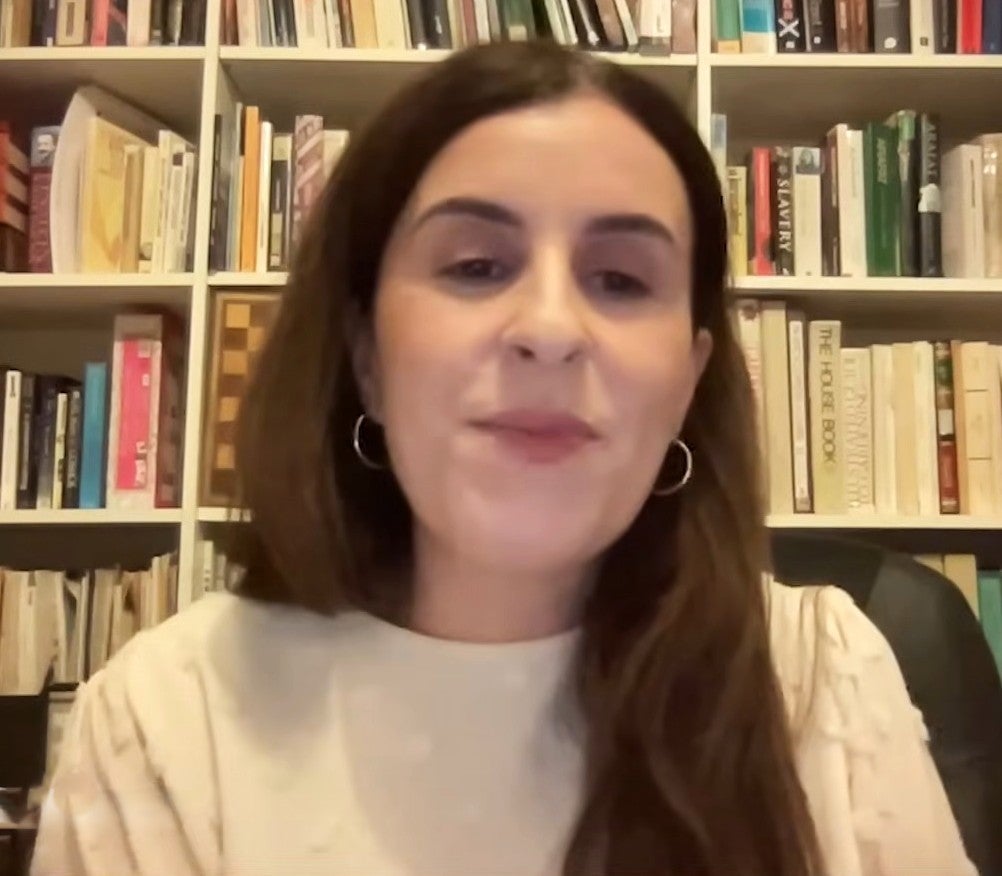
Announcing the cancellation, the board apologised for removing the Palestinian-Australian author, saying the decision was taken to respect a community “experiencing the pain from a devastating event”, but it instead “created more division”.
“Many authors have since announced they will no longer appear at Adelaide Writers’ Week 2026 and it is the Adelaide Festival’s position that the event can no longer go ahead as scheduled for this year. This is a deeply regrettable outcome,” it said in a statement.
The board apologised to Ms Abdel-Fattah “for how the decision was represented” and acknowledged the distress caused to artists, audiences, staff, and partners.
“[We] reiterate this is not about identity or dissent but rather a continuing rapid shift in the national discourse around the breadth of freedom of expression in our nation following Australia’s worst terror attack in history.”
The statement noted that all remaining board members were stepping down, and the new board would focus on “ensuring a successful Adelaide Festival proceeds in a way which safeguards the long and rich cultural legacy of our state but also protects the hardworking staff delivering this important event”.
Rejecting the board’s apology, Ms Abdel-Fattah said in a statement that it felt “disingenuous” and focused on how the decision had been communicated rather than the decision itself.
“Because I have too much respect for myself and for my people, for those who have suffered irreparable harm by the Board’s conduct, for the brilliant Louise Adler who was forced on principle to resign, I refuse and reject the Board’s apology. It is disingenuous. It adds insult to injury,” she wrote.
She said the board’s reference to the “national discourse” amounted to an assertion that she could not be a part of it.
“Once again, the Board citing the ‘national discourse’ for an action that specifically targets me, a Palestinian Australian Muslim woman, is explicitly articulating that I cannot be part of the national discourse, which is insulting and racist in the extreme.”
Ms Abdel-Fattah also criticised the board for reiterating a link to the Bondi Beach attack, which she had “nothing to do with”.
“The Bondi terrorist attack was abhorrent and horrifying,” she wrote. “The Bondi shooting does not mean I or anyone else has to stop advocating for an end to the illegal occupation and systematic extermination of my people – that is an obscene and absurd demand.”
“Please remember that the genocide of Palestinians continues and that all of this is a smokescreen. I am not the story,” she added.
AWW is part of the Adelaide Festival, one of Australia’s most prestigious arts events, held annually in South Australia’s capital and attracting top writers, artists, and performers from across the world. It celebrates opera, theatre, dance, classical and contemporary music, literature, visual art, and new media, and holds a central place in the country’s cultural calendar.
The festival was scheduled to begin on 28 February.
Kathy Lette, one of the writers boycotting the festival, wrote on social media that the decision to bar Ms Abdel-Fattah “sends a divisive and plainly discriminatory message that platforming Australian Palestinians is ‘culturally insensitive’.”
Following the October 7 attacks on Israel, Ms Abdel-Fattah shared an image depicting a person parachuting down with a Palestinian flag.
She later told ABC News she didn’t know the severity of the attack when she shared the picture.
“It was very, very early days, we still did not know what was happening,” she said. “At that point, I had no idea about the death toll, I had no idea about what was happening on the ground.”
She added that the image was just a “celebration of Palestinians who have been living under siege for multiple years, breaking out of their prison”.
The board’s original decision followed lobbying from the Jewish Community Council for South Australia. Norman Schueler, a representative of the organisation, said last week that it had written to the Adelaide Festival Board calling for Ms Abdel-Fattah’s removal.
“It was a very wise move and it will improve the cohesiveness of the festival by not having her there,” Mr Schueler told the Adelaide Advertiser after the invitation was withdrawn.
South Australian premier Peter Malinauskas told ABC News he “wholeheartedly” supported the board’s decision to remove Ms Abdel-Fattah and had made his views clear, but that he had not directed the board’s actions or threatened funding.
Michael Bradley, a lawyer representing Ms Abdel-Fattah, told The Sydney Morning Herald that “the moral indefensibility of the Adelaide Festival Board’s actions has been amply evidenced by the reaction it provoked”.
“It also trampled on Randa’s human rights, and the board will have to answer for that,” he said. His law firm has issued a legal letter instructing board members to retain all documents, including emails, text messages, and communications on disappearing messaging apps, which may be required for litigation.