


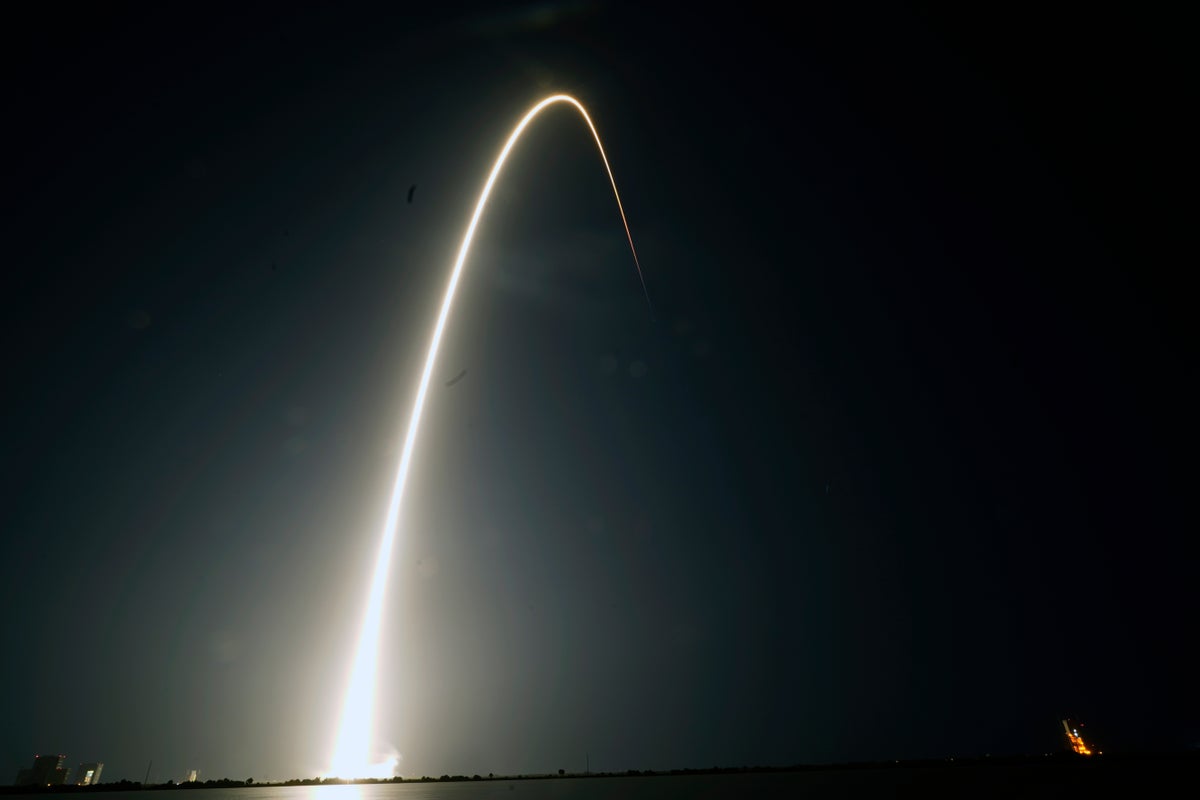
Russia is reportedly developing a new anti-satellite weapon specifically designed to target Elon Musk’s Starlink constellation, according to intelligence findings from two NATO nations.
These reports, seen by The Associated Press, indicate the so-called “zone-effect” weapon aims to flood Starlink orbits with hundreds of thousands of high-density pellets.
Such a weapon could potentially disable multiple satellites at once, but also carries the risk of catastrophic collateral damage to other orbiting systems. The alleged objective behind this development is to curb Western space superiority, which has played a crucial role in aiding Ukraine on the battlefield.
However, analysts who have not reviewed these specific findings express scepticism, questioning whether such a weapon could be deployed without causing uncontrollable chaos in space. This chaos would affect not only Western entities but also companies and countries, including Russia and its ally China, that depend on thousands of orbiting satellites for vital communications, defence, and other essential needs.
These significant repercussions, including potential risks to its own space systems, could ultimately deter Moscow from deploying or using such a weapon.
“I don’t buy it. Like, I really don’t,” said Victoria Samson, a space-security specialist at the Secure World Foundation who leads the Colorado-based nongovernmental organisation’s annual study of anti-satellite systems. “I would be very surprised, frankly, if they were to do something like that.”
But the commander of the Canadian military’s Space Division, Brig. Gen. Christopher Horner, said such Russian work cannot be ruled out in light of previous U.S. allegations that Russia also has been pursuing an indiscriminate nuclear, space-based weapon.
“I can’t say I’ve been briefed on that type of system. But it’s not implausible,” he said. “If the reporting on the nuclear weapons system is accurate and that they’re willing to develop that and willing to go to that end, well it wouldn’t strike me as shocking that something just short of that, but equally damaging, is within their wheelhouse of development.”
Kremlin spokesman Dmitry Peskov didn’t respond to messages from the AP seeking comment. Russia has previously called for United Nations efforts to stop the orbital deployment of weapons and President Vladimir Putin has said Moscow has no intention of deploying nuclear space weapons.
Weapon would have multiple targets
The intelligence findings were shown to the AP on condition that the services involved were not identified and the news organization was not able to independently verify the findings’ conclusions.
The U.S. Space Force didn’t respond to e-mailed questions. The French military’s Space Command said in a statement to the AP that it could not comment on the findings but said, “We can inform you that Russia has, in recent years, been multiplying irresponsible, dangerous, and even hostile actions in space.”

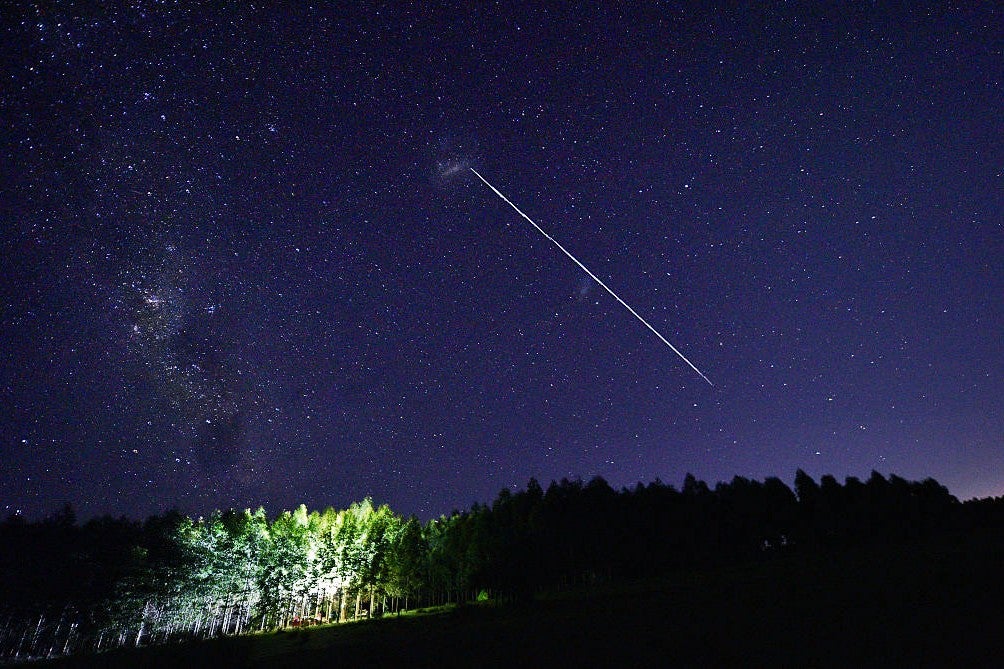
Russia views Starlink in particular as a grave threat, the findings indicate. The thousands of low-orbiting satellites have been pivotal for Ukraine’s survival against Russia’s full-scale invasion, now in its fourth year.
Starlink’s high-speed internet service is used by Ukrainian forces for battlefield communications, weapons targeting and other roles and by civilians and government officials where Russian strikes have affected communications.
Russian officials repeatedly have warned that commercial satellites serving Ukraine’s military could be legitimate targets. This month, Russia said it has fielded a new ground-based missile system, the S-500, which is capable of hitting low-orbit targets.
Unlike a missile that Russia tested in 2021 to destroy a defunct Cold War-era satellite, the new weapon in development would target multiple Starlinks at once, with pellets possibly released by yet-to-be launched formations of small satellites, the intelligence findings say.
Canada’s Horner said it is hard to see how clouds of pellets could be corralled to only strike Starlink and that debris from such an attack could get “out of control in a hurry.”
“You blow up a box full of BBs,” he said. Doing that would “blanket an entire orbital regime and take out every Starlink satellite and every other satellite that’s in a similar regime. And I think that’s the part that is incredibly troubling.”
System is possibly just experimental
The findings seen by the AP didn’t say when Russia might be capable of deploying such a system nor detail whether it has been tested or how far along research is believed to be.
The system is in active development and information about the timing of an expected deployment is too sensitive to share, according to an official familiar with the findings and other related intelligence that the AP did not see. The official spoke on condition of anonymity to discuss the nonpublic findings.
Such Russian research could be simply experimental, Samson said.
“I wouldn’t put it past some scientists … to build out something like this because it’s an interesting thought-experiment and they think, you know, ‘Maybe at some point we can get our government to pay for it,'” she said.
Samson suggested the spectre of a supposed new Russian threat may also be an effort to elicit an international response.
“Often times people pushing these ideas are doing it because they want the U.S. side to build something like that or … to justify increased spending on counterspace capabilities or using it for a more hawkish approach on Russia,” she said.
“I’m not saying that this is what’s happening with this,” Samson added. “But it has been known to happen that people take these crazy arguments and use them.”
Tiny pellets could remain undetected
The intelligence findings say the pellets would be so small — just millimeters across — that they would evade detection by ground- and space-based systems that scan for space objects, which could make it hard to pin blame for any attack on Moscow.
Clayton Swope, who specialises in space security and weaponry at the Center for Strategic and International Studies, a Washington, D.C.-based security and policy think tank, said if “the pellets are not trackable, that complicates things” but “people would figure it out.”
“If satellites start winking out with damage, I guess you could put two and two together,” he said.
Exactly how much destruction tiny pellets could do isn’t clear. In November, a suspected impact by a small piece of debris was sufficient to damage a Chinese spacecraft that was meant to bring three astronauts back to the Earth.
“Most damage would probably be done to the solar panels because they’re probably the most fragile part” of satellites, Swope said. “That’d be enough, though, to damage a satellite and probably bring it offline.”
‘Weapon of fear’ could threaten chaos
After such an attack, pellets and debris would over time fall back toward Earth, possibly damaging other orbiting systems on their way down, analysts say.
Starlink’s orbits are about 550 kilometers (340 miles) above the planet. China’s Tiangong space station and the International Space Station operate at lower orbits, “so both would face risks,” according to Swope.
The space chaos that such a weapon could cause might enable Moscow to threaten its adversaries without actually having to use it, Swope said.
“It definitely feels like a weapon of fear, looking for some kind of deterrence or something,” he said.
Samson said the drawbacks of an indiscriminate pellet-weapon could steer Russia off such a path.
“They’ve invested a huge amount of time and money and human power into being, you know, a space power,” she said.
Using such a weapon “would effectively cut off space for them as well,” Samson said. ”I don’t know that they would be willing to give up that much.”
