Polar bears in one of the fastest-warming parts of the Arctic are showing clear changes in how their DNA behaves, according to a new study.
Researchers examined genetic activity in polar bears from northeastern and southeastern Greenland – two regions that now experience starkly different temperature patterns to the historic norm.
The team found that bears living in the warmer, more fragmented sea-ice environment of southeastern Greenland had markedly higher activity in their “jumping genes”, small mobile elements in the genome that can alter how other genes switch on and off.
These changes were concentrated in genes related to heat stress, metabolism and ageing, and were consistently associated with the region’s temperature patterns.
The study is the first to find a statistically significant link between rising temperatures and altered DNA activity in a wild mammal.
Lead researcher of the study, Dr Alice Godden from the University of East Anglia (UEA), said the findings show a measurable link between rising temperatures and changes in polar bear gene activity.
“By comparing these bears’ active genes to local climate data, we found that rising temperatures appear to be driving a dramatic increase in the activity of jumping genes within the southeastern Greenland bears’ DNA.”
“Essentially, this means that different groups of bears are having different sections of their DNA changed at different rates, and this activity seems linked to their specific environment and climate.”
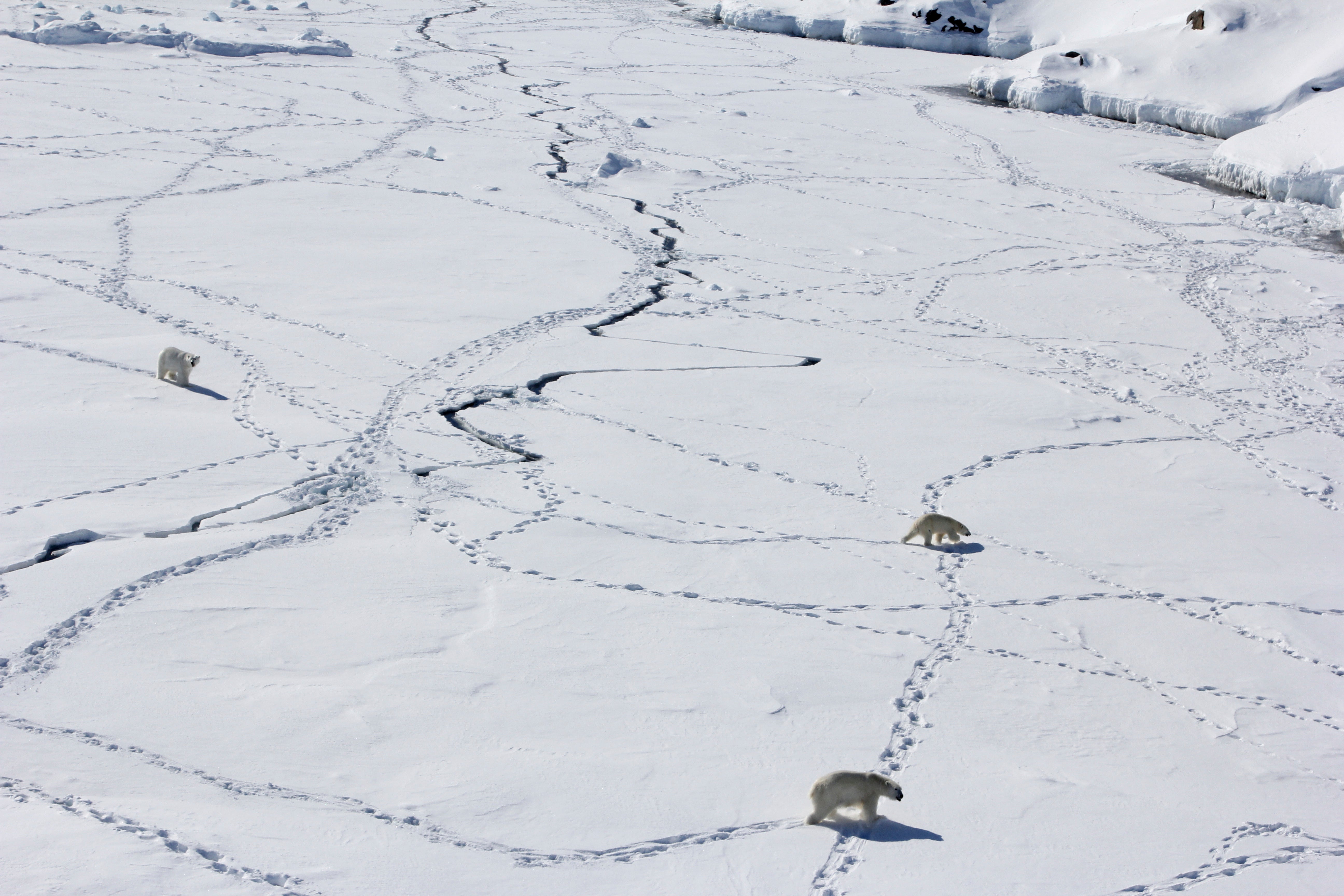
Southeastern Greenland has become one of the warmest and least predictable habitats in the polar bear range. Sea-ice cover is low and unstable, temperatures fluctuate far more than in the northeast, and bears are increasingly isolated by retreating ice.
Researchers describe this population as living in “future Arctic conditions”, with similarities to what most polar bear habitats are projected to experience by mid-century.
This year is expected to be the world’s second- or third-warmest on record, while 2023 and 2024 smashed global temperature benchmarks. The Copernicus Climate Change Service has said the world is now in its first three-year period where average global temperatures exceeded 1.5C above pre-industrial levels. The Arctic is warming almost four times faster than the global average.
More than two-thirds of polar bears are expected to vanish by 2050, with full extinction possible by the end of the century if global emissions continue on their current trajectory.
The UEA team analysed RNA – the molecules showing which genes are active – from blood samples collected for an earlier study that identified the southeastern population as genetically distinct from northern groups after becoming isolated around 200 years ago.
Key findings include:
- Jumping genes were significantly more active in southeastern bears than in northeastern bears.
- Many of these elements were located near protein-coding regions, meaning they could influence how fundamental biological processes function.
- Genetic activity shifts were strongest in heat-stress, ageing and metabolic pathways – processes likely to be under pressure in a warmer environment with reduced access to high-fat seal prey.
- Changes were also observed in genes linked to fat processing, consistent with the dietary shift in the southeastern population, which increasingly relies on land-based, lower-fat food sources when sea ice disappears.
Dr Godden said these differences do not indicate that polar bears are “safe” or successfully adapting, but that the southeastern population may be undergoing unusually rapid genetic responses to environmental stress.
“This finding is important because it shows, for the first time, that a unique group of polar bears in the warmest part of Greenland are using ‘jumping genes’ to rapidly rewrite their own DNA, which might be a desperate survival mechanism against melting sea ice.”
“As the rest of the species faces extinction, these specific bears provide a genetic blueprint for how polar bears might be able to adapt quickly to climate change… However, we cannot be complacent.”
The authors stress that genetic shifts do not guarantee long-term survival. Even if some populations exhibit rapid responses, polar bears remain constrained by the physical limits of a warming Arctic: they rely on sea ice to hunt seals, and in many regions the ice-free season is lengthening beyond the time bears can safely fast.
The researchers say broader sampling is now essential, as roughly 20 polar bear sub-populations may be experiencing climate pressure differently.
Dr Godden said the next step is to examine whether similar changes are occurring elsewhere: “I also hope this work will highlight the urgent need to analyse the genomes of this precious and enigmatic species before it is too late.”