

28 Years Later: The Bone Temple – yes, The Bone Temple, make the joke now so we can all move on – is proof artists shouldn’t be too territorial about their own work. Danny Boyle, having revisited the world of 28 Days Later – his canonised 2002 work of zombie cinema – in last year’s 28 Years Later, has passed over the reins to Nia DaCosta (Candyman; The Marvels) for its sequel. And that new voice, that fresh perspective, has helped push The Bone Temple further than its predecessor ever dared to go.
With Alex Garland remaining onboard as screenwriter, providing necessary connective tissue, the pair have together crafted a horror that drags its audience right into the heart of the apocalyptic (not so hard these days, admittedly). It’s frenzied, wild, contemplative, mournful, claustrophobic, fiery, monstrous, and humanist. 28 Years Later followed a boy, Spike (Alfie Williams), as he left the safety of his isolated Lindisfarne community to risk it all for the precious commodity of a mother’s love. It was rooted in foundational myths. Simple, but effective.
Garland’s script, here, weaves in a touch of Mary Shelley to ask the kinds of questions that have never really been asked about the “infected” before. What exactly makes a man a man and a zombie a zombie? Asking them too is Dr Ian Kelson (Ralph Fiennes), the very mad and very sage physician responsible for the “bone temple”, an ossuary constructed out of human remains to preserve the memory of the dead. Kelson has grown increasingly fascinated with the infected “alpha” he’s nicknamed Samson (Chi Lewis-Parry). He keeps returning to the temple with an expression of… is it curiosity? Or simply more confusion between all the snarling and brain snacking?
DaCosta is more subtle in her camerawork than Boyle, working here with regular cinematographer Sean Bobbitt. Some might mourn that she chose not to shoot on the iPhone or include infrared footage, as Boyle did. But DaCosta’s playfulness is equal to her predecessor, only expressed more tonally: it surfaces in her handling of silence, or in the unexpectedly funny montage of Kelson and Samson’s romcom-esque interactions set to Duran Duran’s “Ordinary World”. It pairs nicely with Fiennes’s ferocious performance, too. Kelson looks like Colonel Kurtz but he acts like Yoda, singing and giggling and quoting Latin. You wonder whether losing your mind might actually be the best way to make a go of the end of the world.
Yet, there’s another major player in The Bone Temple, and he rocked up at the end of 28 Years Later dressed like Jimmy Savile and with the lethal grin of Jack O’Connell, who delivers another masterfully villainous performance off the back of last year’s Sinners. He understands what’s needed to make a vastly complex and elementally evil character like this work: a sense of internal logic and command even within all the outsized cruelty. (DaCosta, for what it’s worth, is unafraid to depict stomach-churning violence when needed.) There’s a clear understanding of how he could hold such corruptive power over his cult of “Jimmys”, in which poor Spike now finds himself trapped, with his underlings dressing like him, thinking like him and torturing like him. Williams too carves out a strong place for his performance, an anxious middle ground between the child he still is and the man the world is forcing him to become.
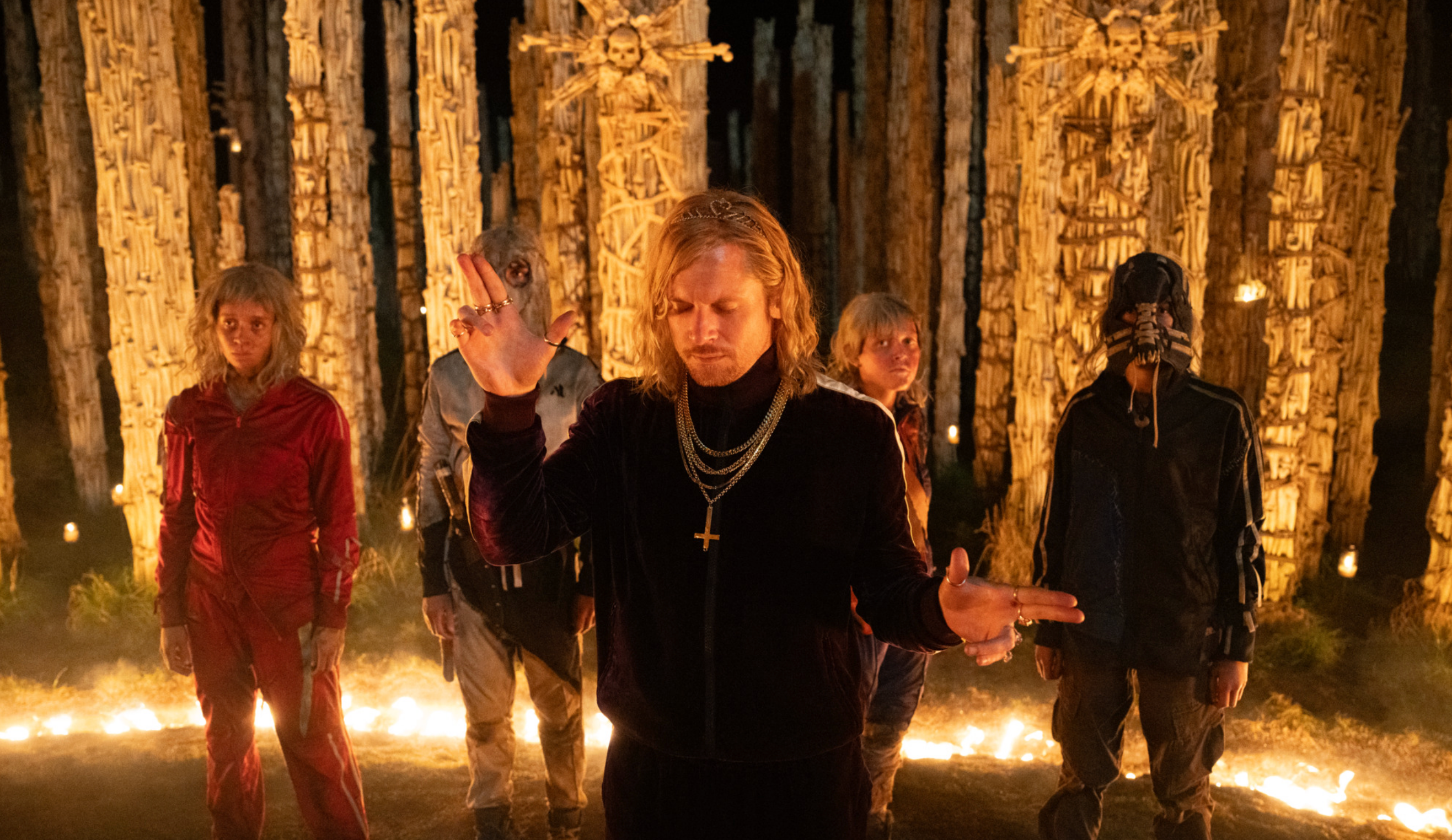
What binds Kelson and O’Connell’s Sir Lord Jimmy Crystal is the role of language in how we build our sense of humanity – or strip it from each other. Lord Jimmy presents himself as the son of Satan, a figurehead for the total perversion of all words and symbols, who refers to his acts of violence as “charity”. It adds to the film’s bold, layered invocation of Savile, a man who hid his heinous crimes beneath the veneer of charity. O’Connell’s Lord Jimmy, in his own way, obscures the truth of his barbarity through grand performance. Kelson, meanwhile, agonises over the infected’s inability to communicate or to consent. It’s rich thematic territory for the series, and slowly amps up the audience’s anticipation for the moment these two finally cross paths. When they do, it’s spectacular and audacious.
DaCosta will hand the reins back to Boyle for a third, planned instalment of the trilogy, with Cillian Murphy set to reprise his role as Jim. I’ll be curious to see if The Bone Temple in any way influences Boyle’s film. Sometimes we need to see our own world through another’s eyes to better understand it.
Dir: Nia DaCosta. Starring: Ralph Fiennes, Jack O’Connell, Alfie Williams, Erin Kellyman, Chi Lewis-Parry. Cert 18, 109 minutes.